Historical Significance and Brand Heritage
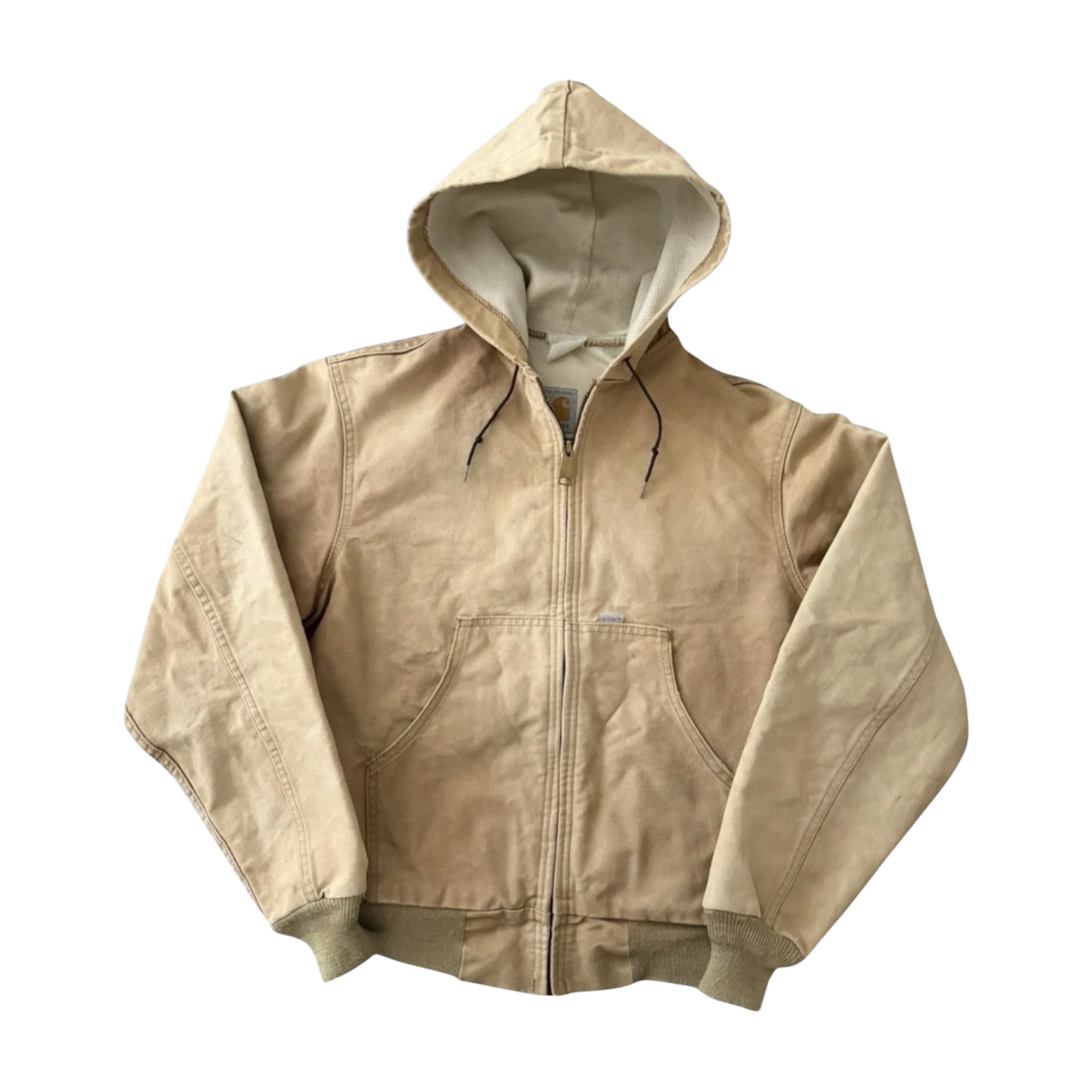
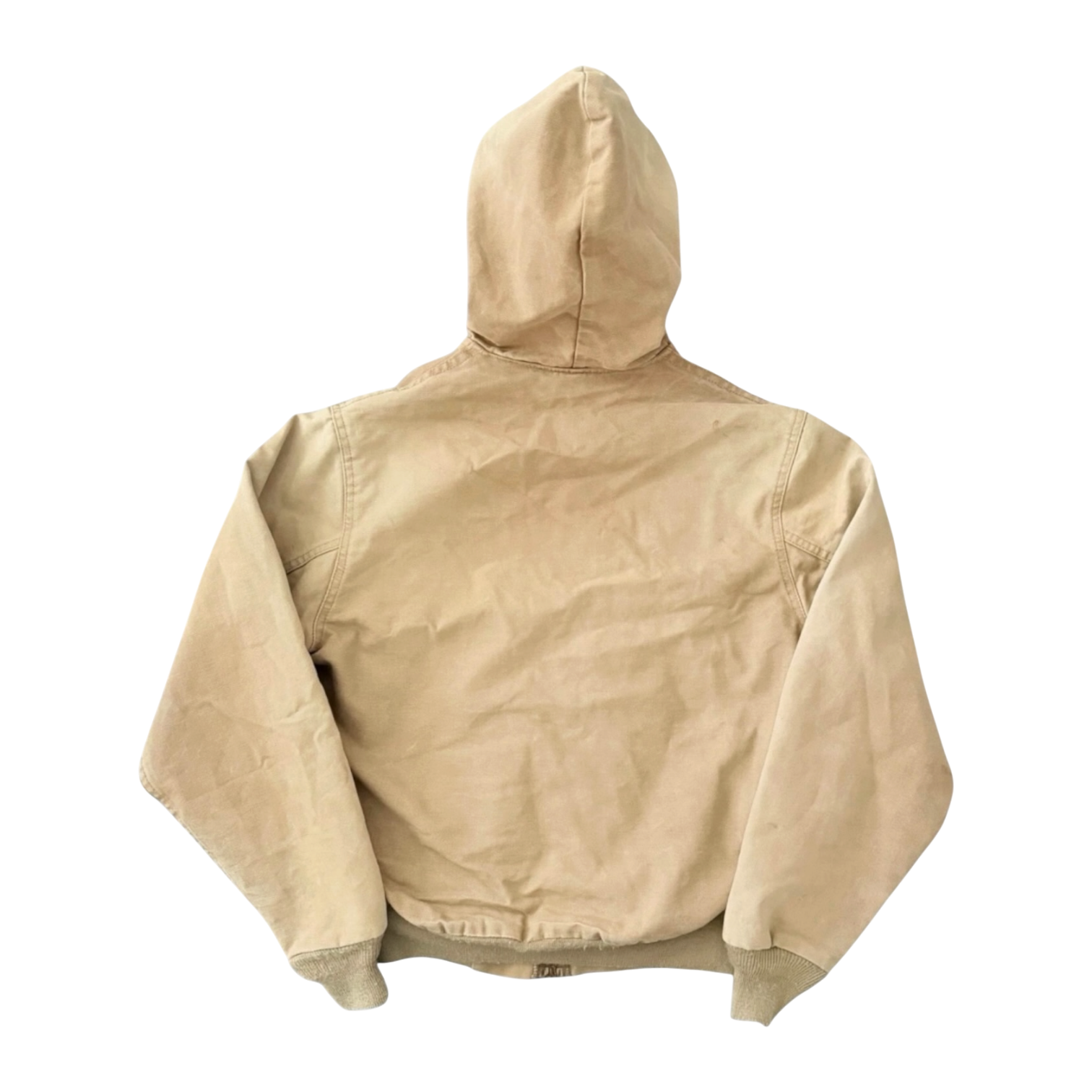
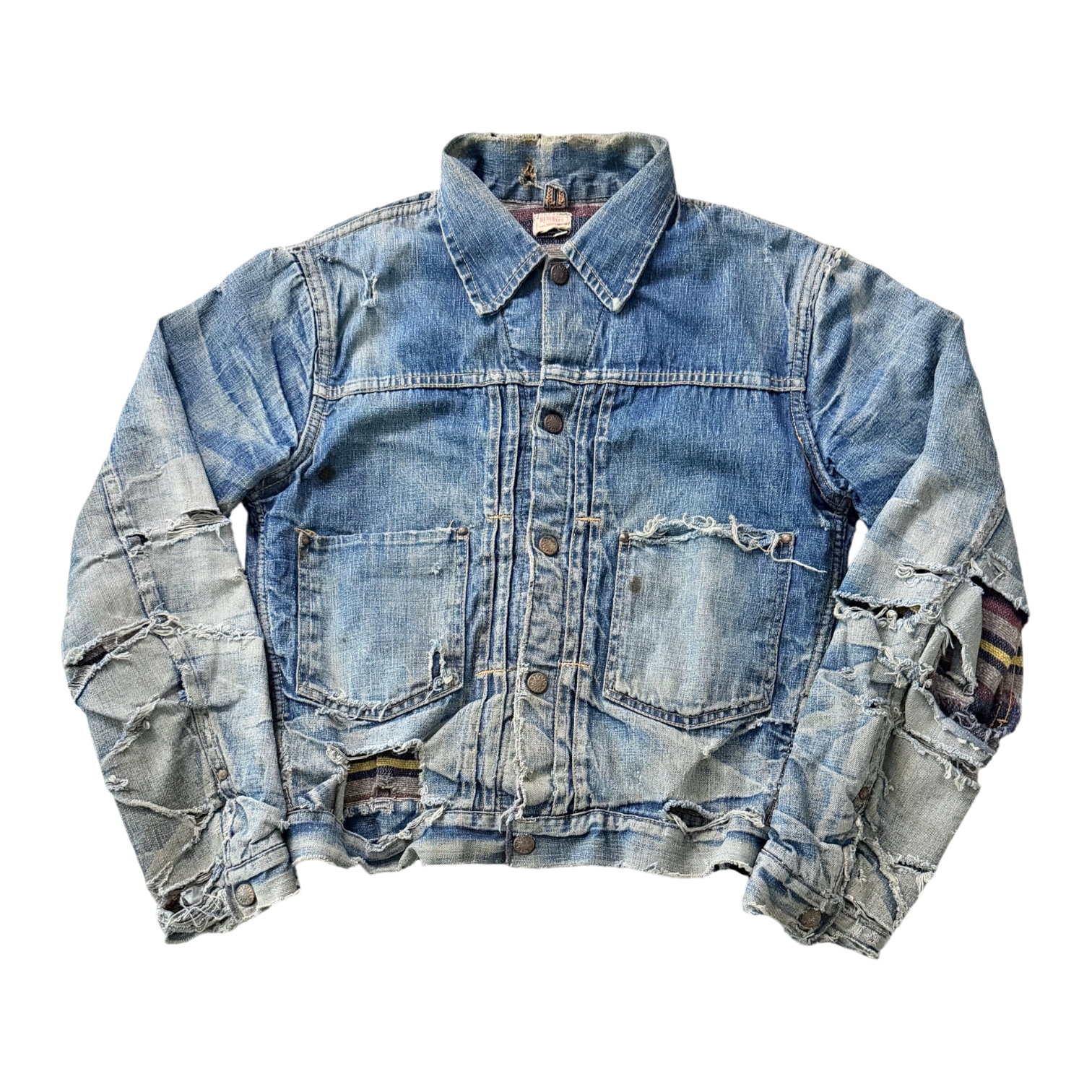
This is an authentic 1950s Hercules denim trucker jacket, a definitive artifact of mid-century American labor manufactured for Sears, Roebuck & Co. During the 1950s, Hercules was the premier house brand for Sears, engineered to compete directly with the "Big Three" denim giants by offering superior utility and rugged construction. This specific model utilizes the iconic Type II silhouette, characterized by its pleated front and dual chest pocket configuration. While Levi’s popularized this design, the Hercules iteration is often more sought after by niche collectors for its unique hardware and specialized linings. This jacket represents a specific moment in post-war American industry when workwear was built with an uncompromising focus on longevity, utilizing heavyweight shuttle-loom denim that was intended to last a lifetime of manual toil.
Technical Construction and Hardware
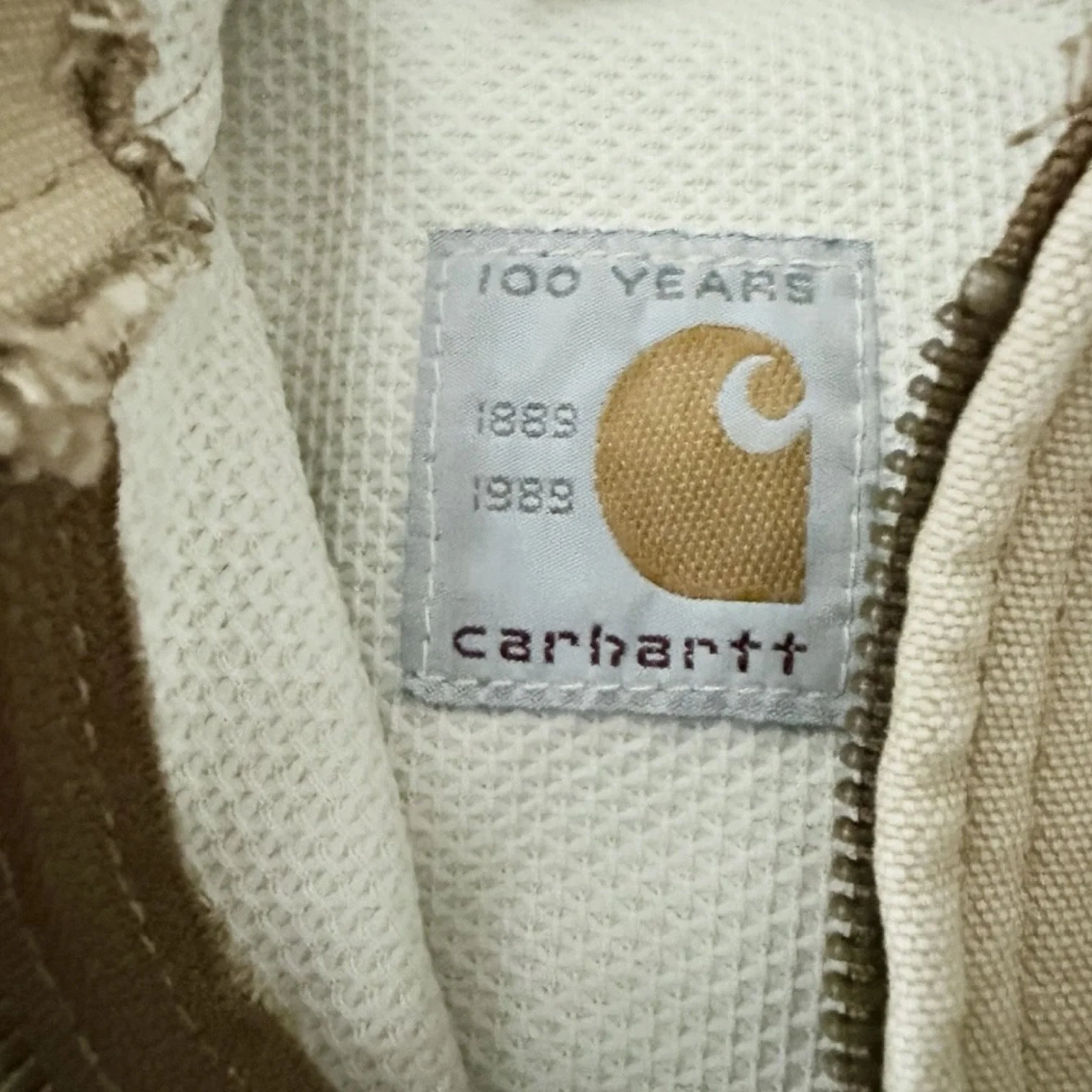
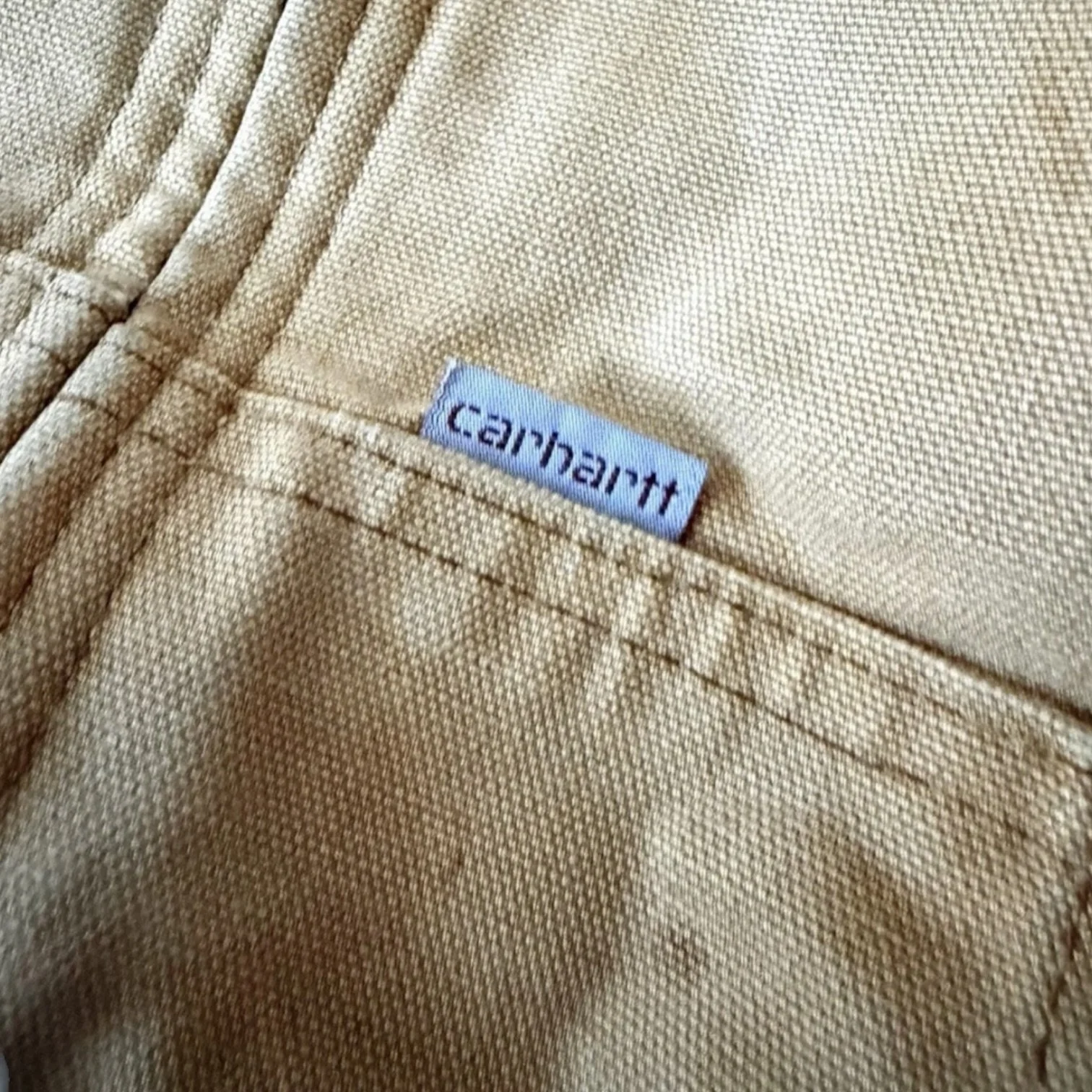
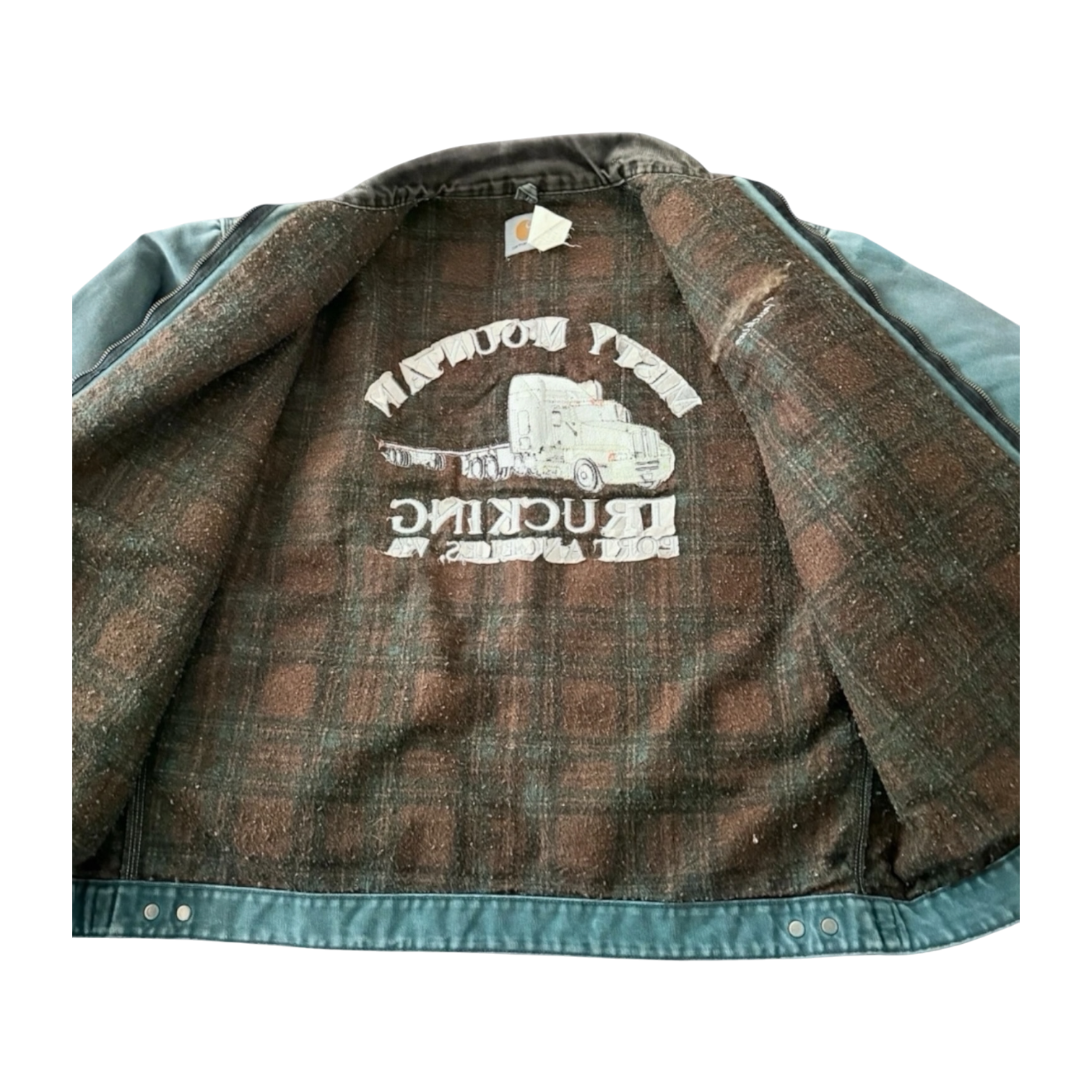
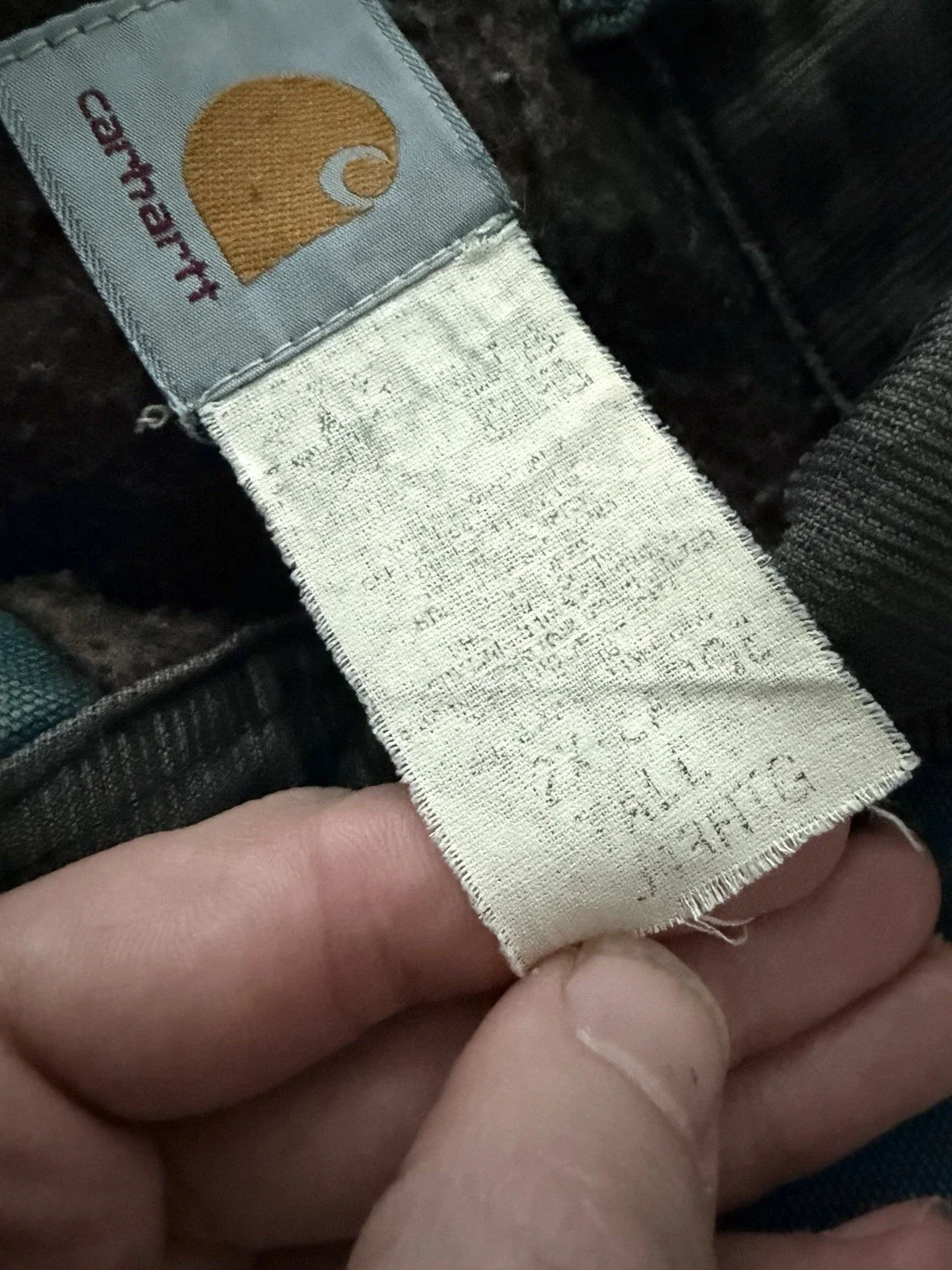
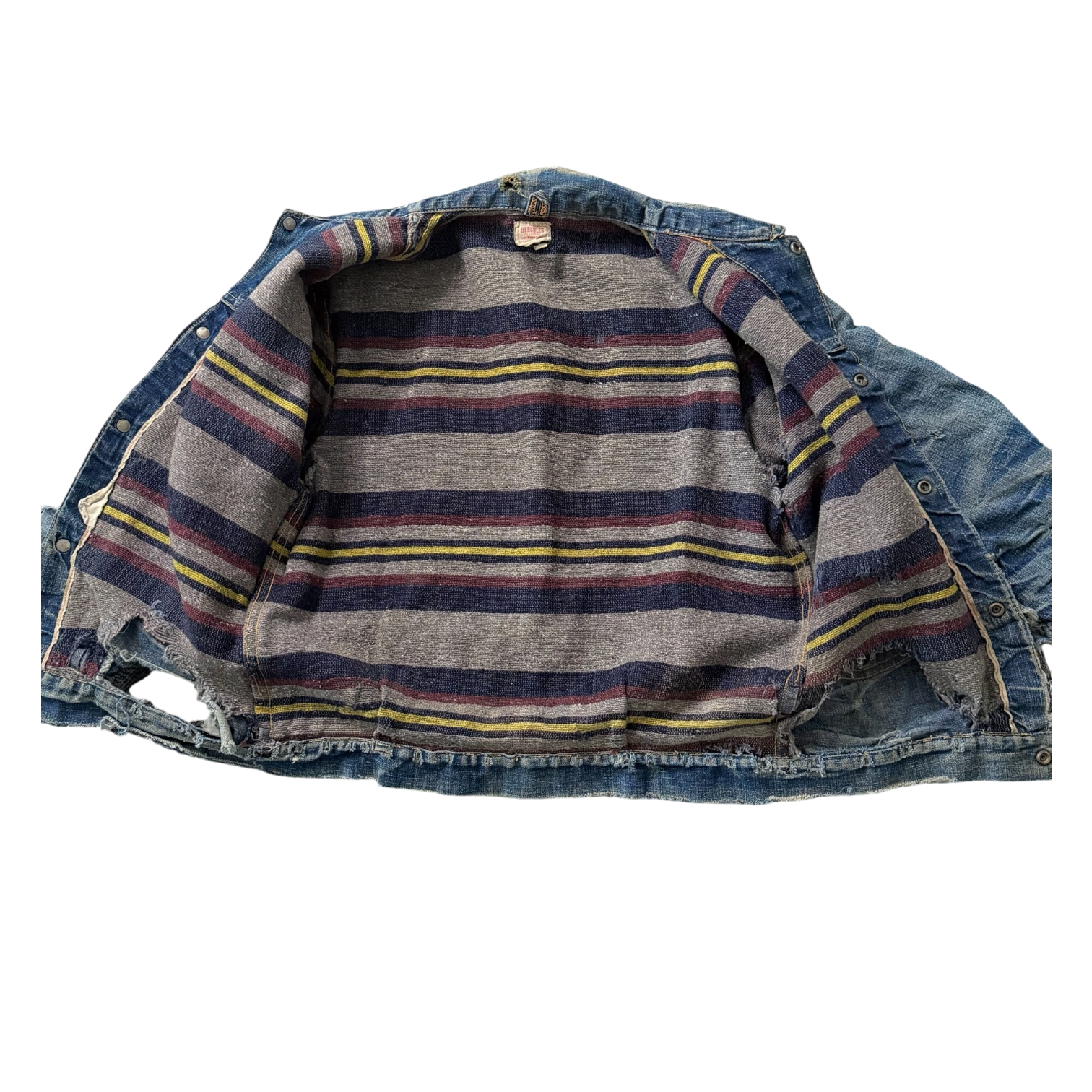
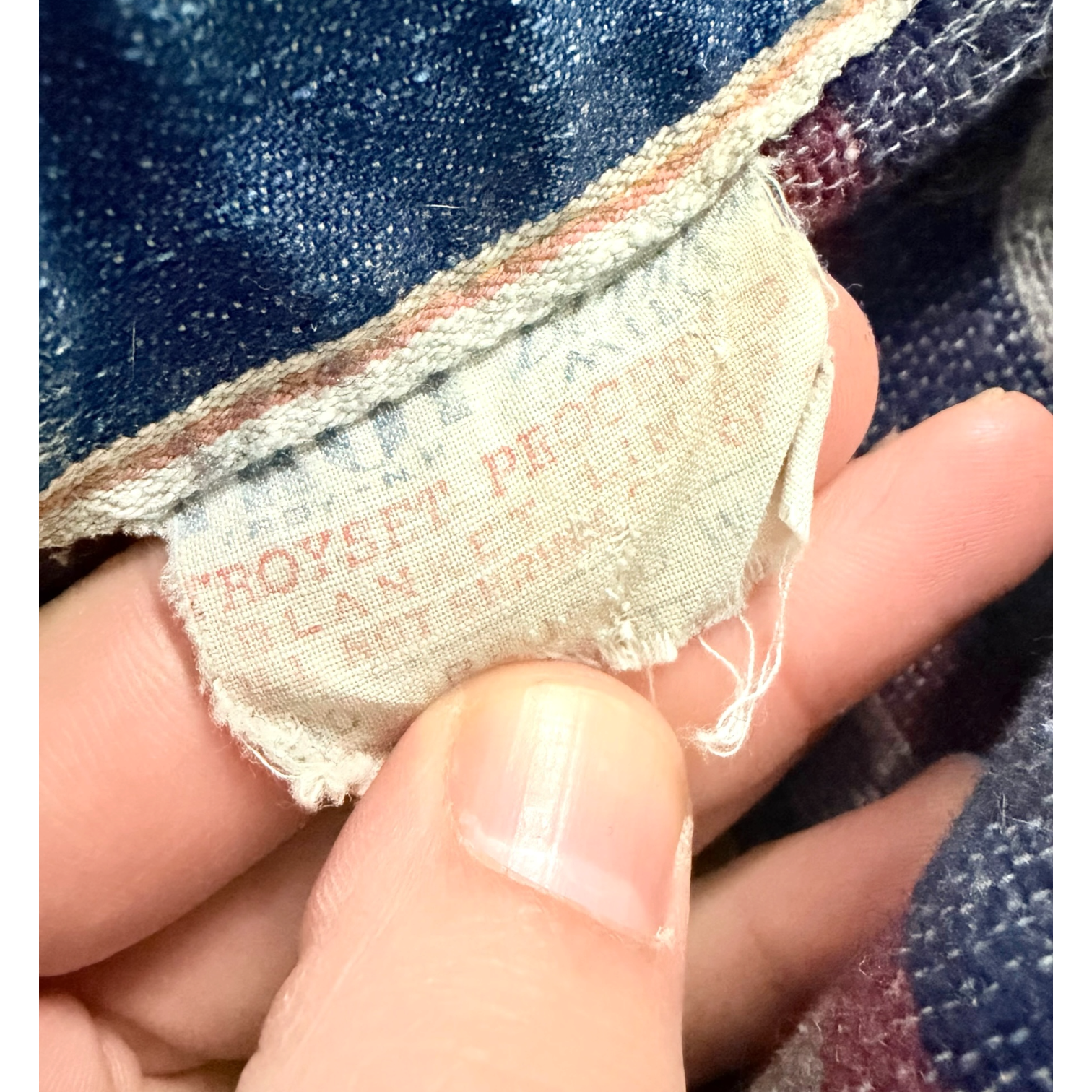
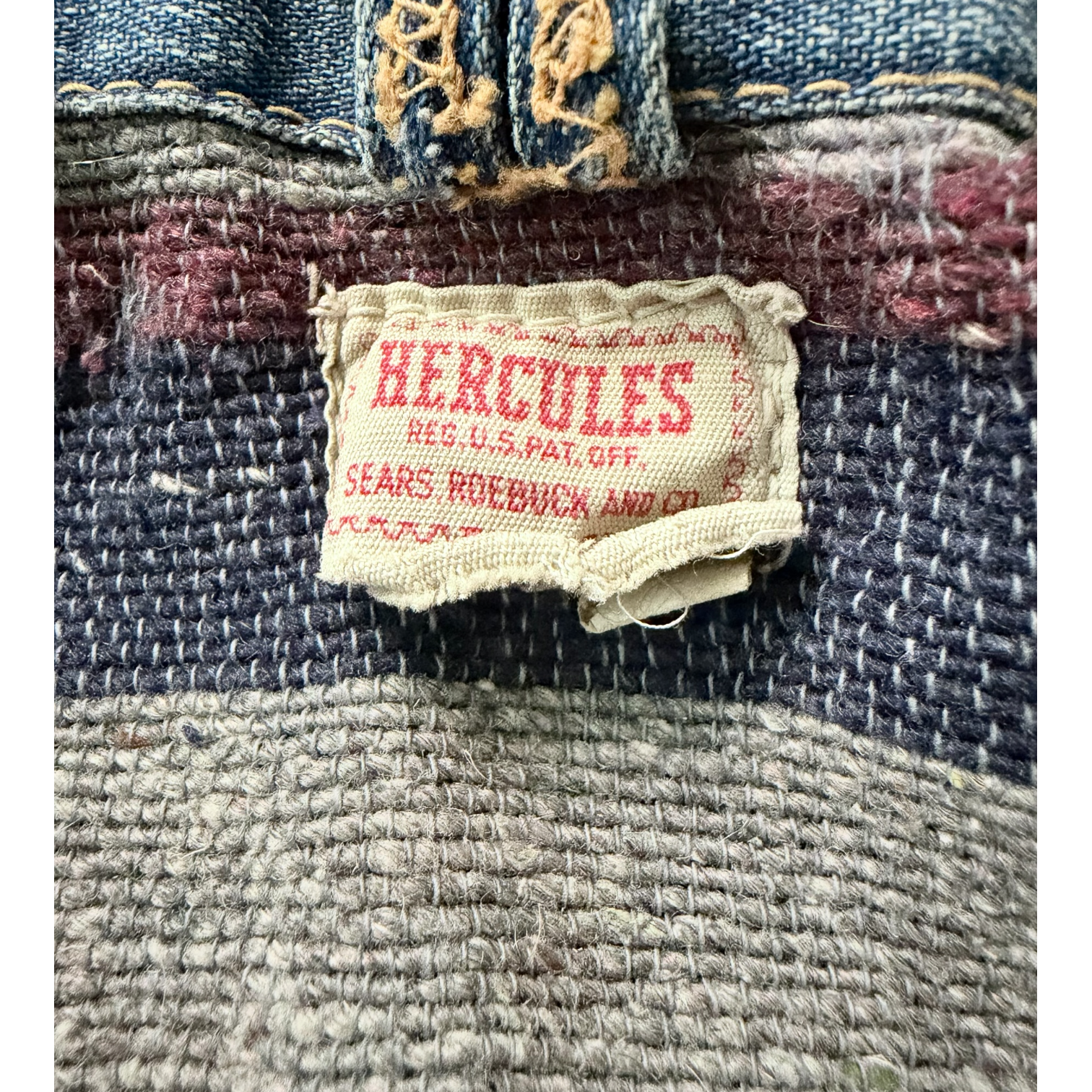
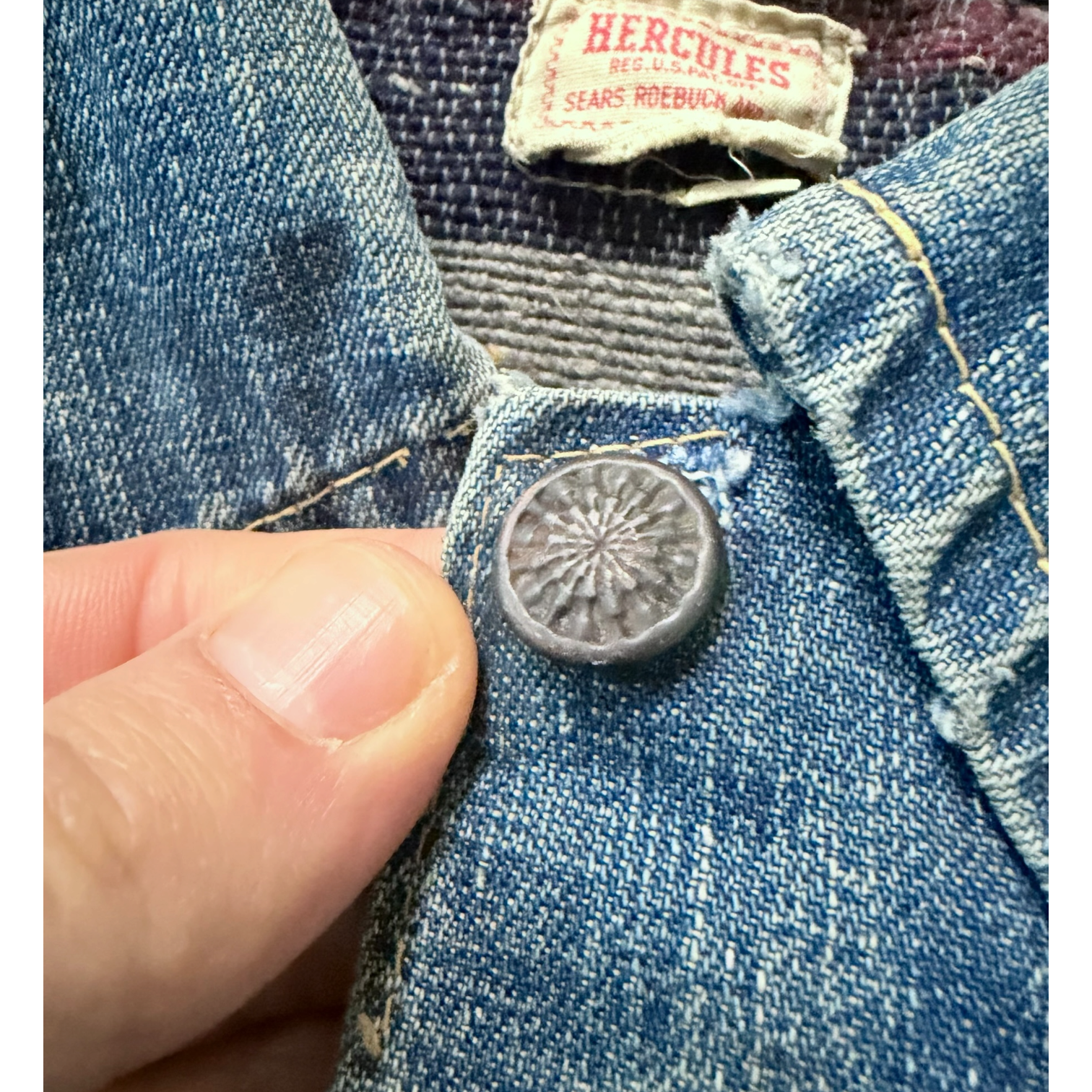
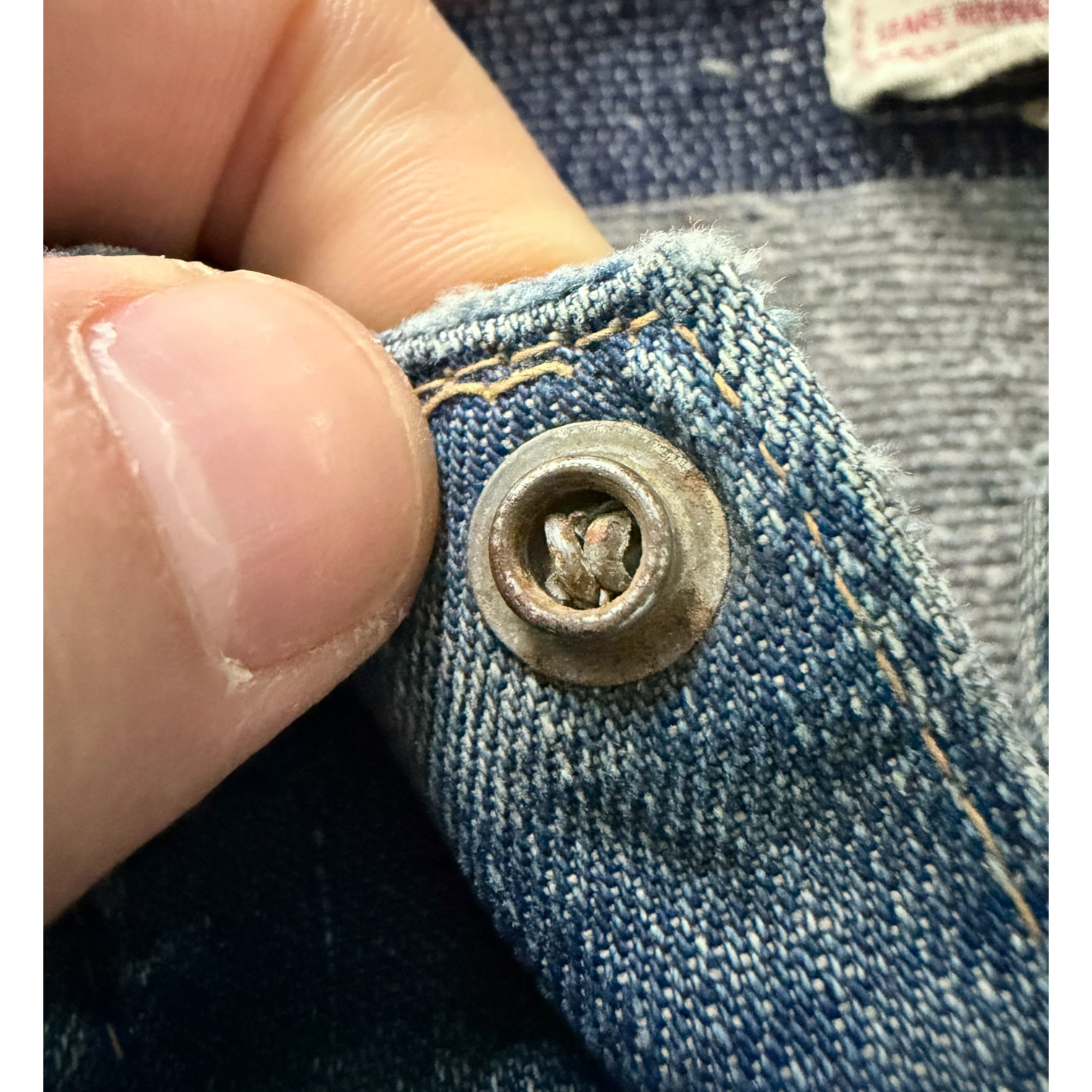
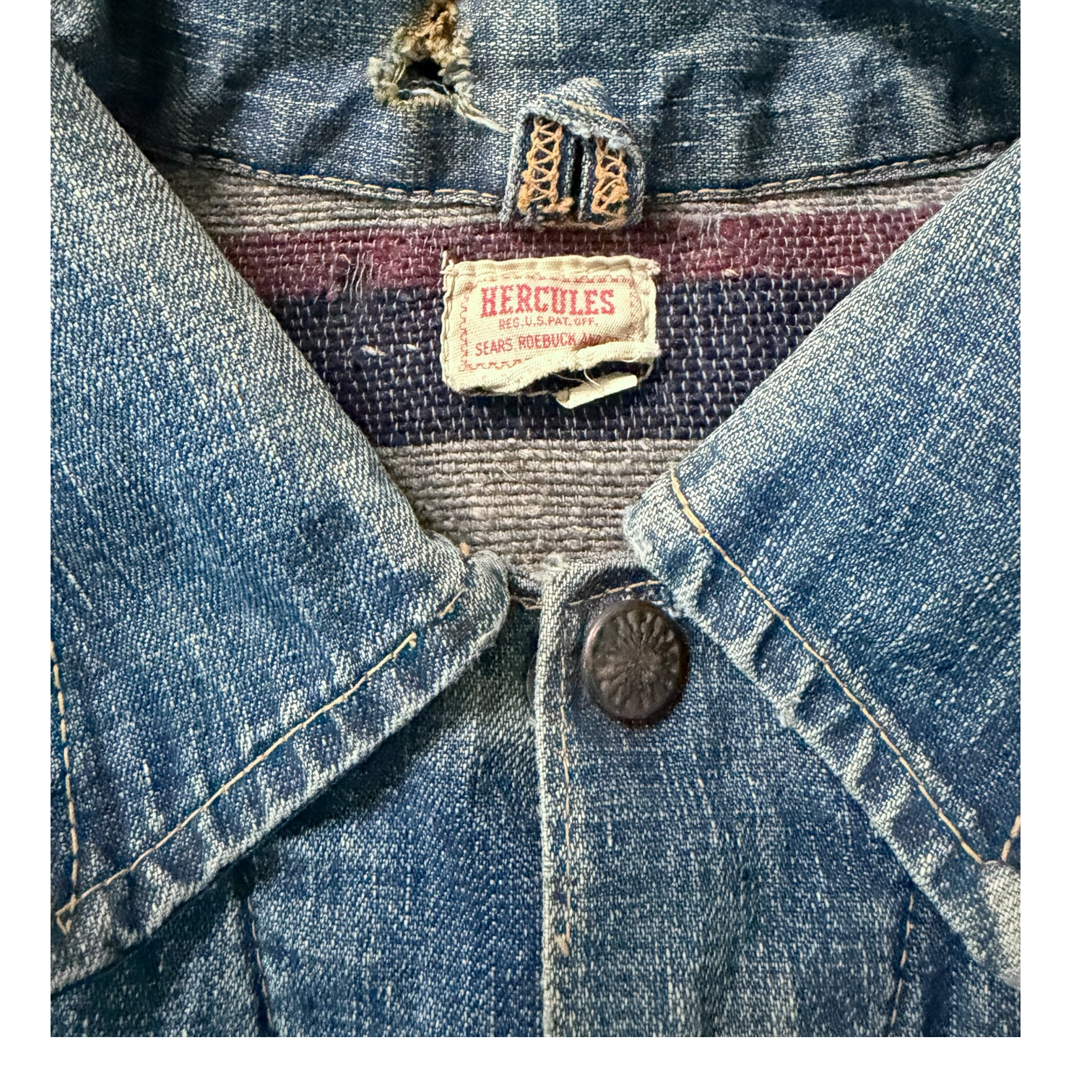
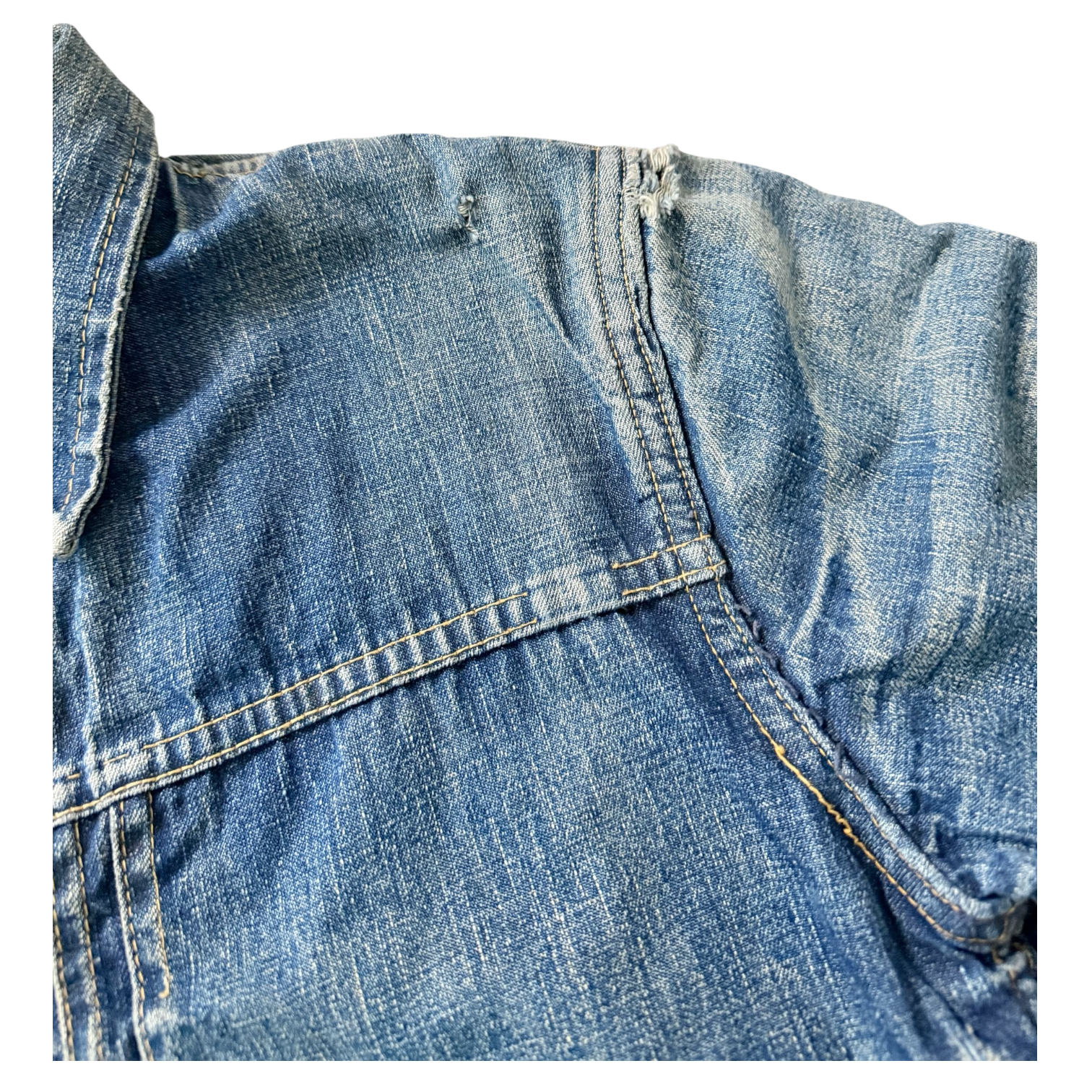
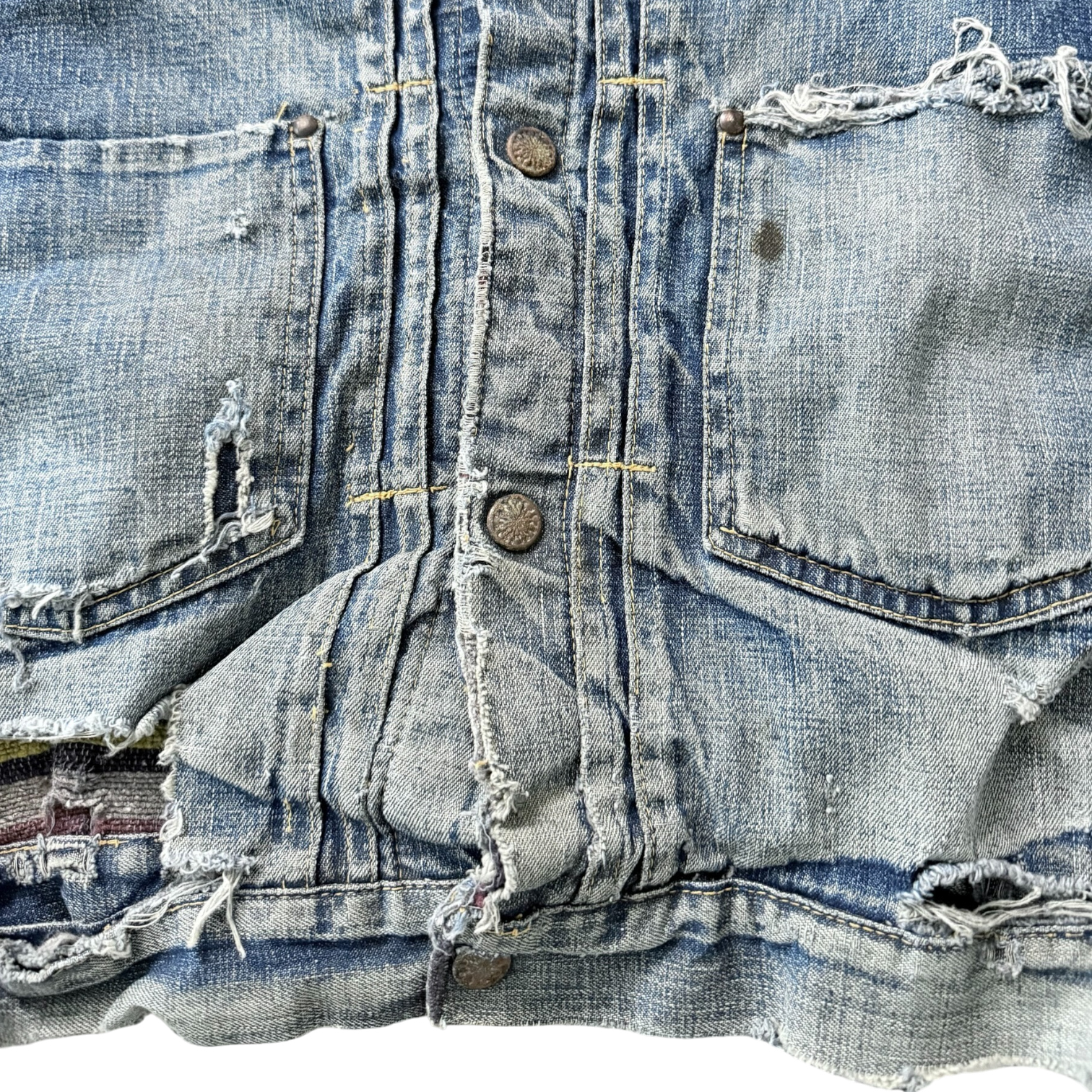
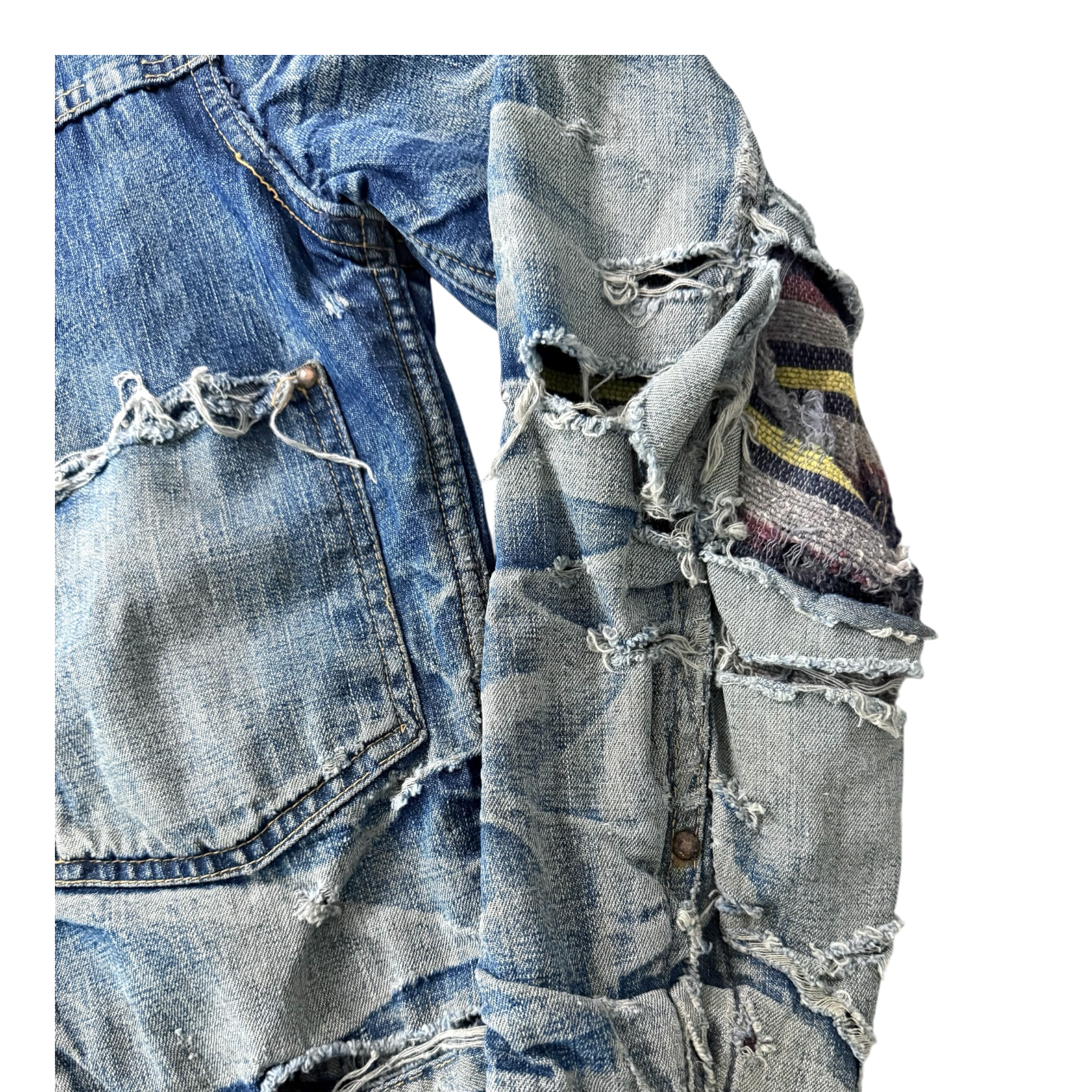
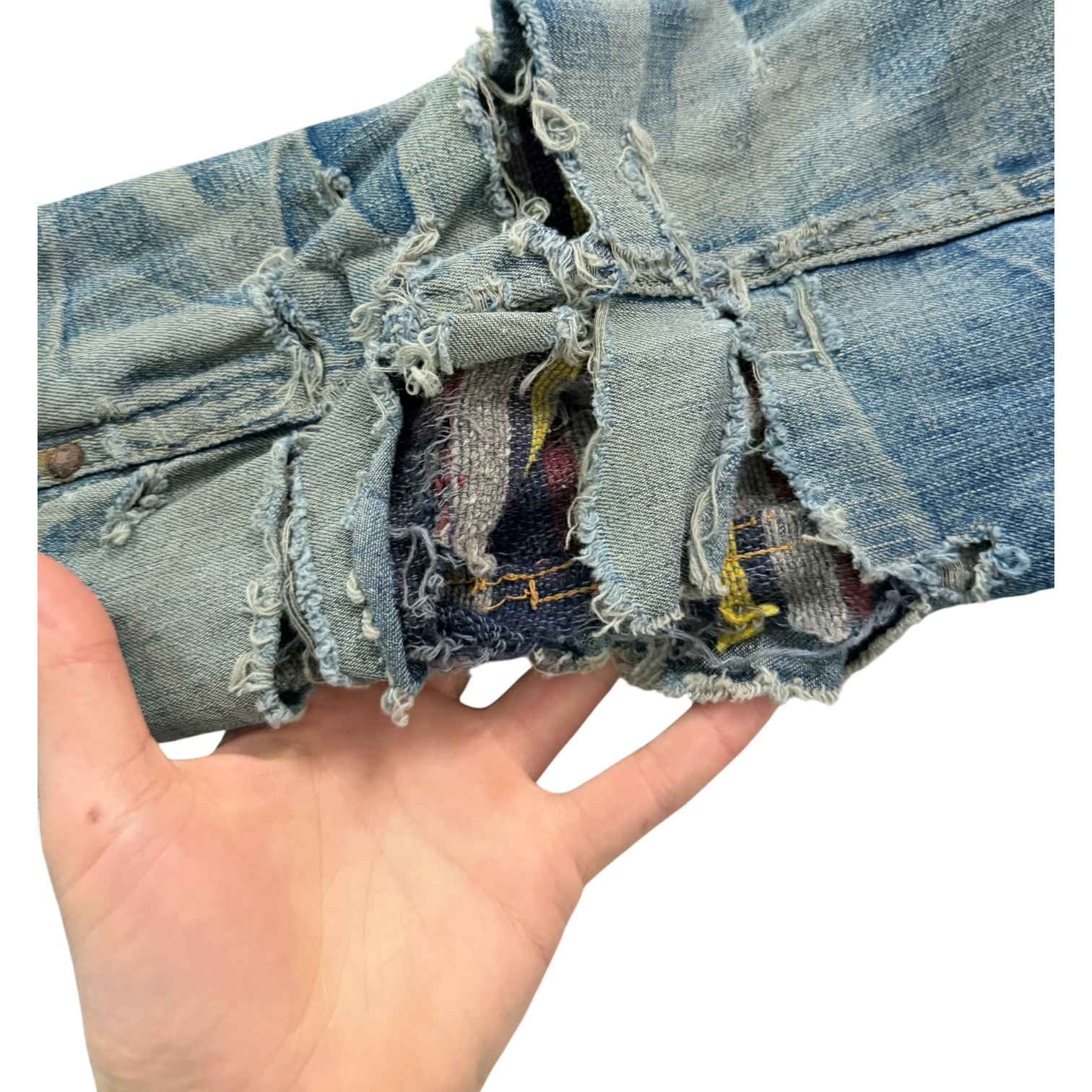
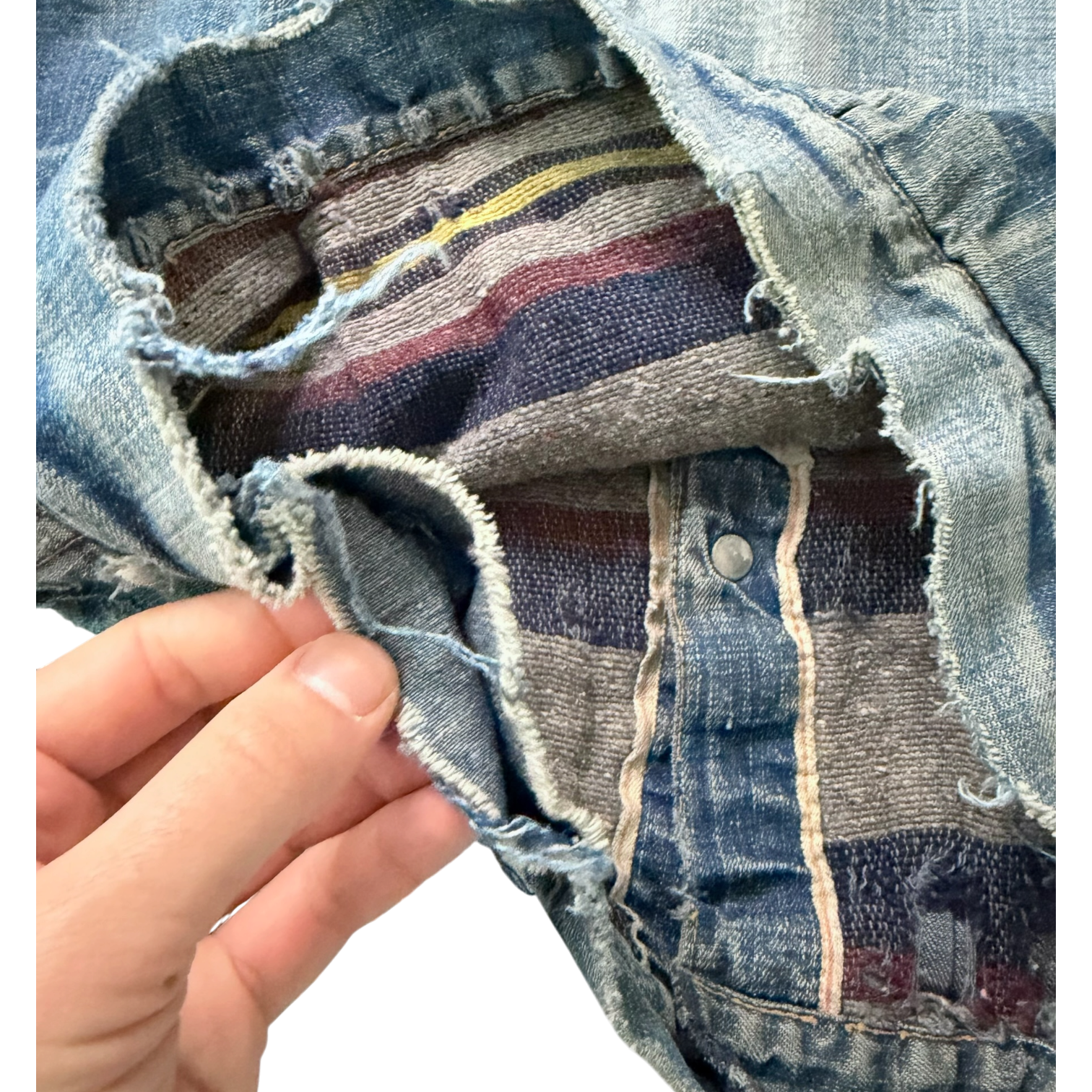
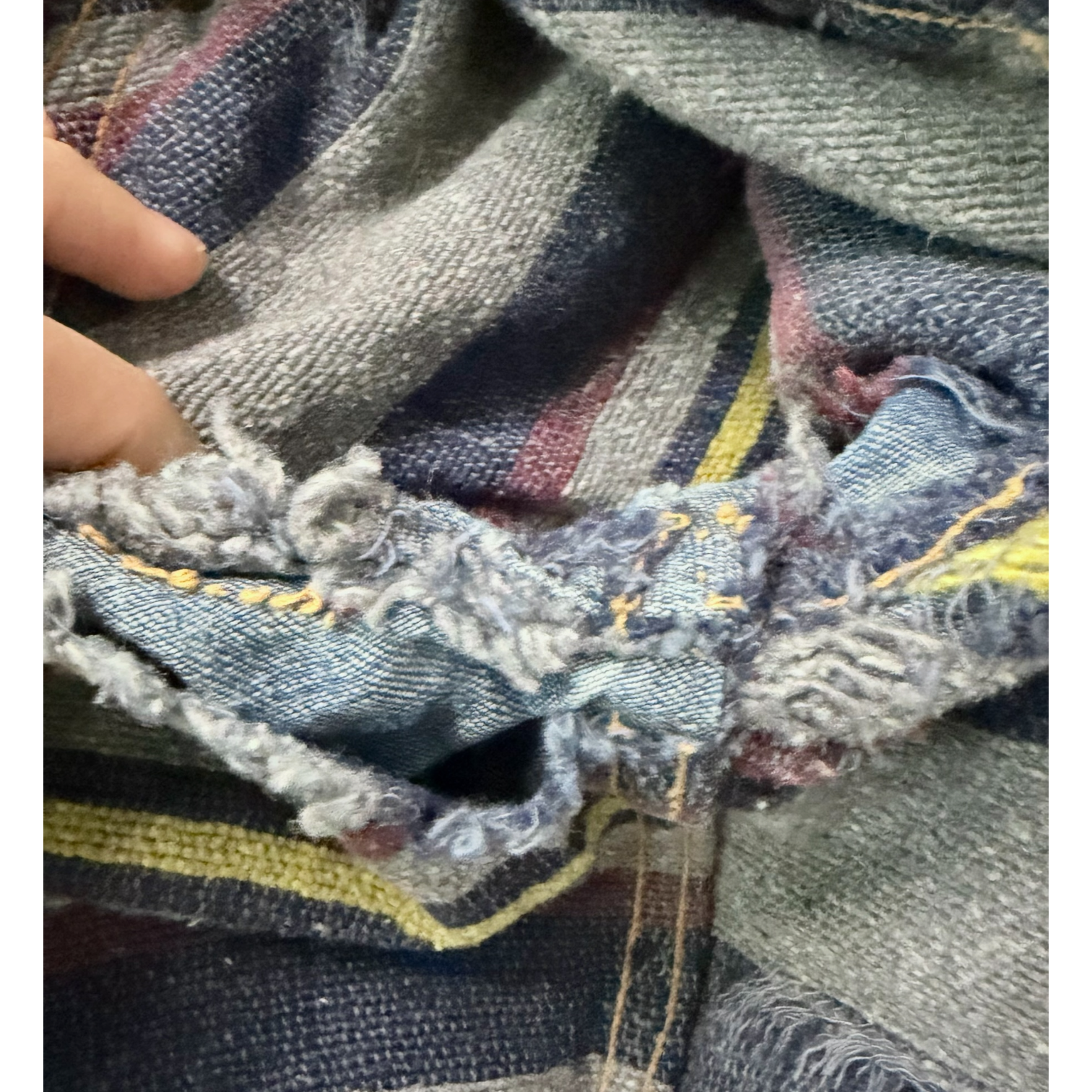
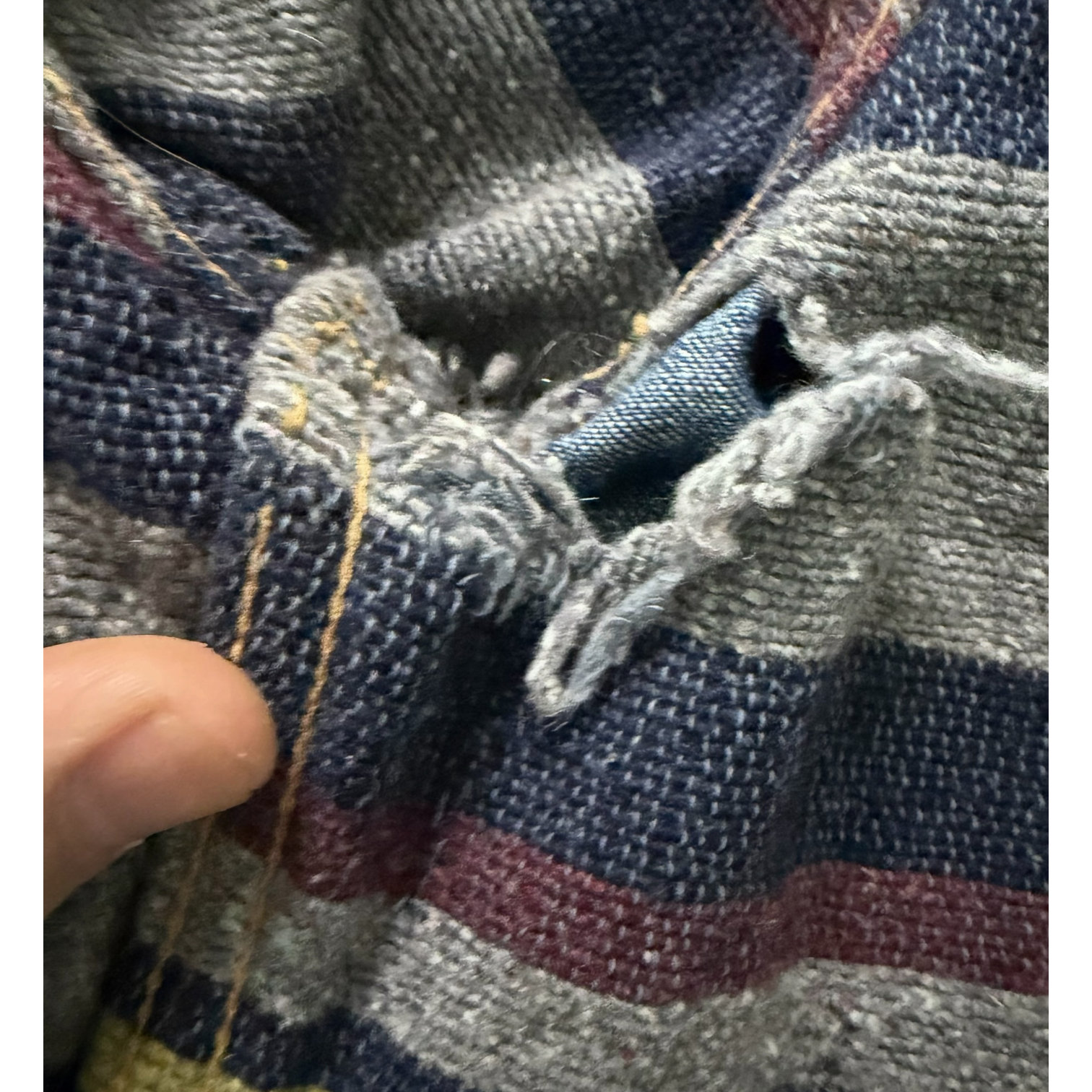
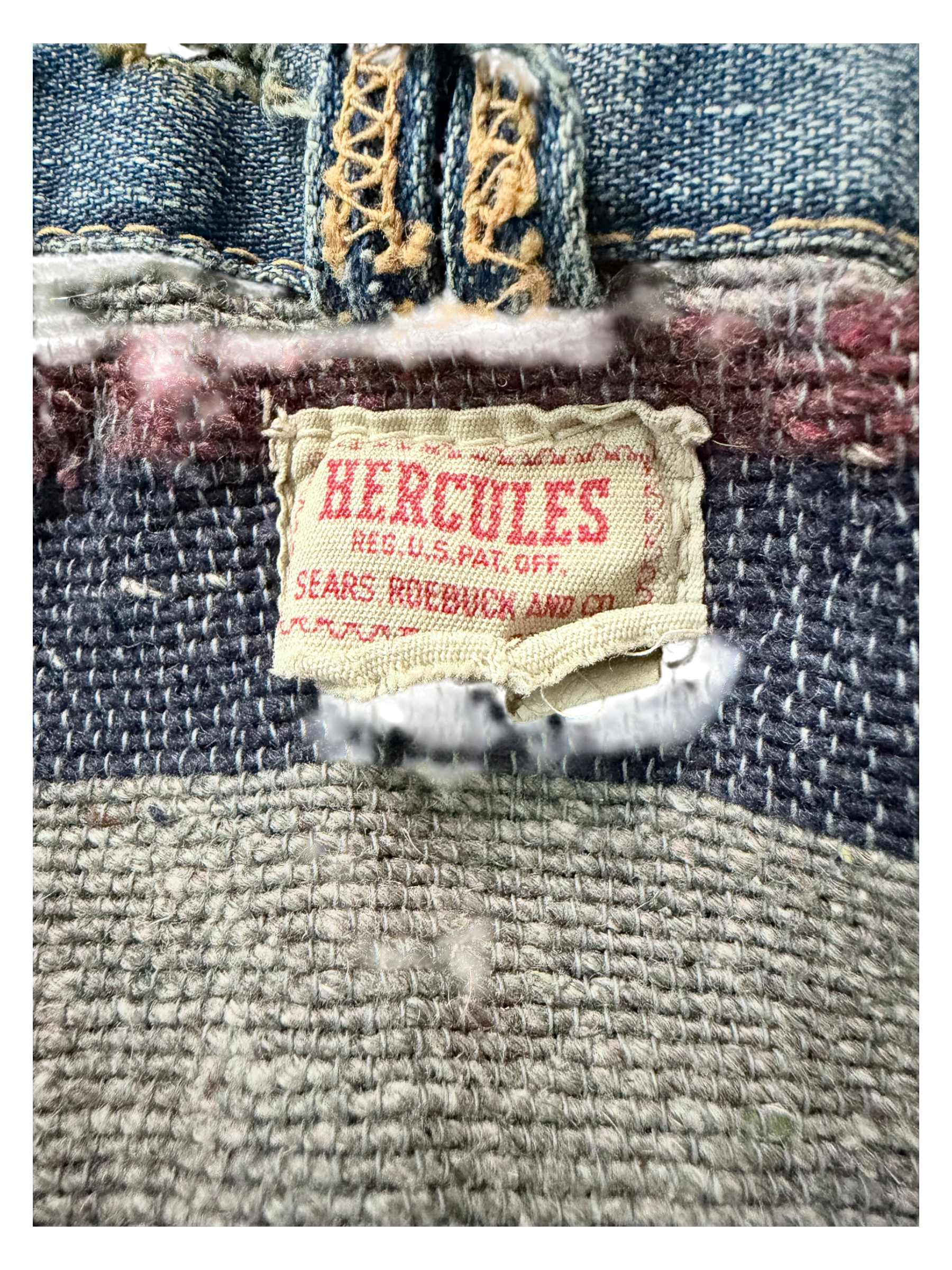
The garment features the legendary "sunburst" or "starburst" metal buttons, a hallmark of 1950s Hercules production that serves as a primary chronological marker for collectors. The front of the jacket is defined by two vertical pleats held in place by heavy-duty bar-tacks. These pleats were originally designed as a functional "expansion" feature for laborers who needed a greater range of motion, though they have since become one of the most recognizable aesthetic signatures of mid-century trucker jackets. The denim itself is a heavyweight, dark-indigo indigo-dyed fabric, likely in the 13.5 to 14-ounce range, which has developed a high-contrast character through years of authentic wear. The inclusion of the "Troyset" striped blanket lining, produced by the storied Troy Mills of New Hampshire, adds both historical weight and thermal utility. Finding a specimen that retains both the Hercules neck tag and the Troyset lining tag is increasingly rare, as these were often removed or lost to heavy laundering.
The Anatomy of Authentic Distress
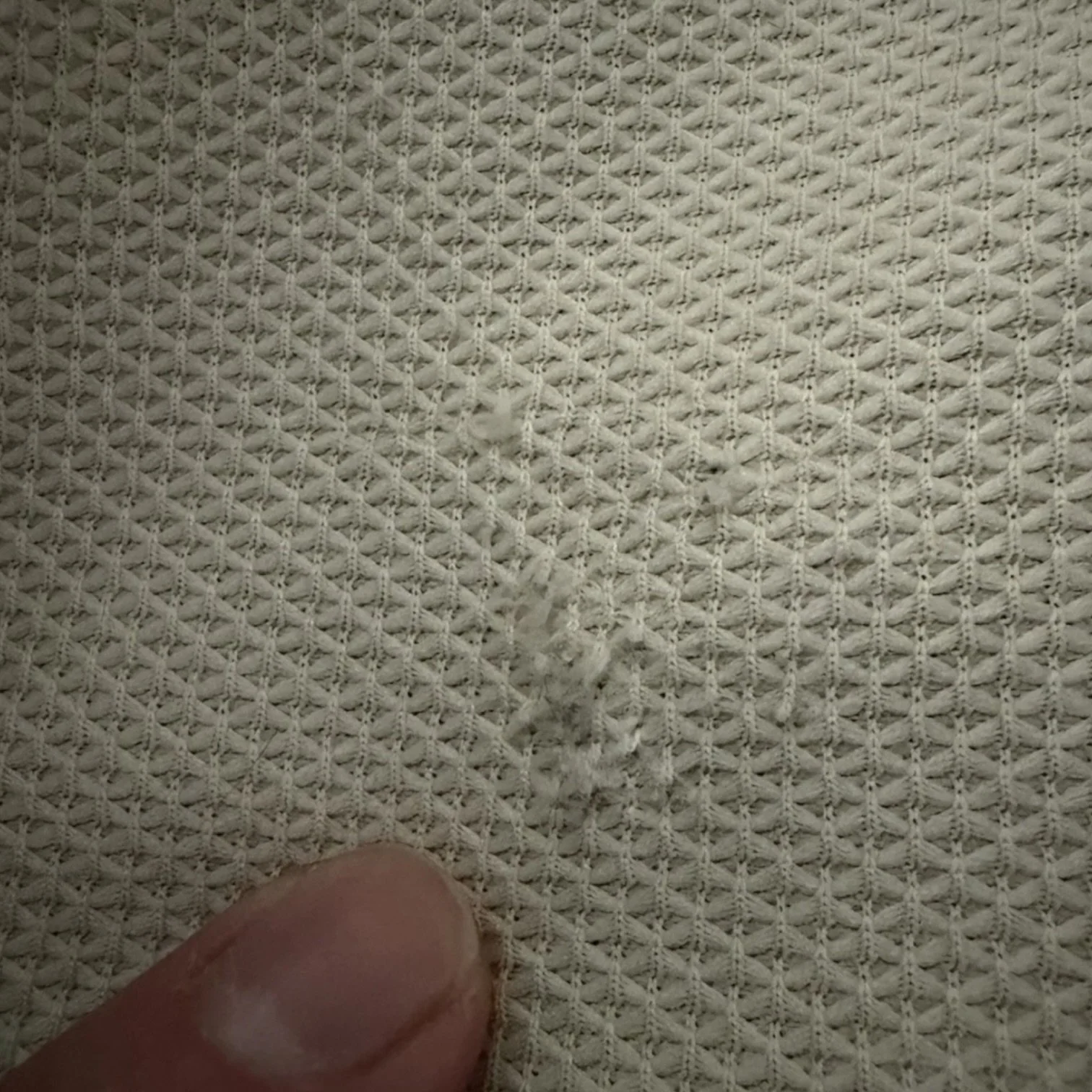
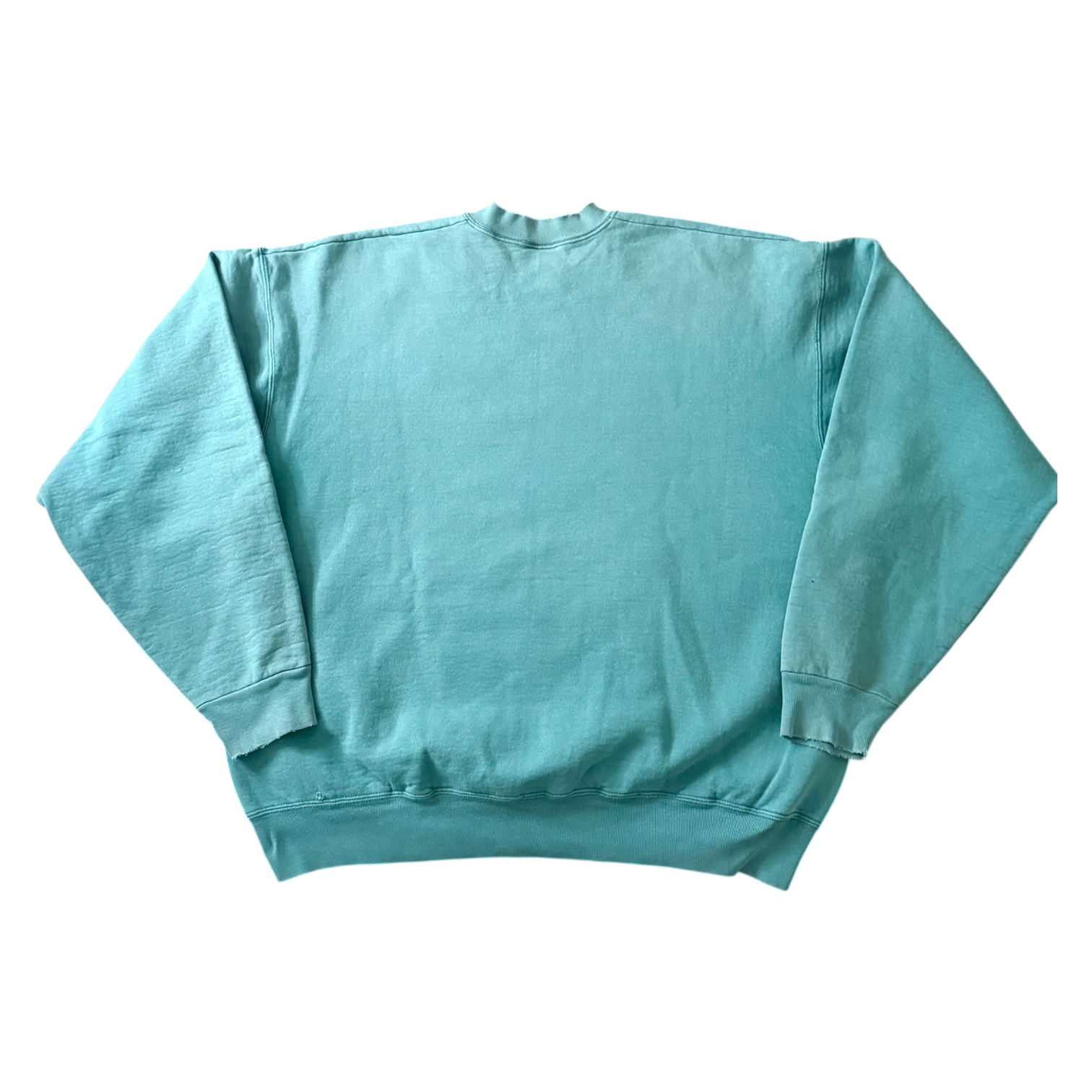
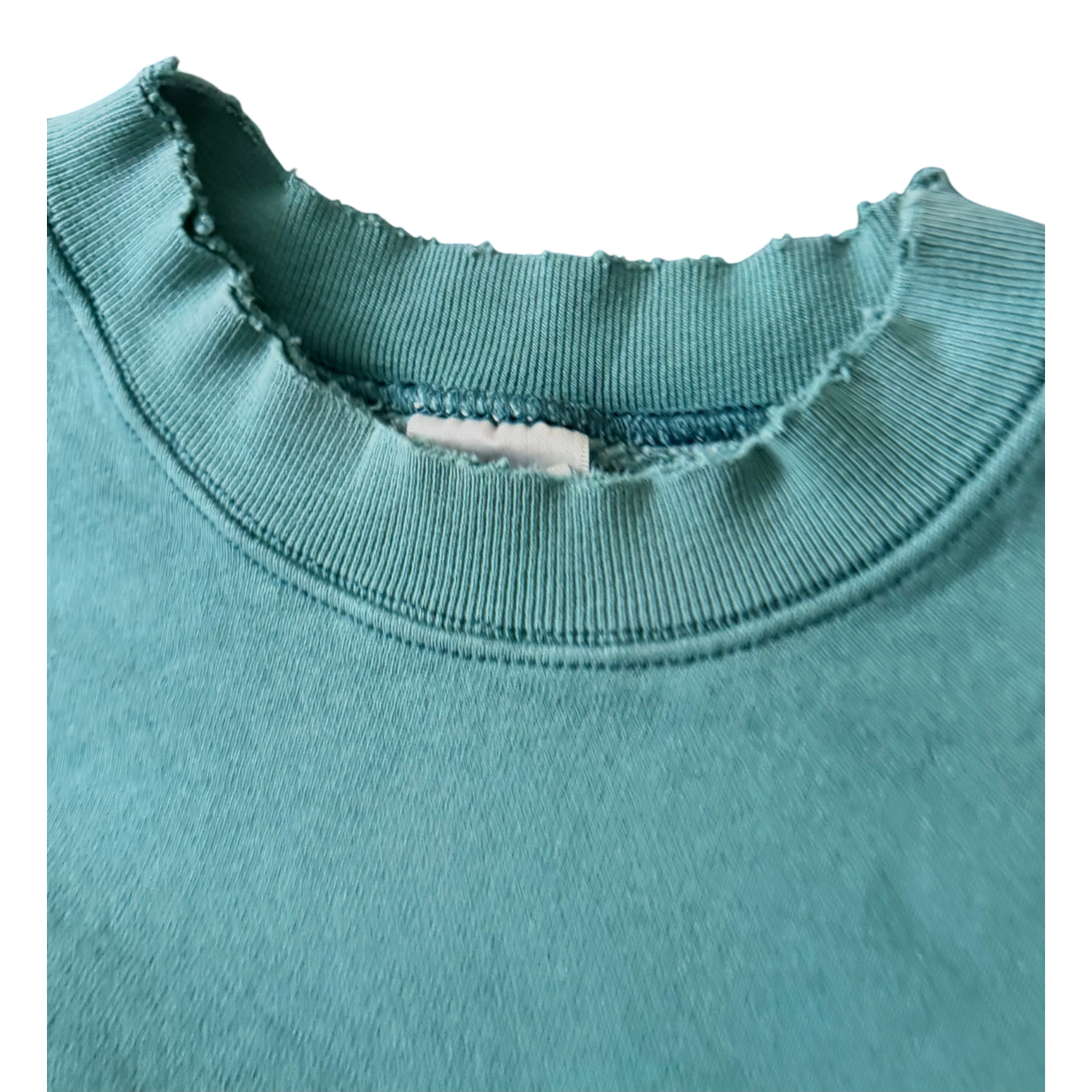
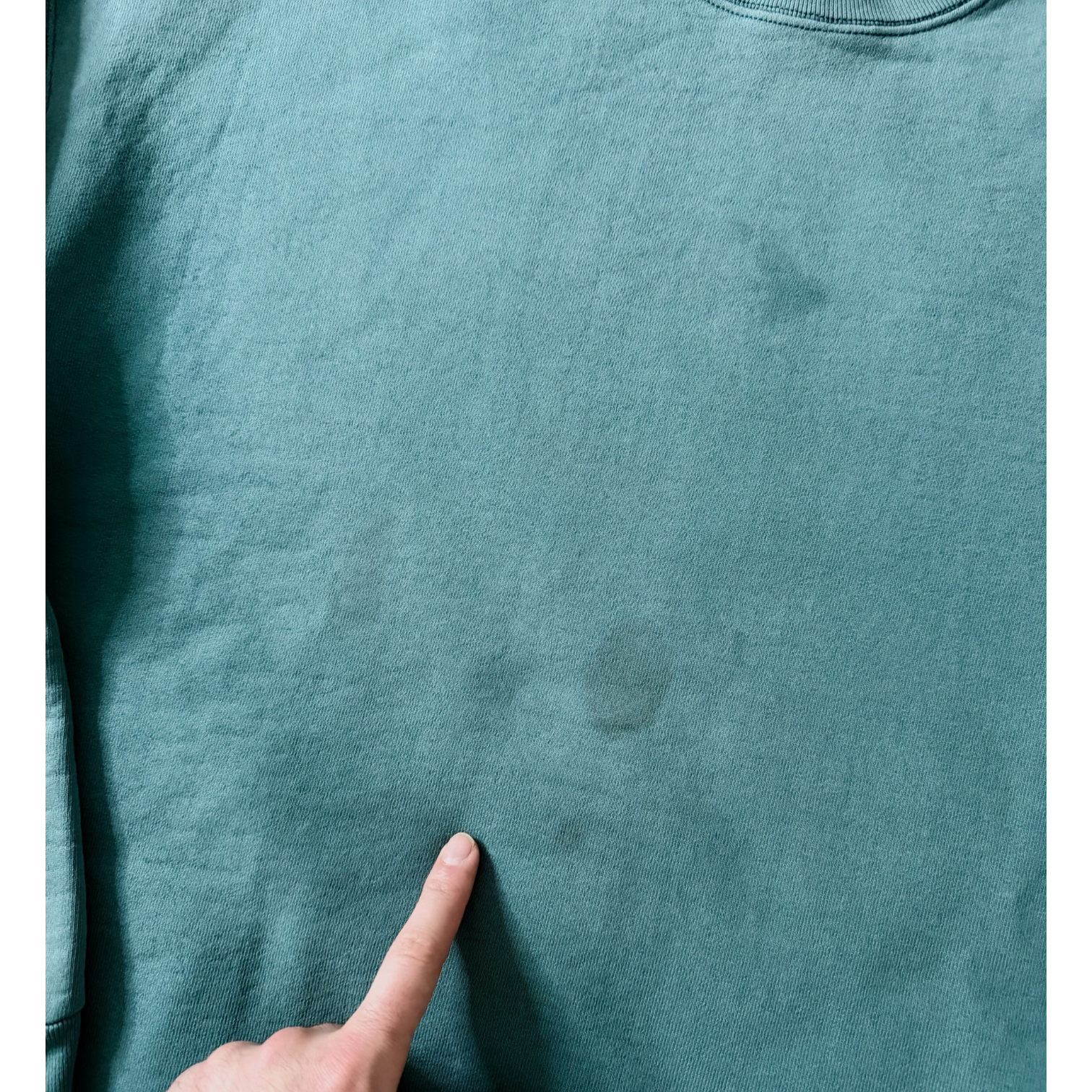
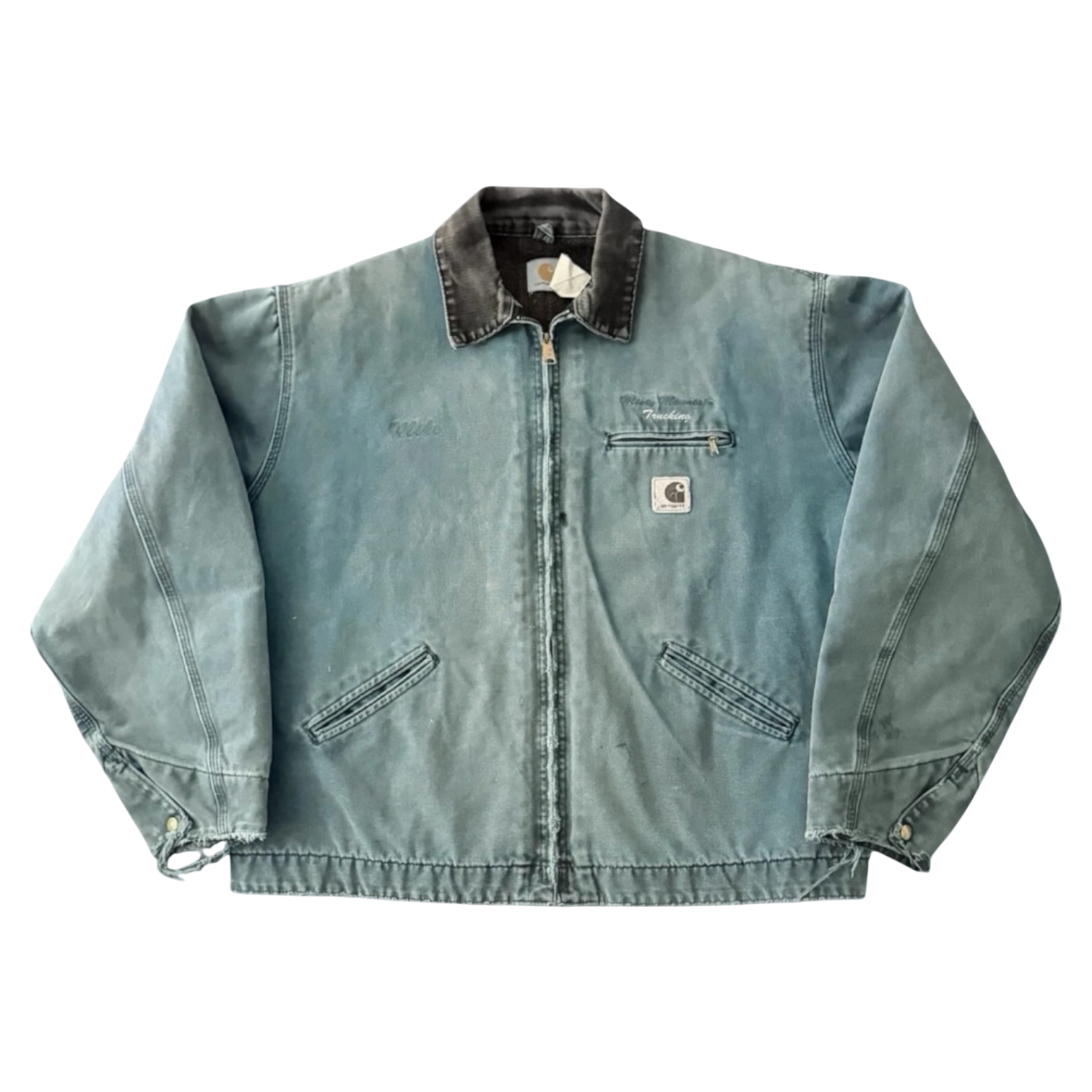
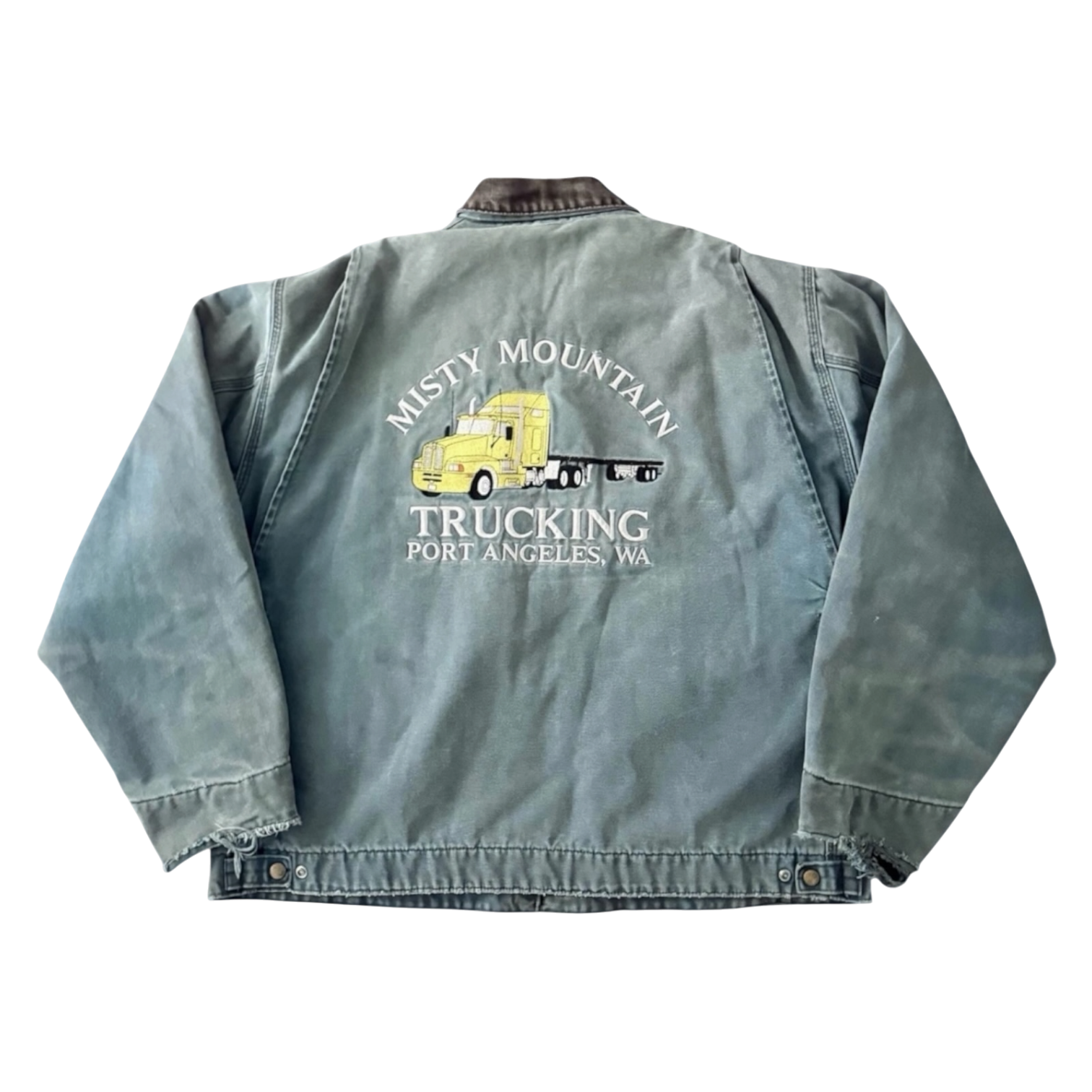
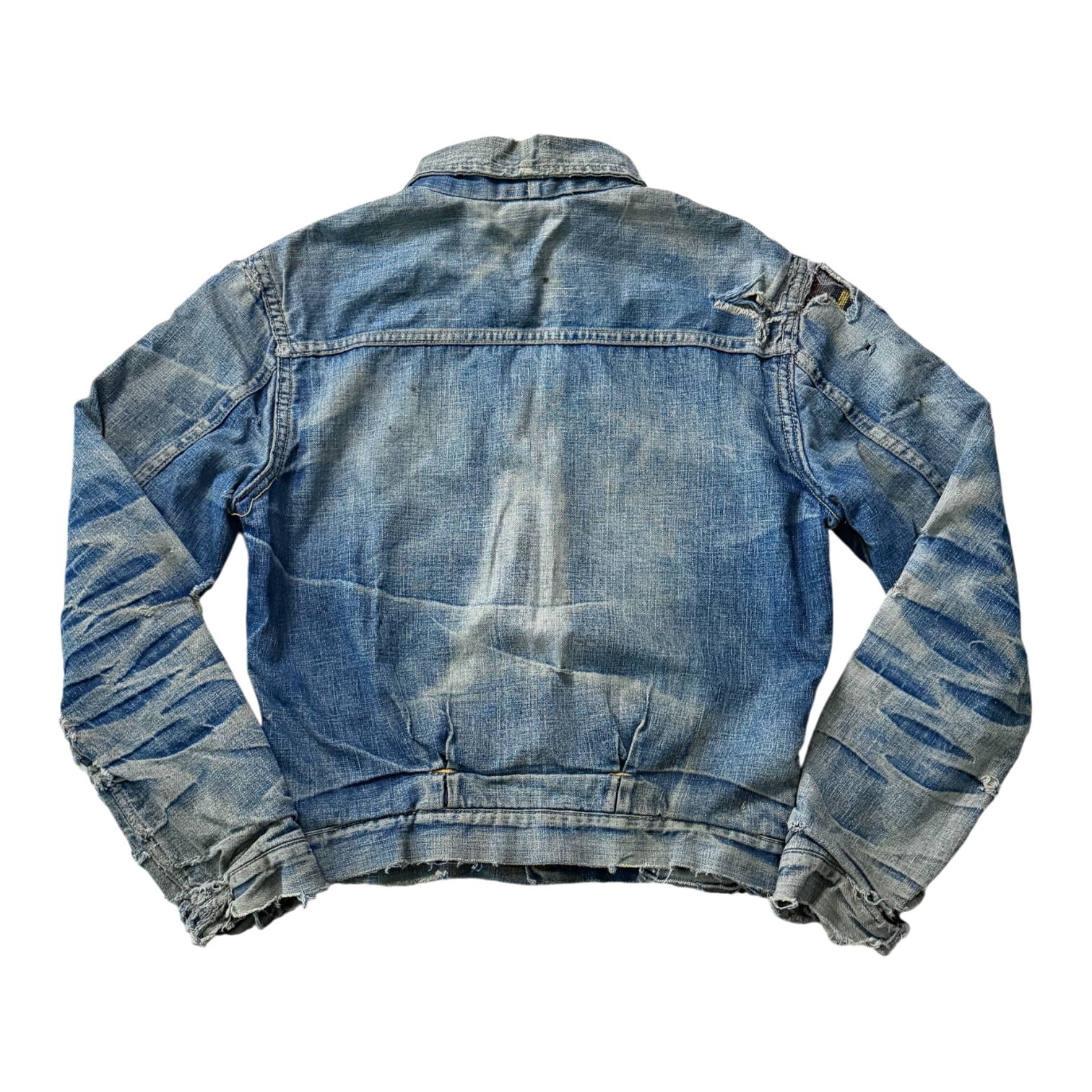
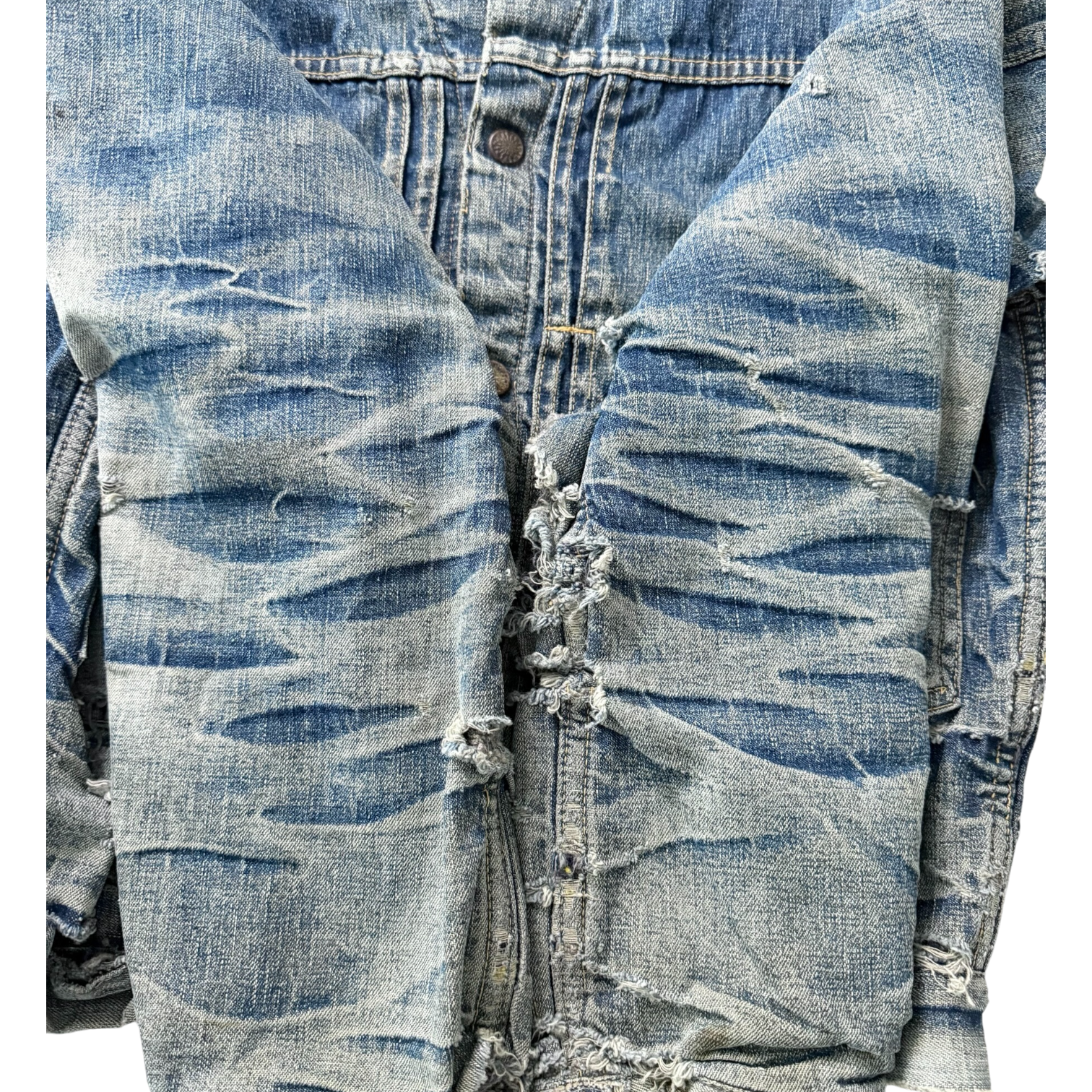
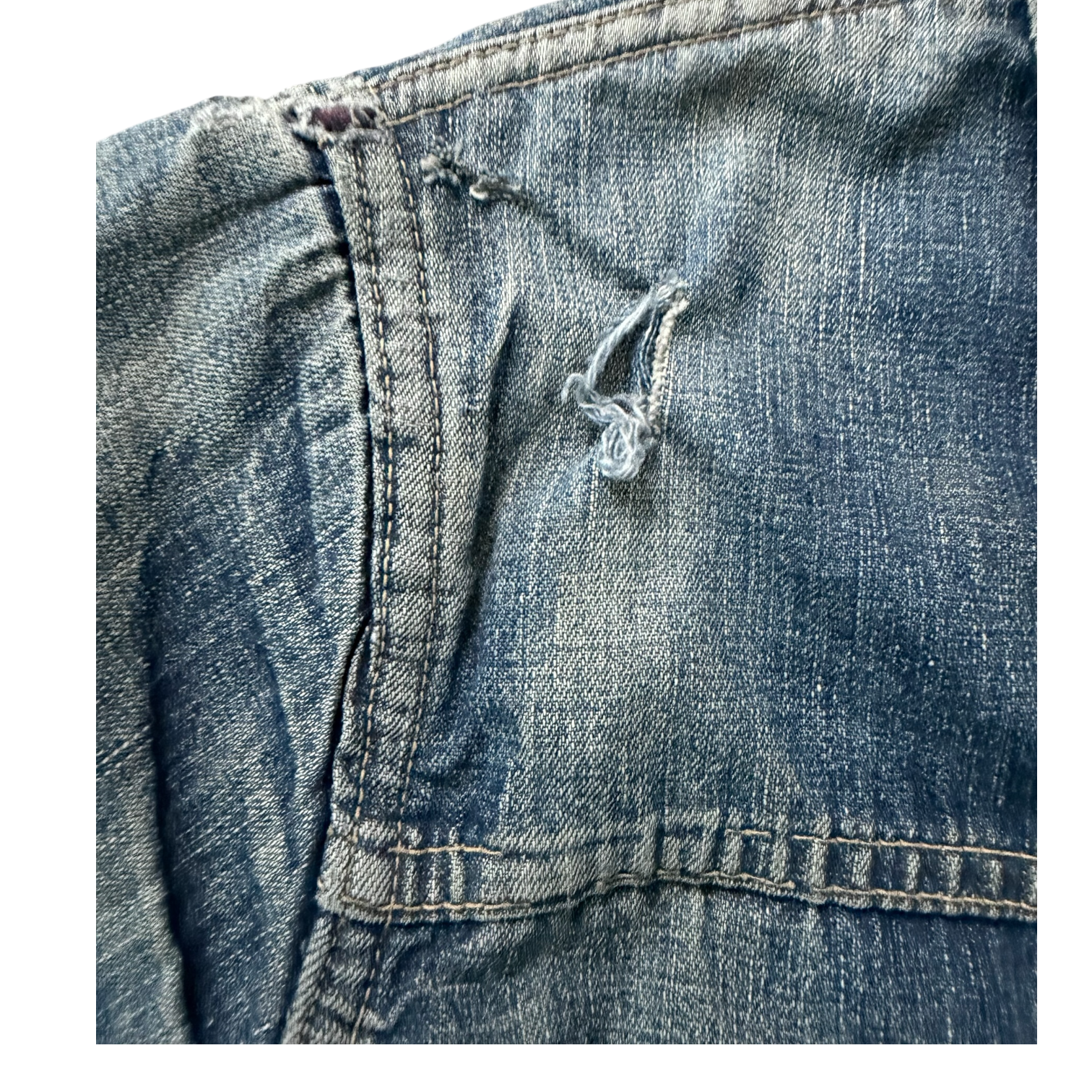
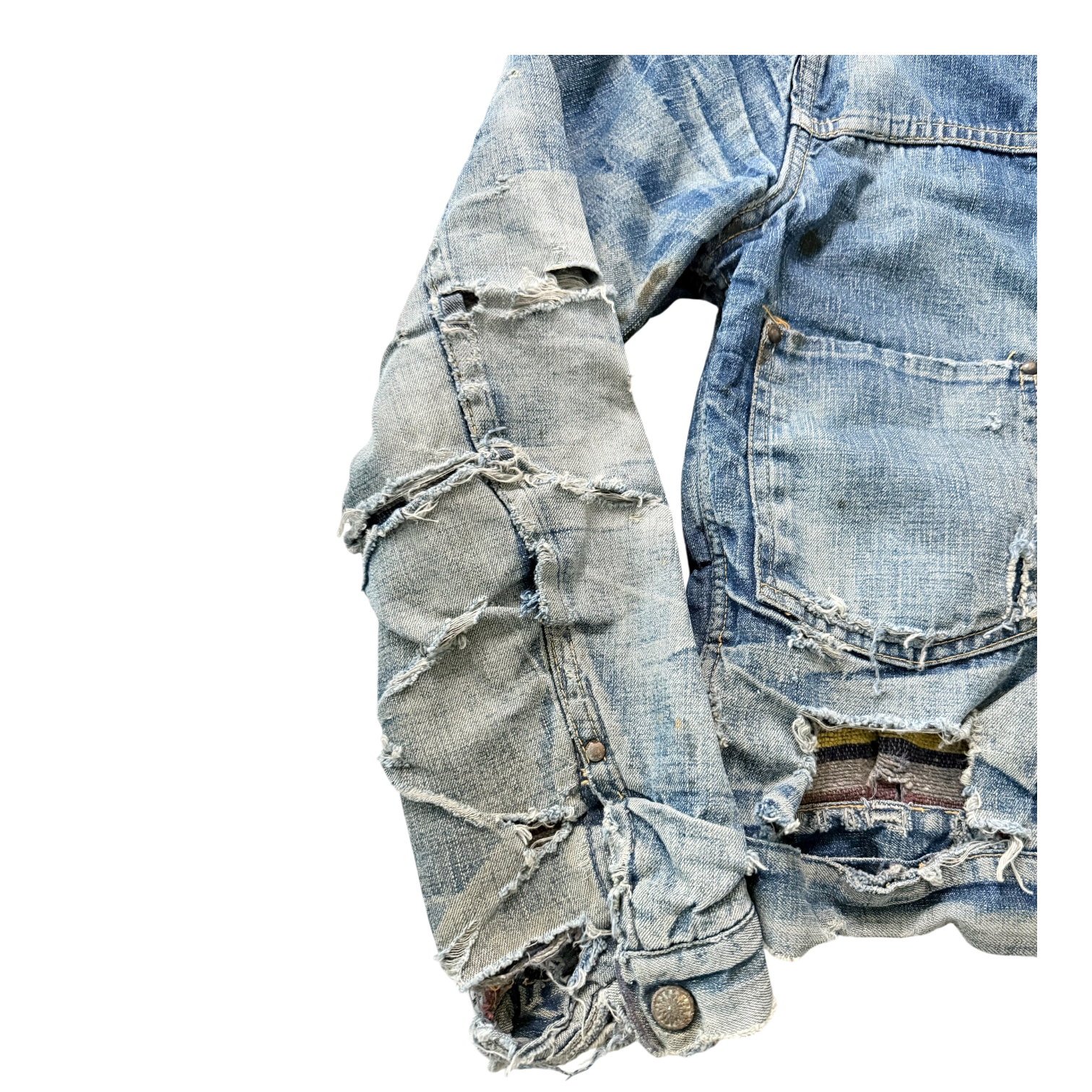
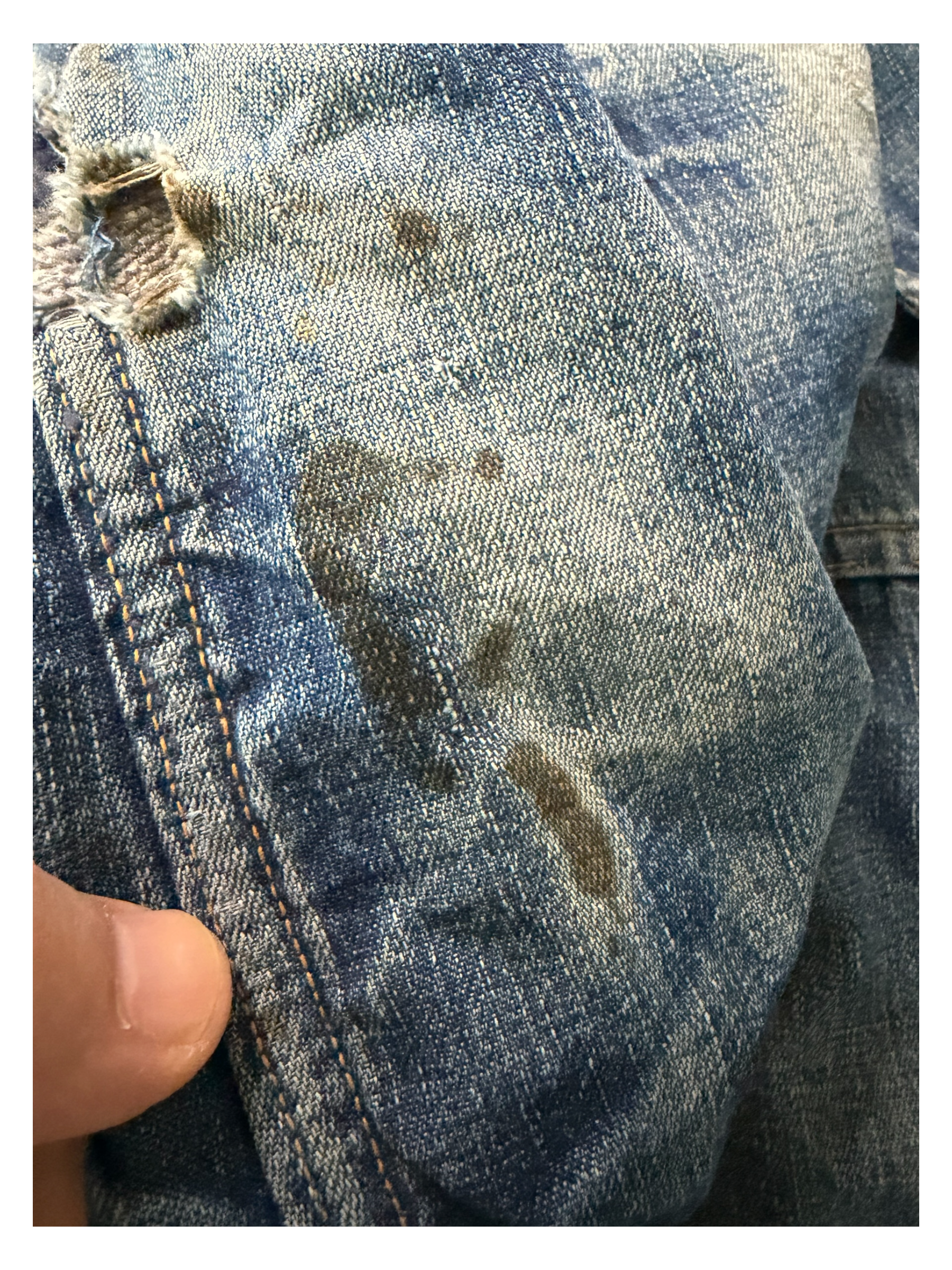
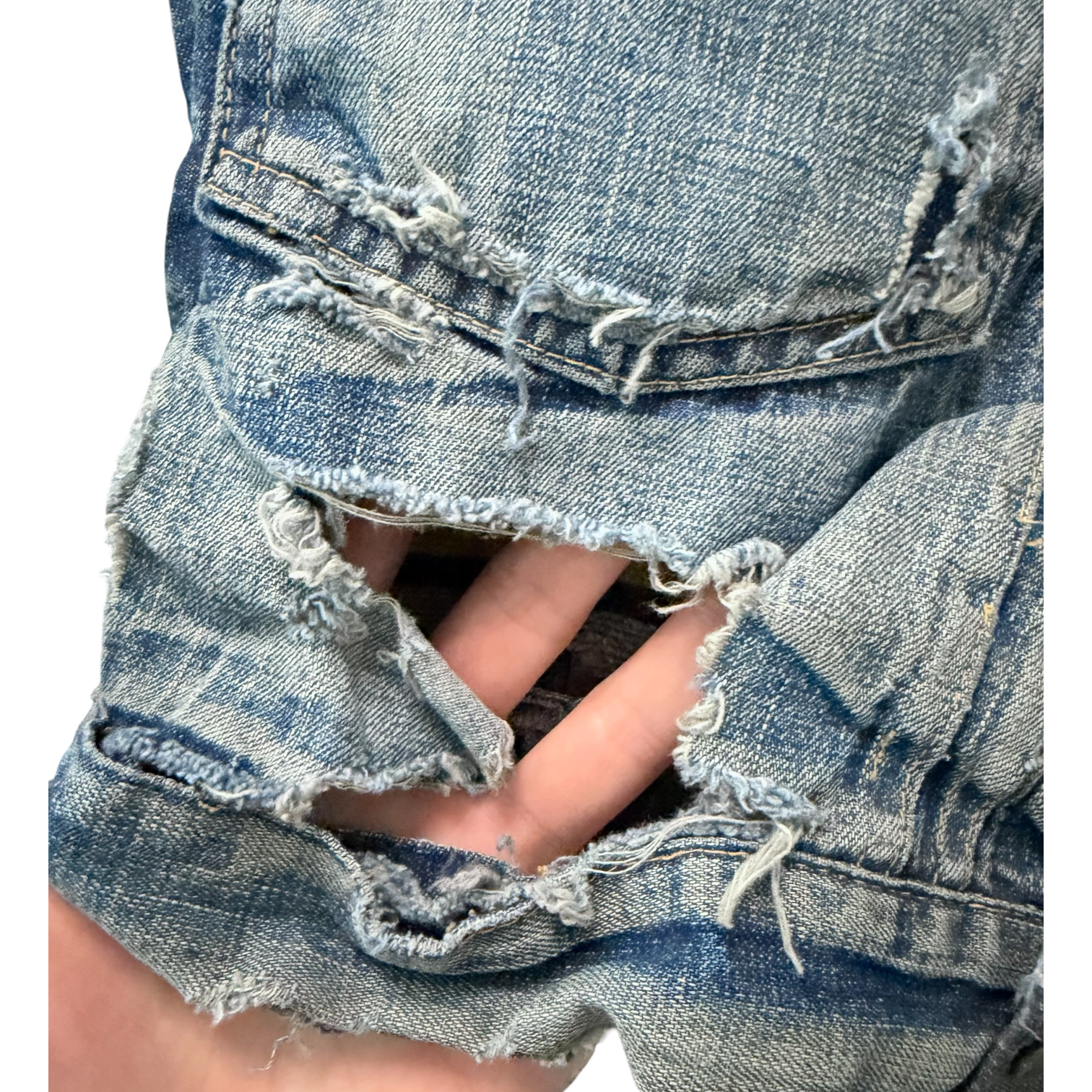
This jacket possesses a "true thrashed" condition that represents the full lifecycle of a garment built for work. The distressing found throughout the piece is entirely organic, featuring pronounced honeycombing across the sleeves—a wear pattern caused by the repeated bending of the elbows that only occurs in high-quality, raw denim over many years. The jacket exhibits multiple areas of tearing, fraying, and fabric breakdown, including notable holes at the underarms and significant abrasion at the cuffs and collar. This level of wear is highly prioritized in the archival market because it visually communicates a genuine provenance that artificial distressing cannot replicate. Despite the extensive cosmetic wear, the jacket remains structurally stable and wearable, offering a sophisticated patina of labor that makes it a premier candidate for high-end styling or historical reference.
Measurements and Dimensional Context
The jacket follows the traditional "cropped" proportions of the 1950s, designed to sit higher on the waist to accommodate work belts and high-rise trousers. This specific Medium fits true to the era's slimmer, more athletic tailoring.
1. Chest (Pit to Pit): 20 inches
2. Length (Nape to Hem): 22 inches
3. Sleeve (Mid-Collar to Cuff): 32.5 inches
4. Waist (Buttoned Across): 16 inches
Historical Significance and Brand Heritage
This is an authentic 1950s Hercules denim trucker jacket, a definitive artifact of mid-century American labor manufactured for Sears, Roebuck & Co. During the 1950s, Hercules was the premier house brand for Sears, engineered to compete directly with the "Big Three" denim giants by offering superior utility and rugged construction. This specific model utilizes the iconic Type II silhouette, characterized by its pleated front and dual chest pocket configuration. While Levi’s popularized this design, the Hercules iteration is often more sought after by niche collectors for its unique hardware and specialized linings. This jacket represents a specific moment in post-war American industry when workwear was built with an uncompromising focus on longevity, utilizing heavyweight shuttle-loom denim that was intended to last a lifetime of manual toil.
Technical Construction and Hardware
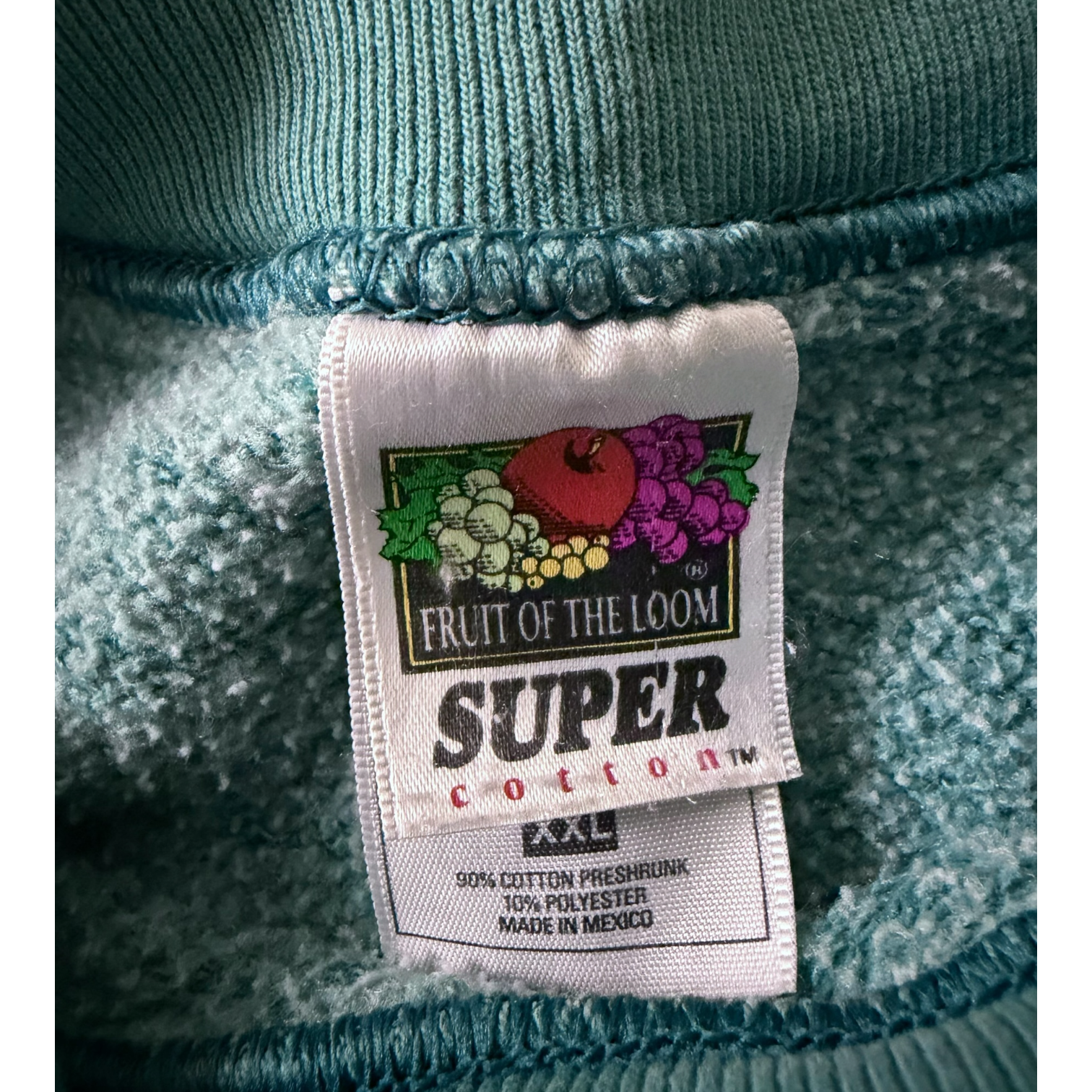
The garment features the legendary "sunburst" or "starburst" metal buttons, a hallmark of 1950s Hercules production that serves as a primary chronological marker for collectors. The front of the jacket is defined by two vertical pleats held in place by heavy-duty bar-tacks. These pleats were originally designed as a functional "expansion" feature for laborers who needed a greater range of motion, though they have since become one of the most recognizable aesthetic signatures of mid-century trucker jackets. The denim itself is a heavyweight, dark-indigo indigo-dyed fabric, likely in the 13.5 to 14-ounce range, which has developed a high-contrast character through years of authentic wear. The inclusion of the "Troyset" striped blanket lining, produced by the storied Troy Mills of New Hampshire, adds both historical weight and thermal utility. Finding a specimen that retains both the Hercules neck tag and the Troyset lining tag is increasingly rare, as these were often removed or lost to heavy laundering.
The Anatomy of Authentic Distress
This jacket possesses a "true thrashed" condition that represents the full lifecycle of a garment built for work. The distressing found throughout the piece is entirely organic, featuring pronounced honeycombing across the sleeves—a wear pattern caused by the repeated bending of the elbows that only occurs in high-quality, raw denim over many years. The jacket exhibits multiple areas of tearing, fraying, and fabric breakdown, including notable holes at the underarms and significant abrasion at the cuffs and collar. This level of wear is highly prioritized in the archival market because it visually communicates a genuine provenance that artificial distressing cannot replicate. Despite the extensive cosmetic wear, the jacket remains structurally stable and wearable, offering a sophisticated patina of labor that makes it a premier candidate for high-end styling or historical reference.
Measurements and Dimensional Context
The jacket follows the traditional "cropped" proportions of the 1950s, designed to sit higher on the waist to accommodate work belts and high-rise trousers. This specific Medium fits true to the era's slimmer, more athletic tailoring.
1. Chest (Pit to Pit): 20 inches
2. Length (Nape to Hem): 22 inches
3. Sleeve (Mid-Collar to Cuff): 32.5 inches
4. Waist (Buttoned Across): 16 inches