Product Overview
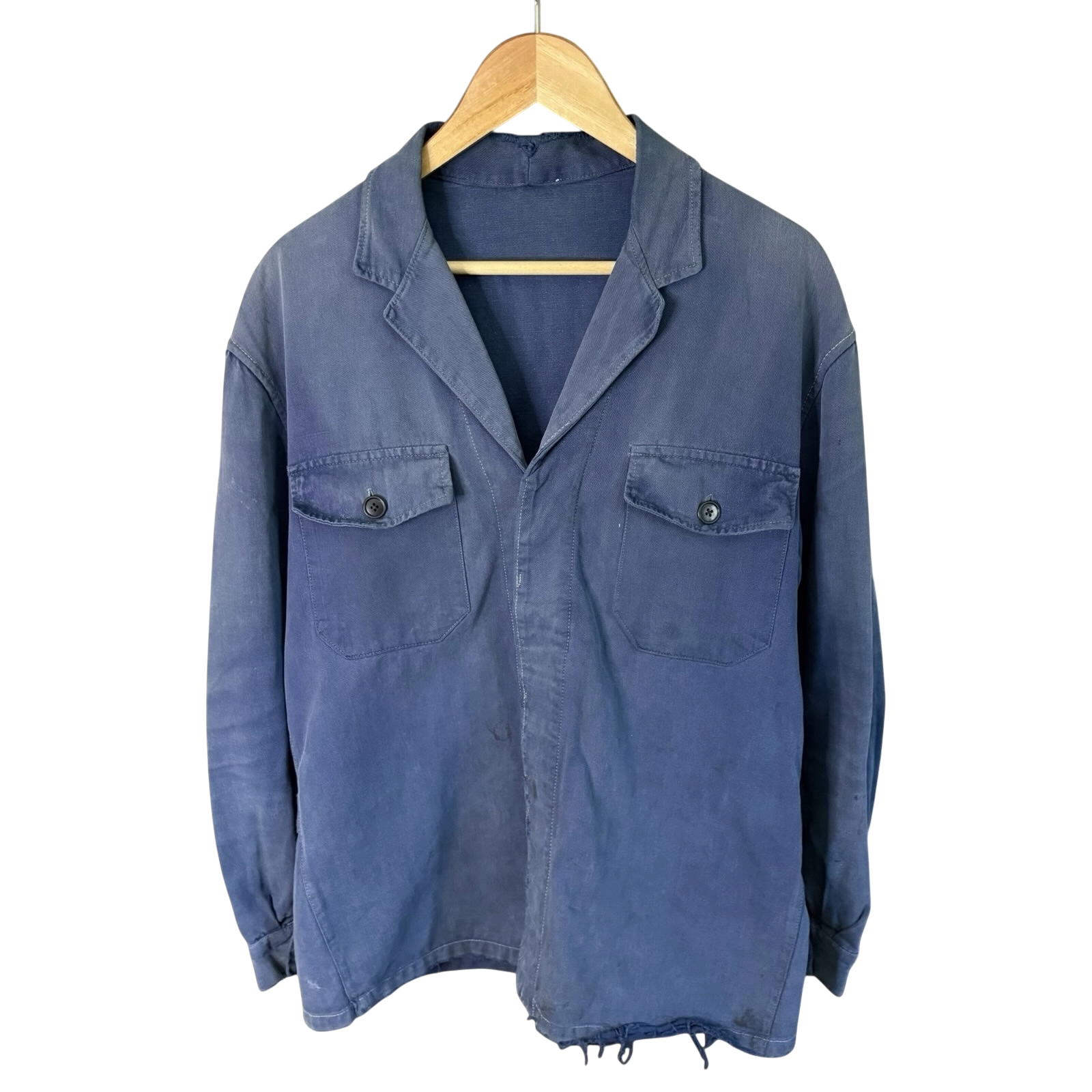
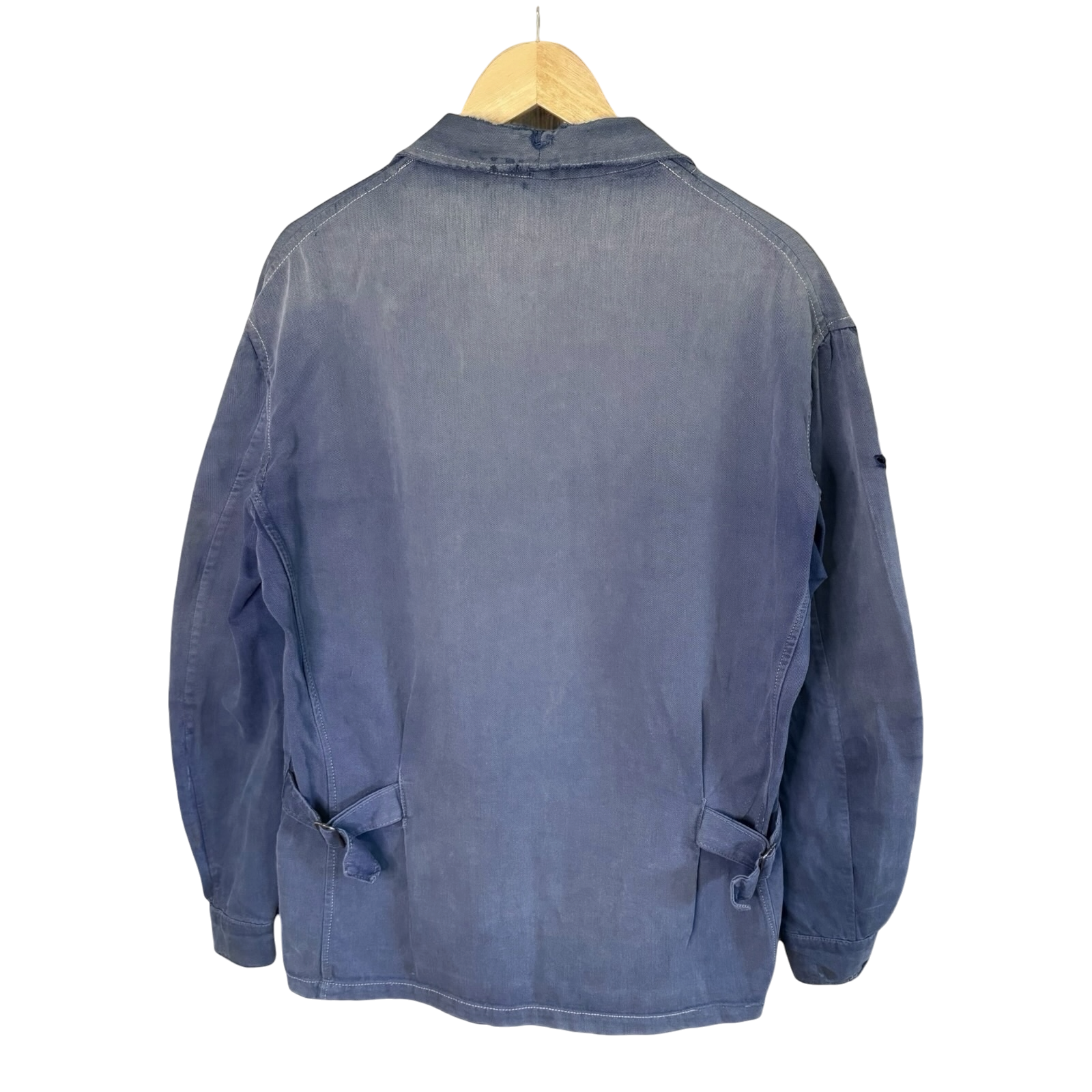
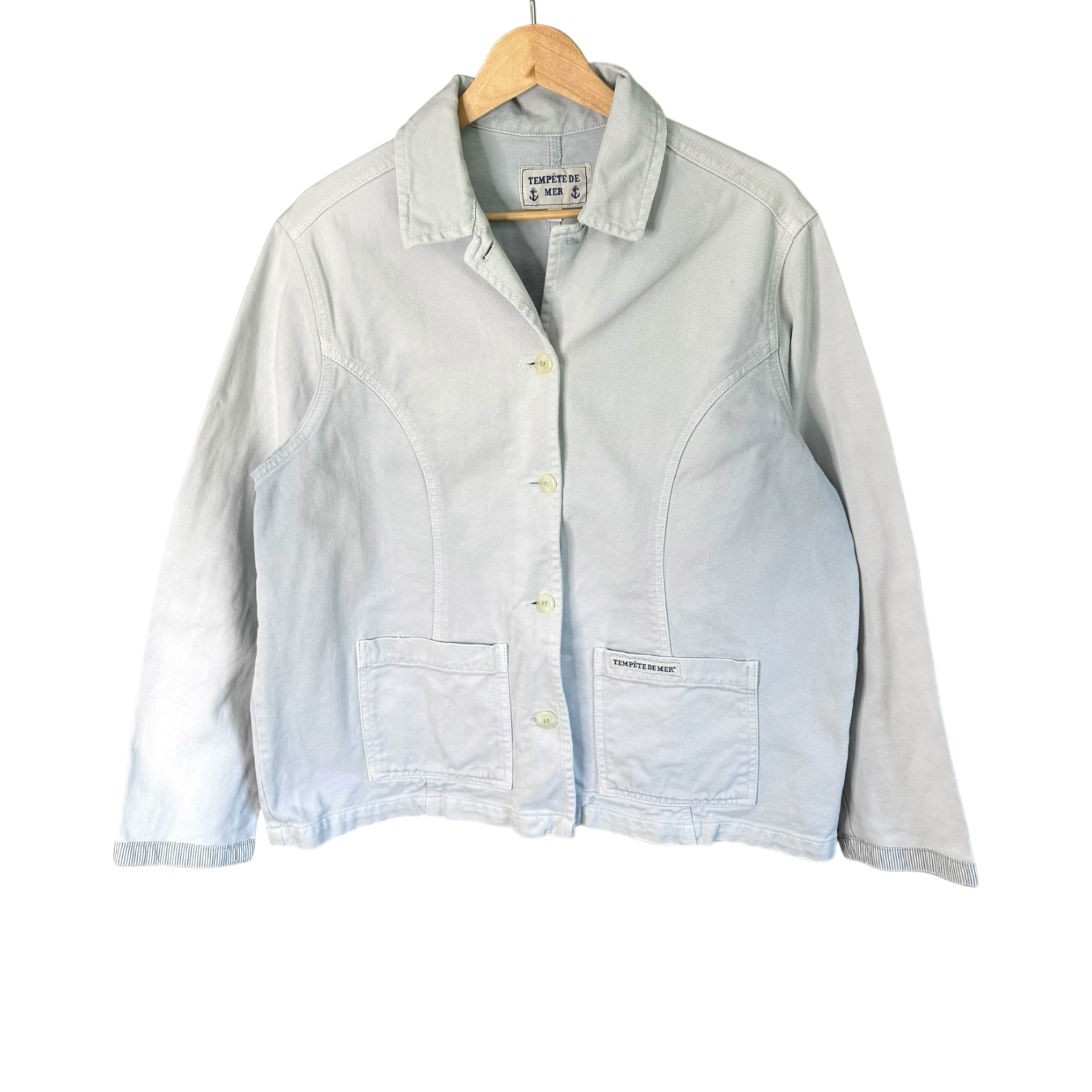
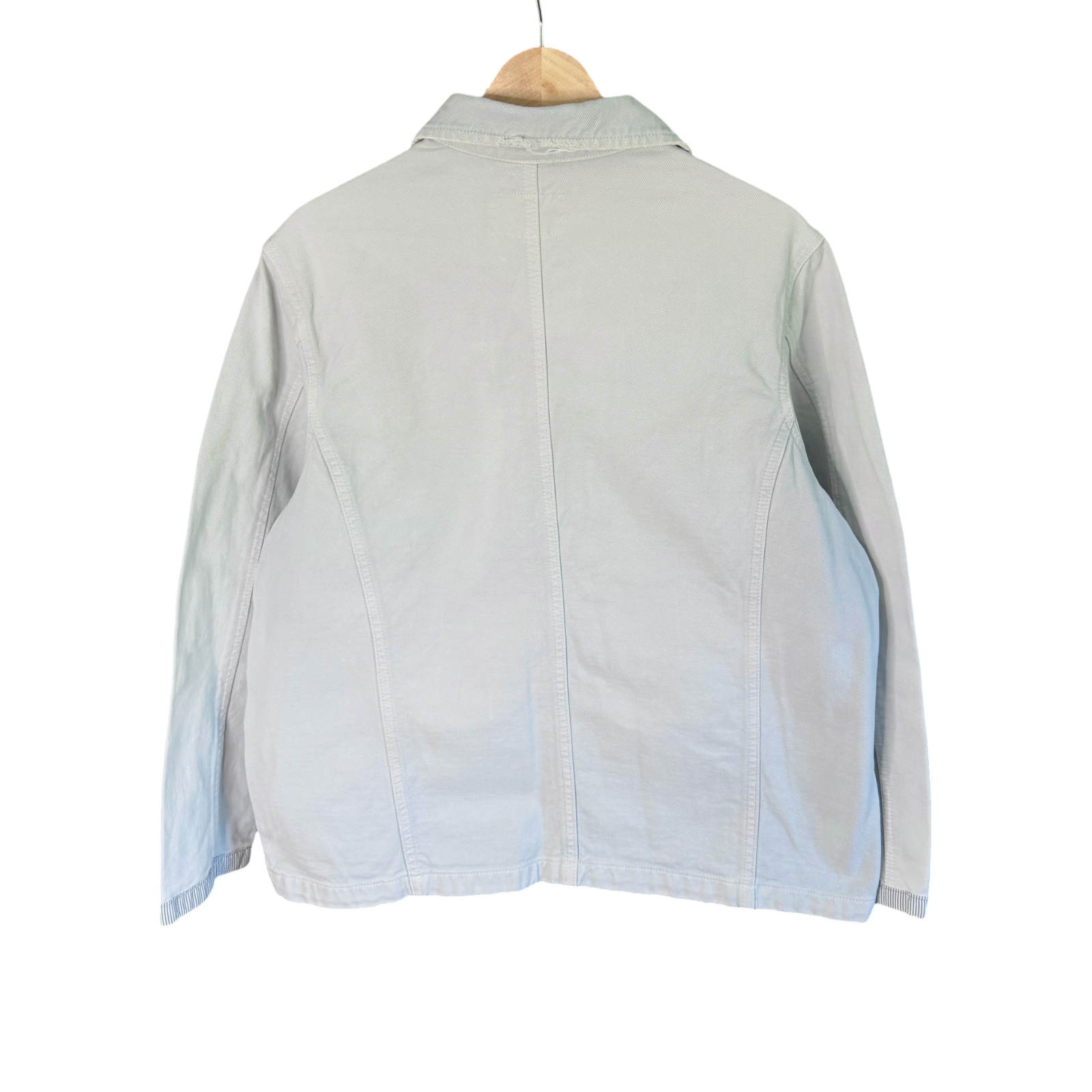
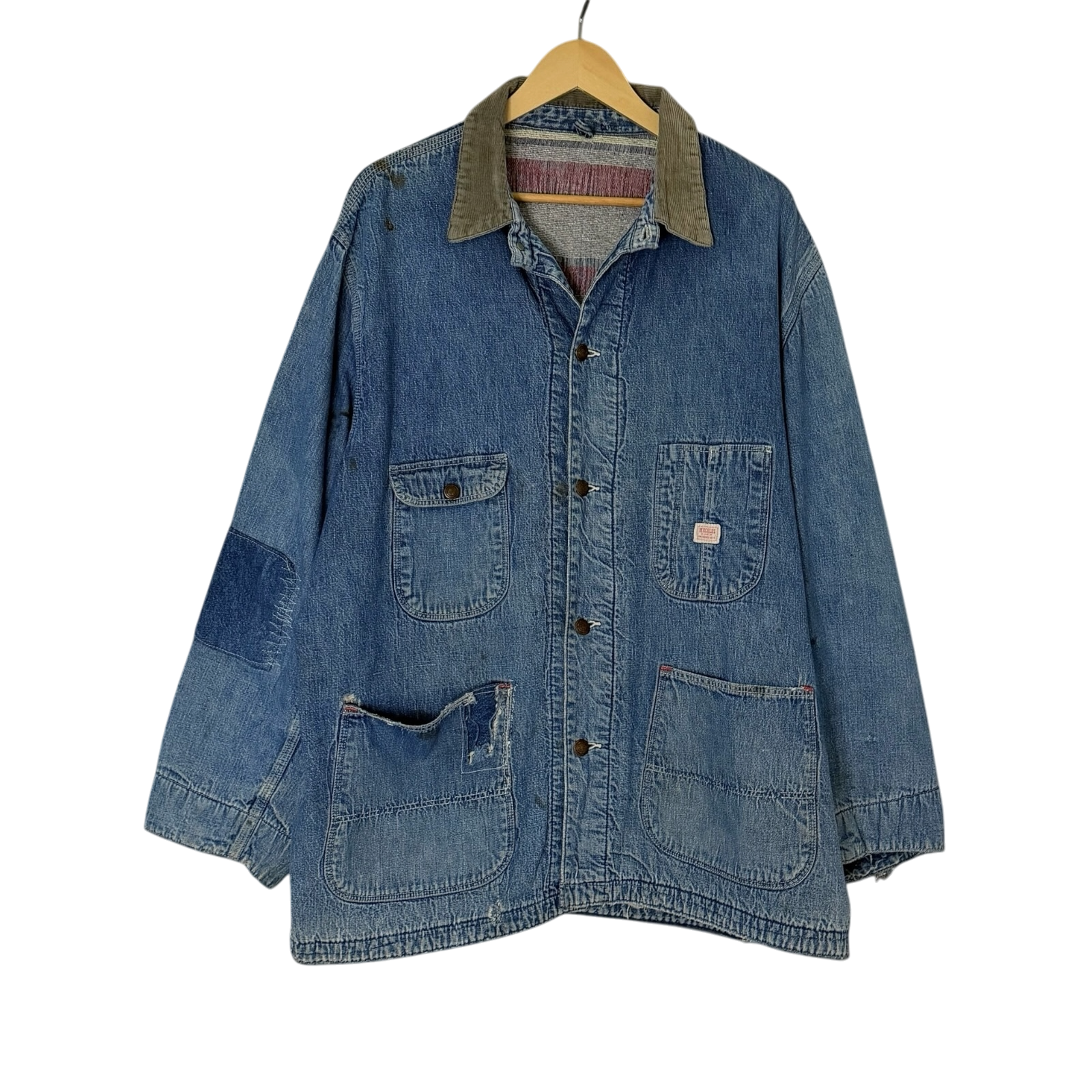
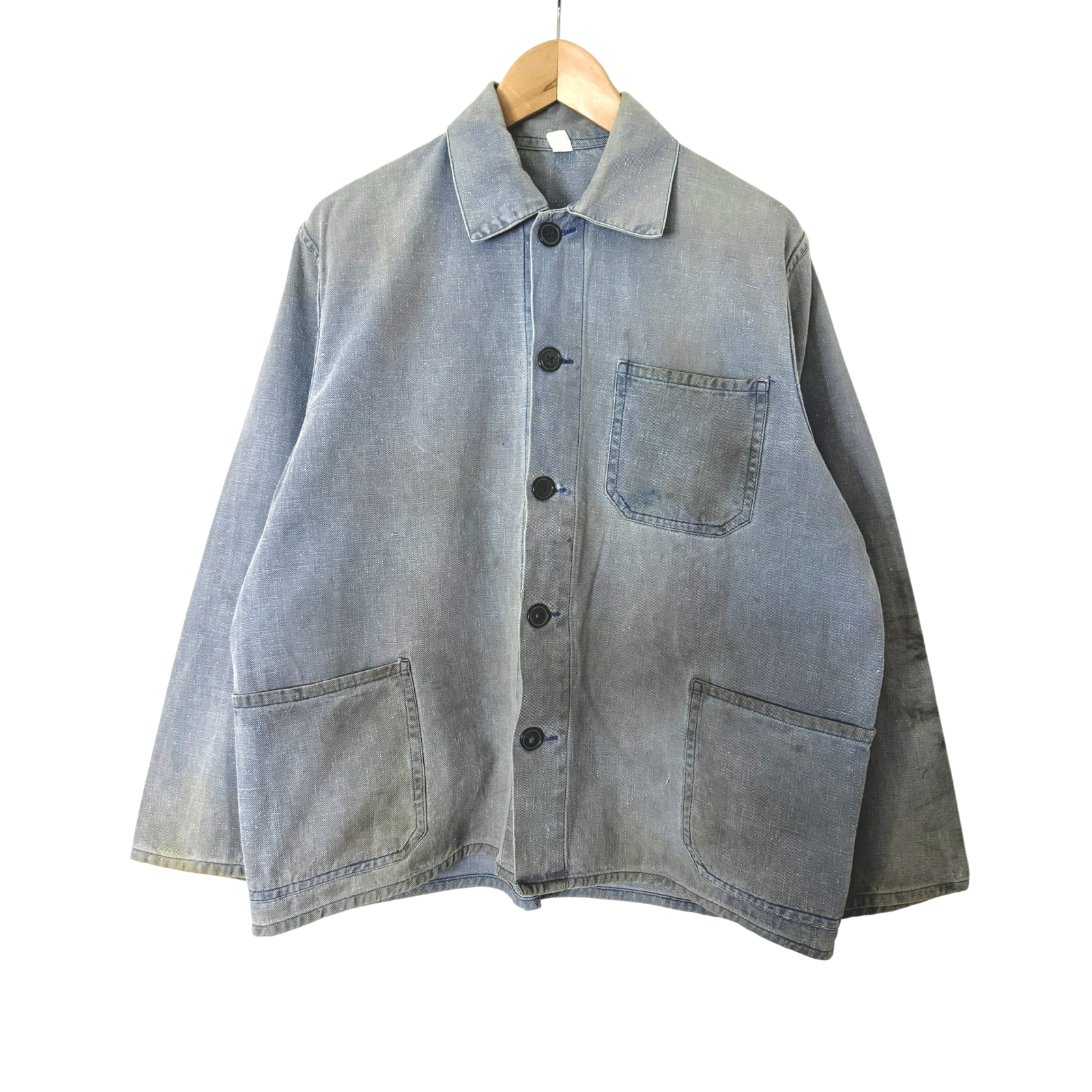
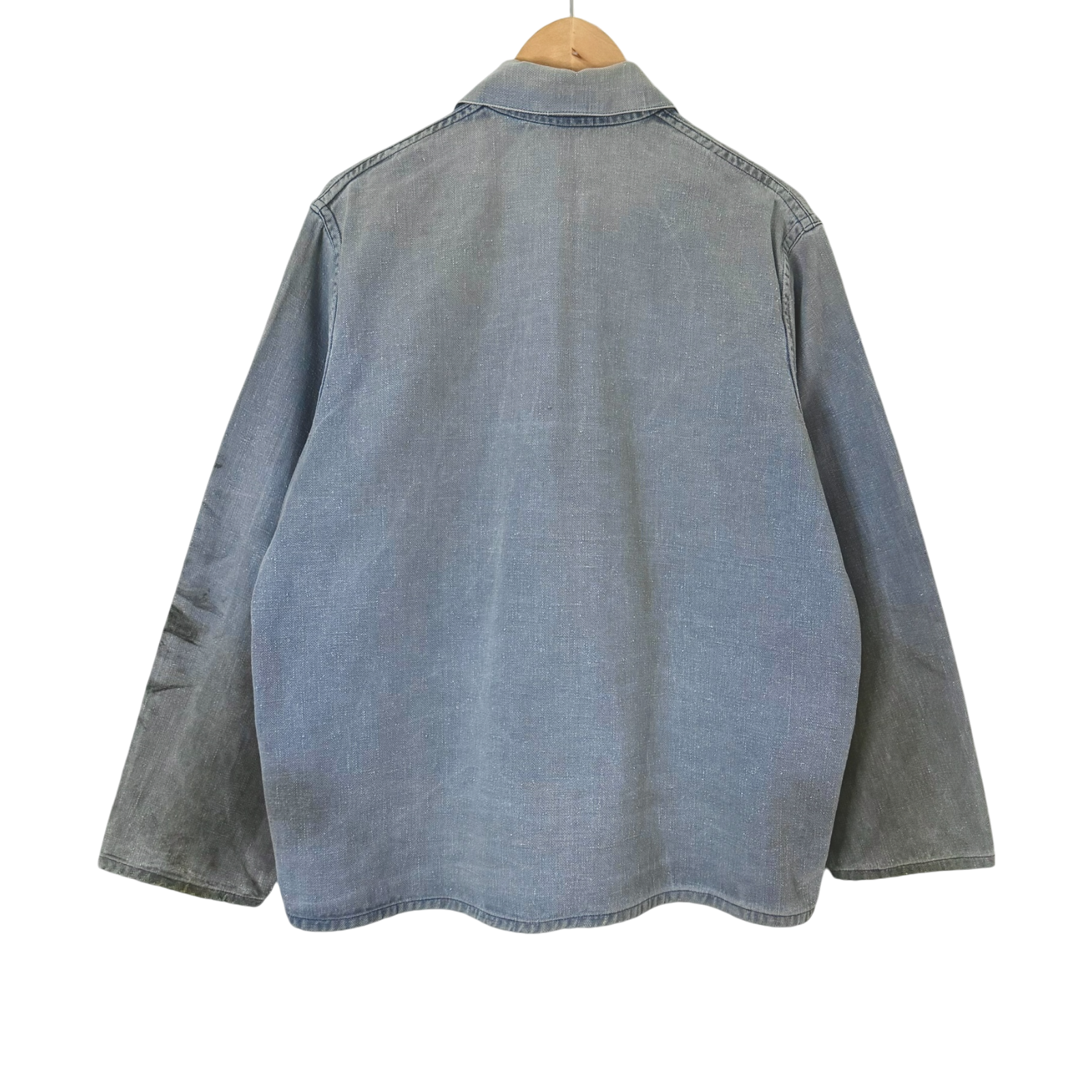
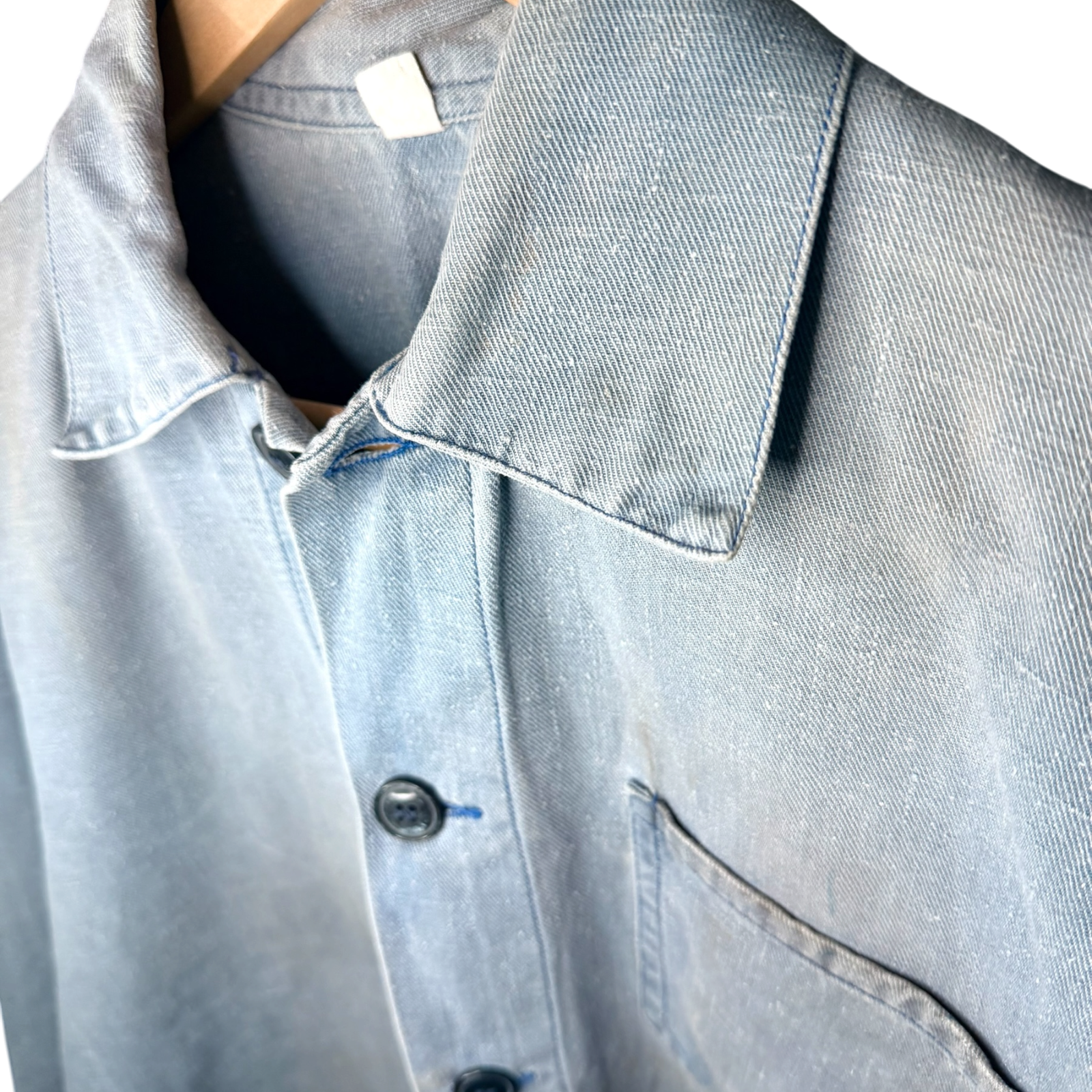
This is an exceptional late 1940s–late 1950s French Bleu de Travail chore jacket, representing a highly sought-after tier of antique and mid-century European workwear. Textile analysis very strongly indicates the garment is constructed from métis, a French cotton-linen blend historically valued for combining linen’s durability, breathability, and dry hand crispness with cotton’s softness and wearability. The jacket exhibits an incredible authentic work fade, transitioning from deeply worn platinum silver-white and pale gray-blue tones to soft baby blue, creating a striking gris-bleu / salt-and-pepper visual texture. Lightweight, breathable, and durable, this is a collector-grade French workwear jacket with the age, fabric, fade, and construction details serious vintage buyers look for.
Details & History
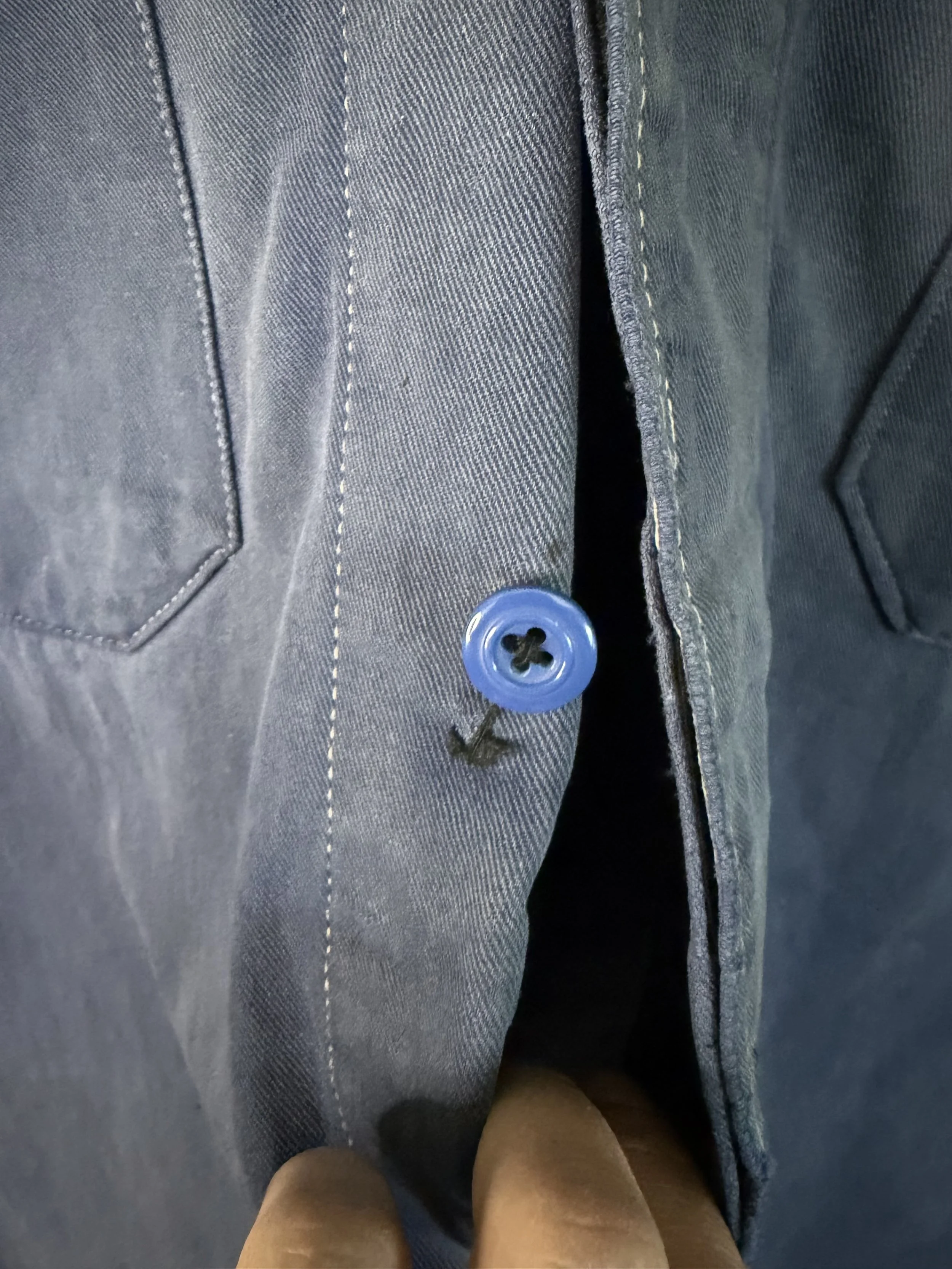
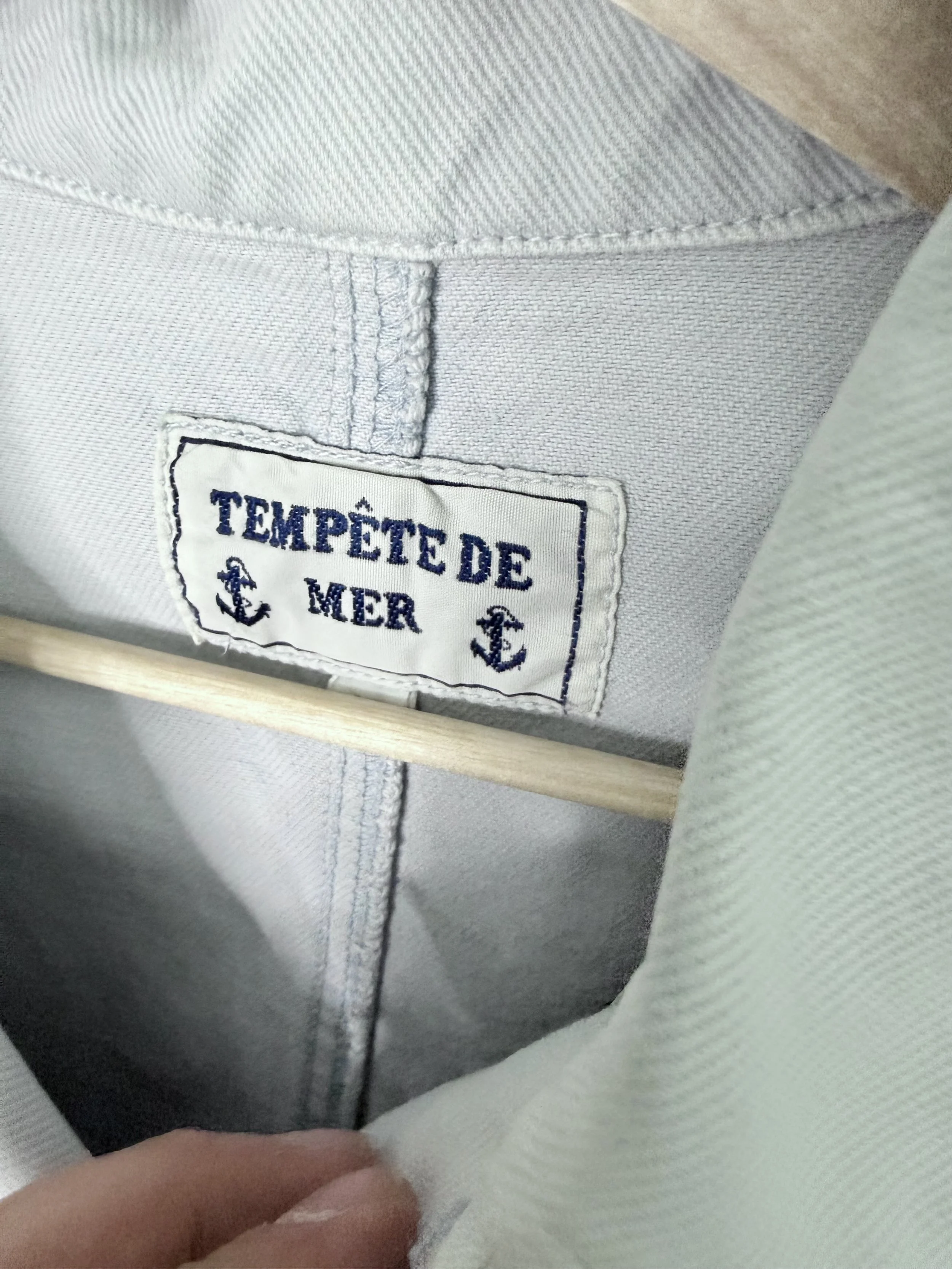
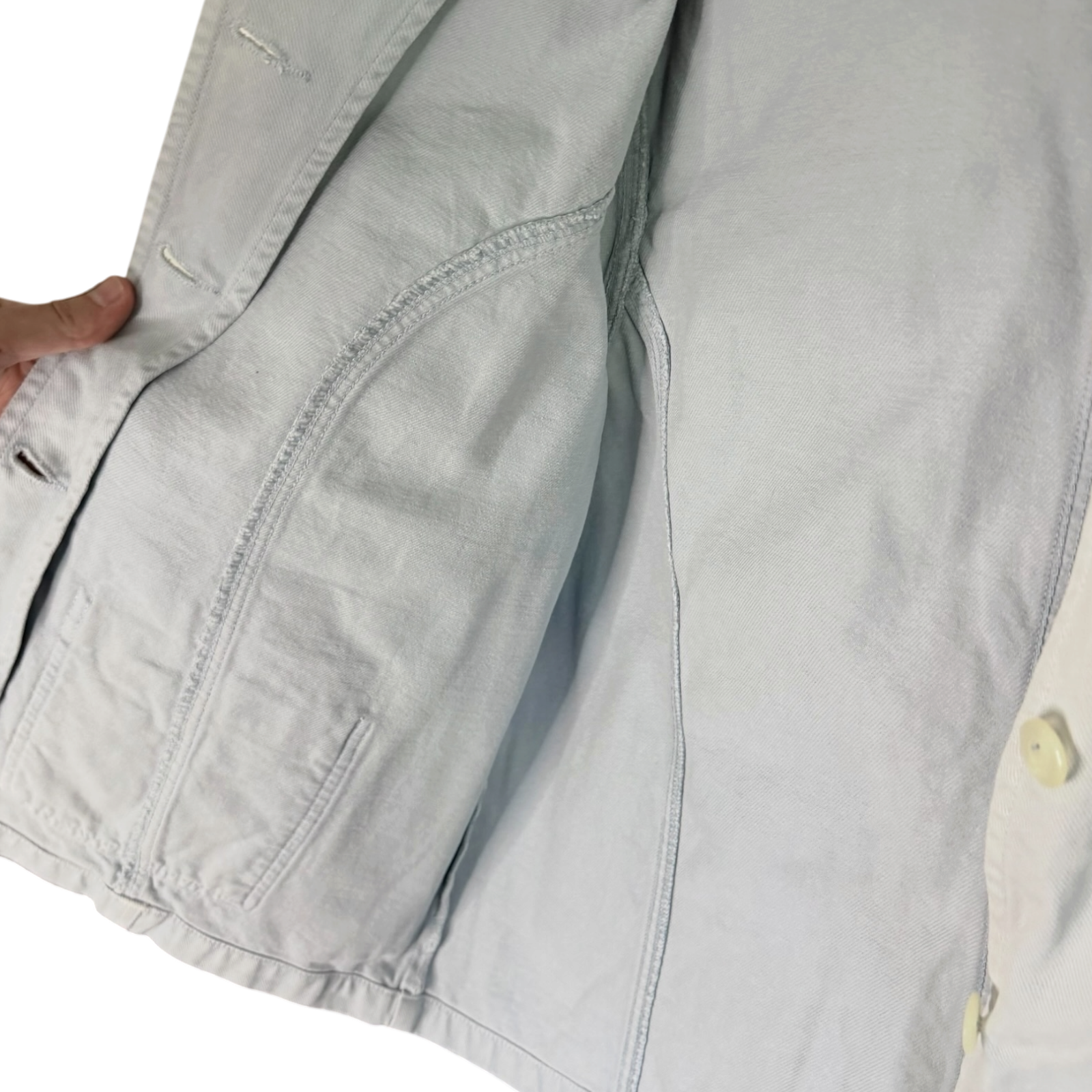
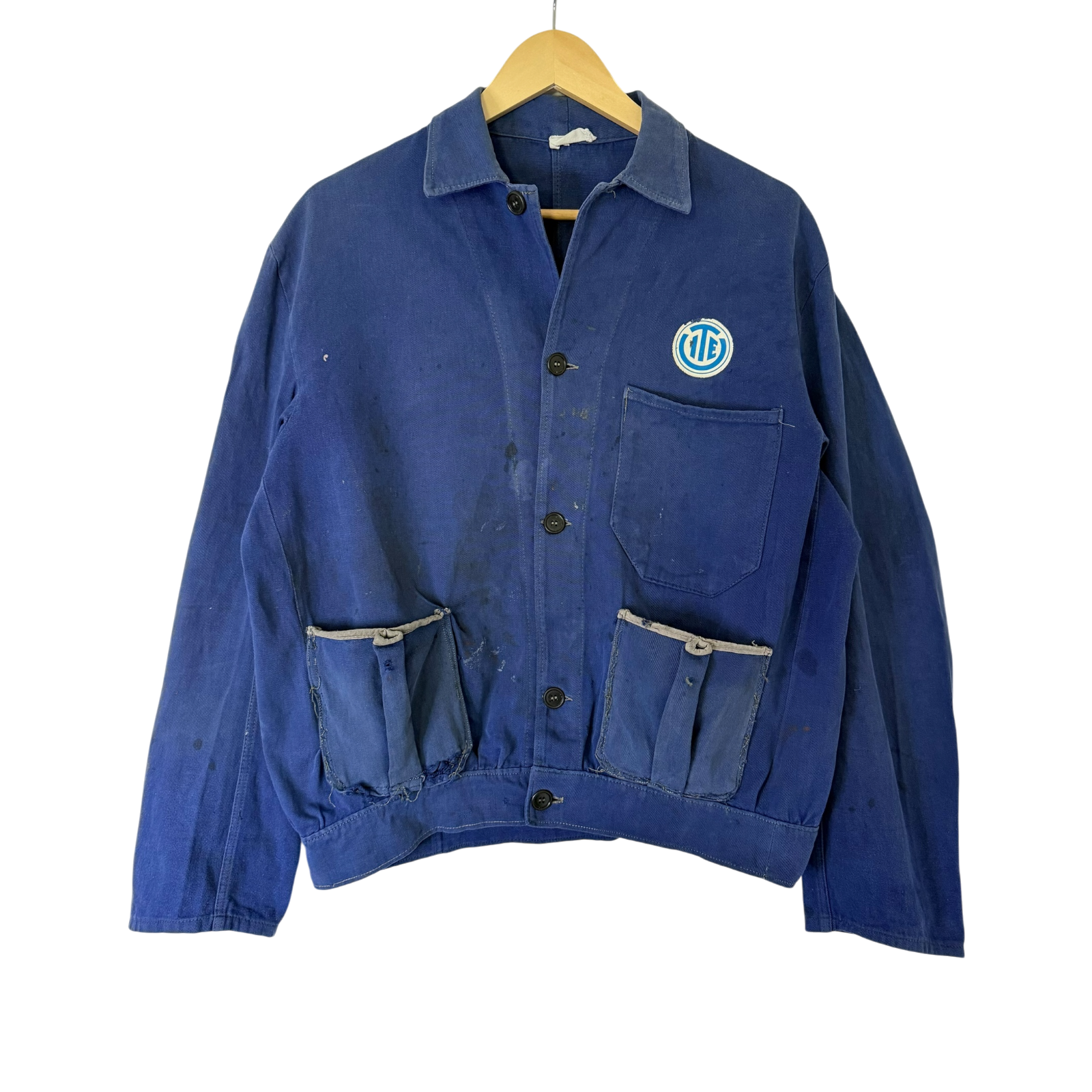
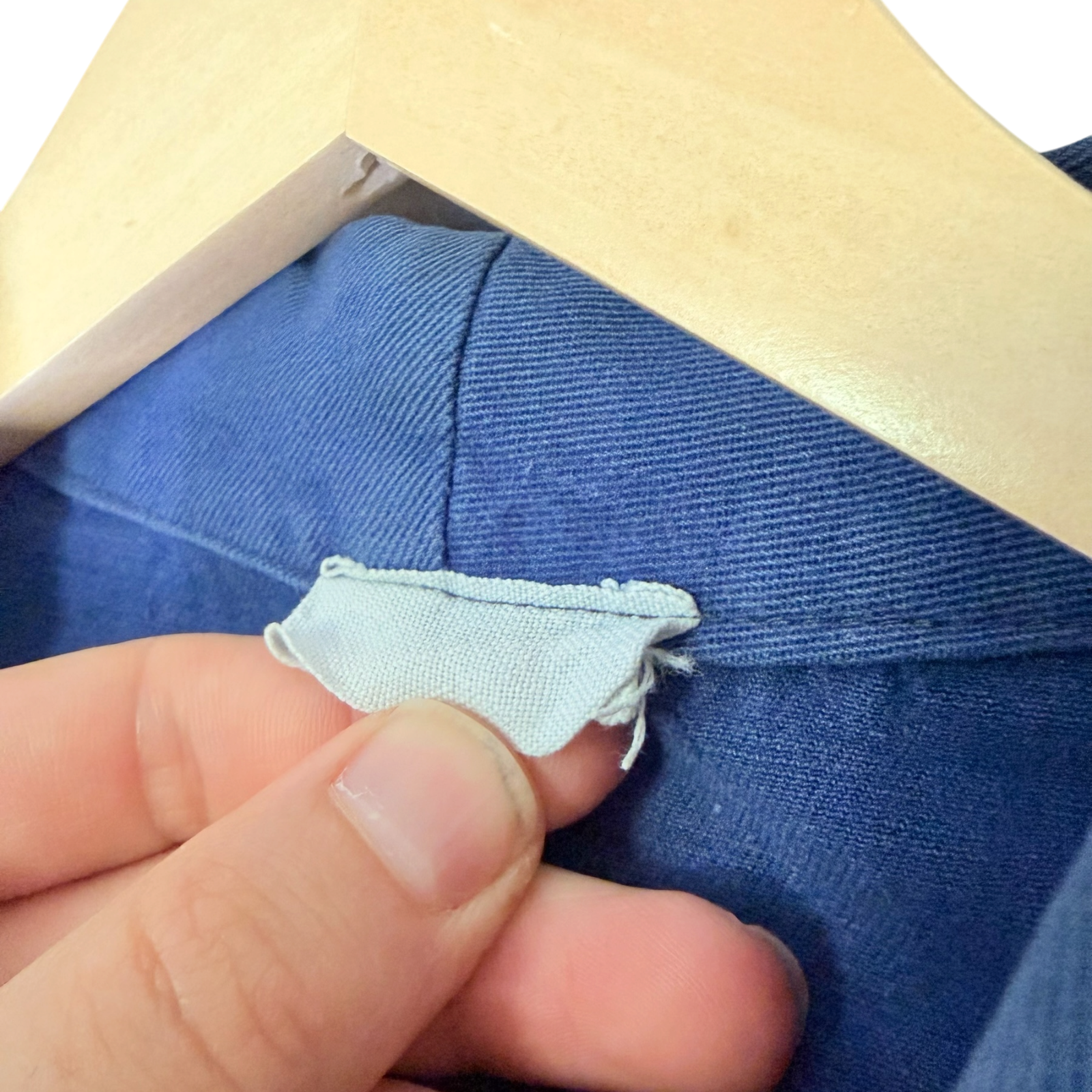
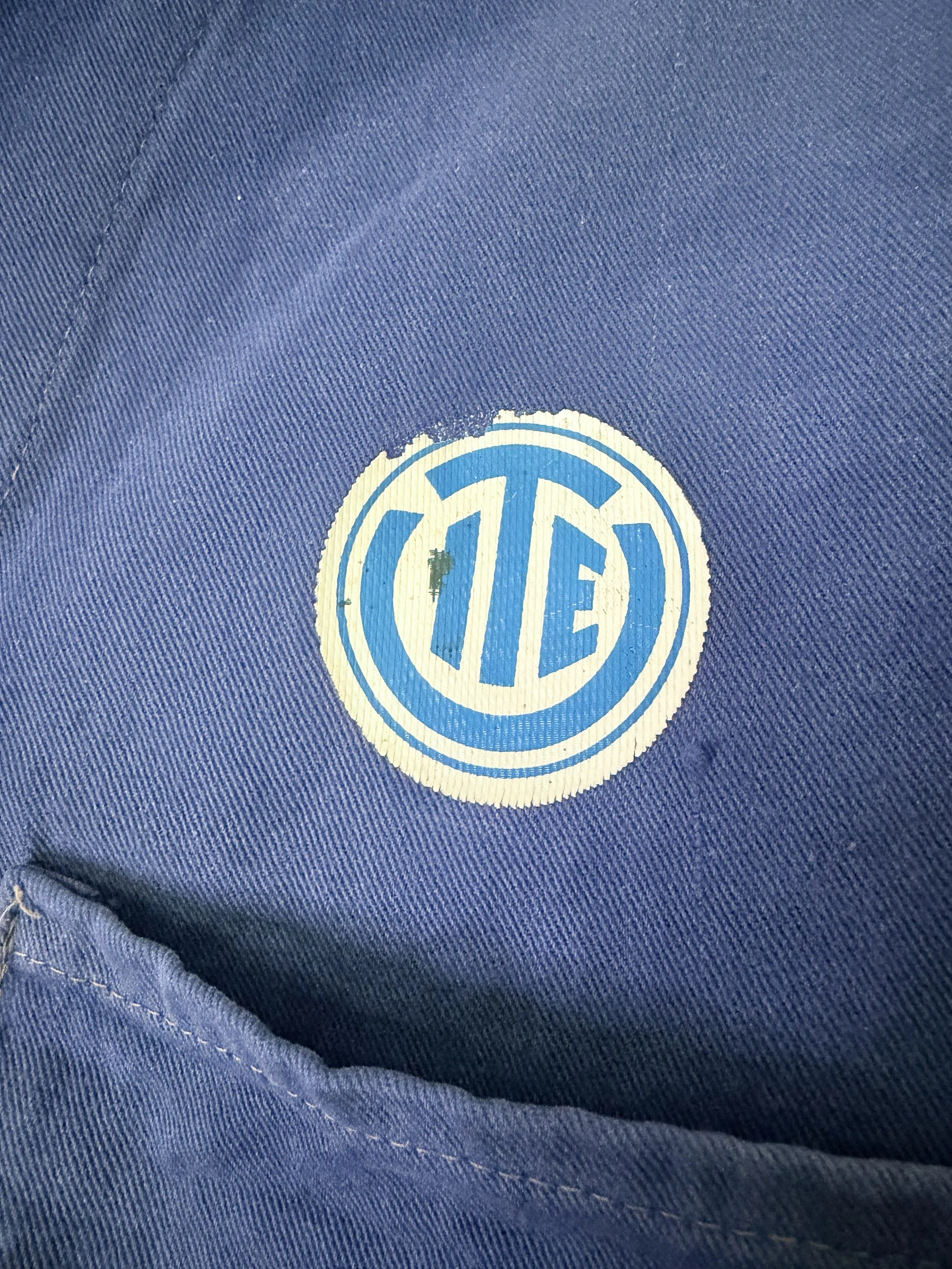
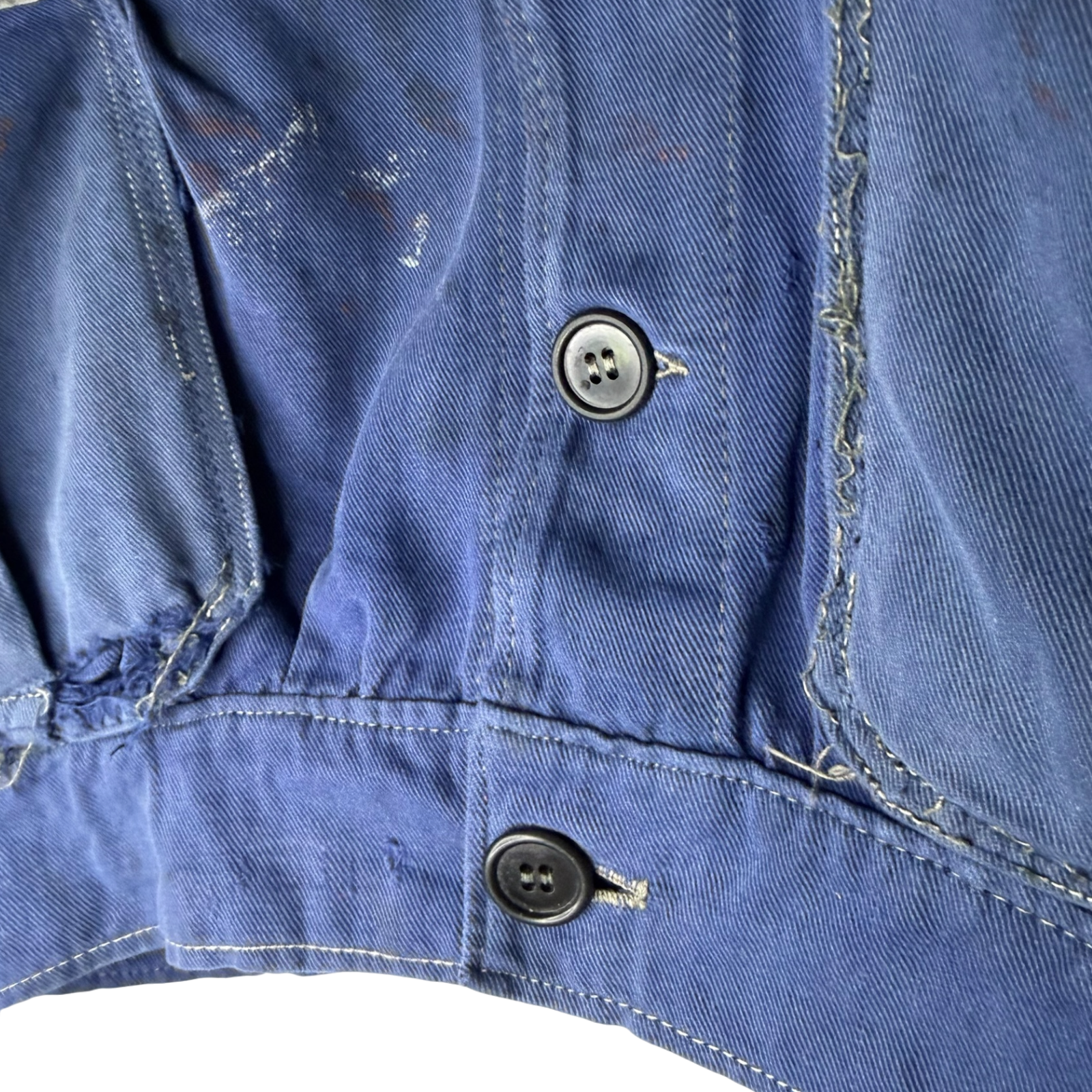
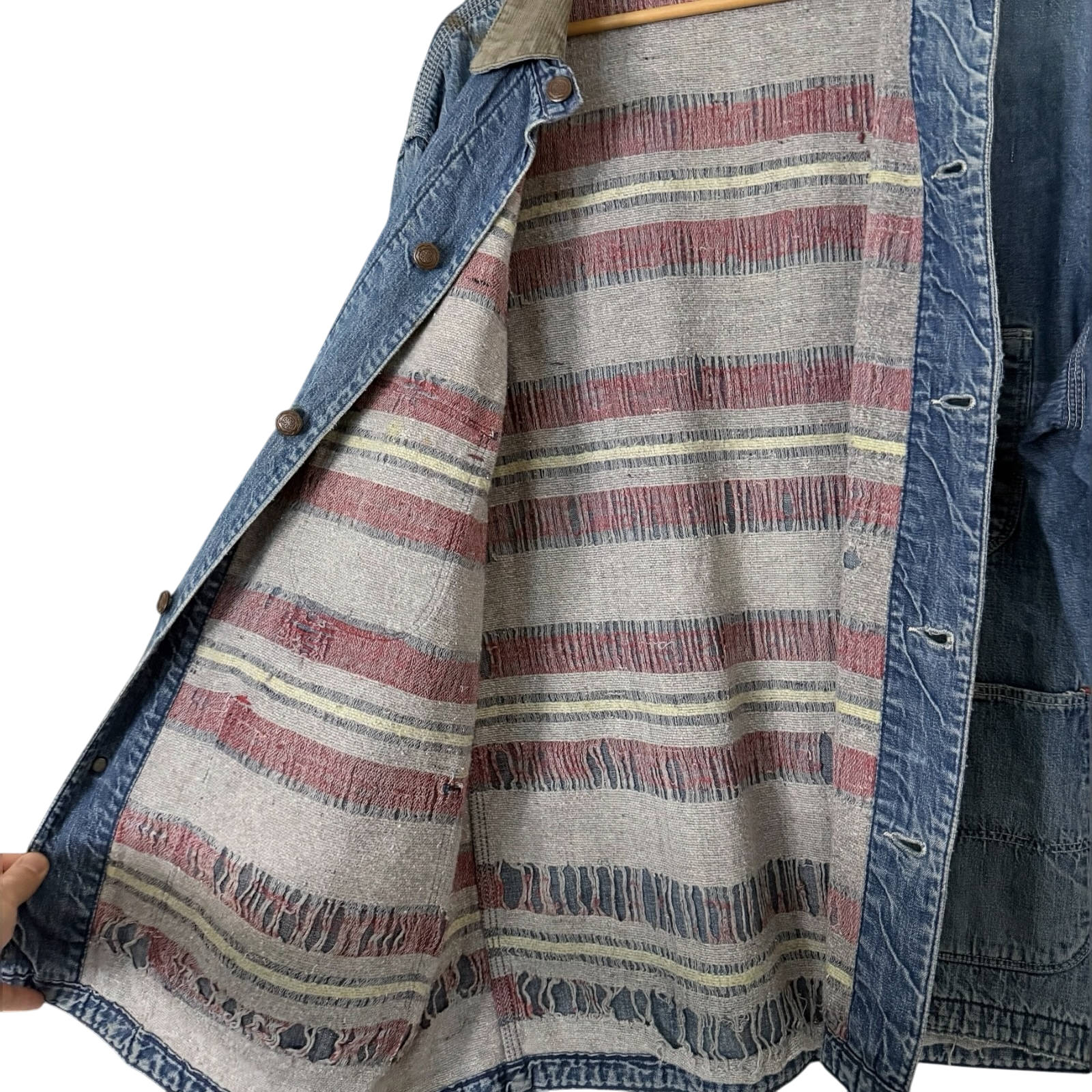
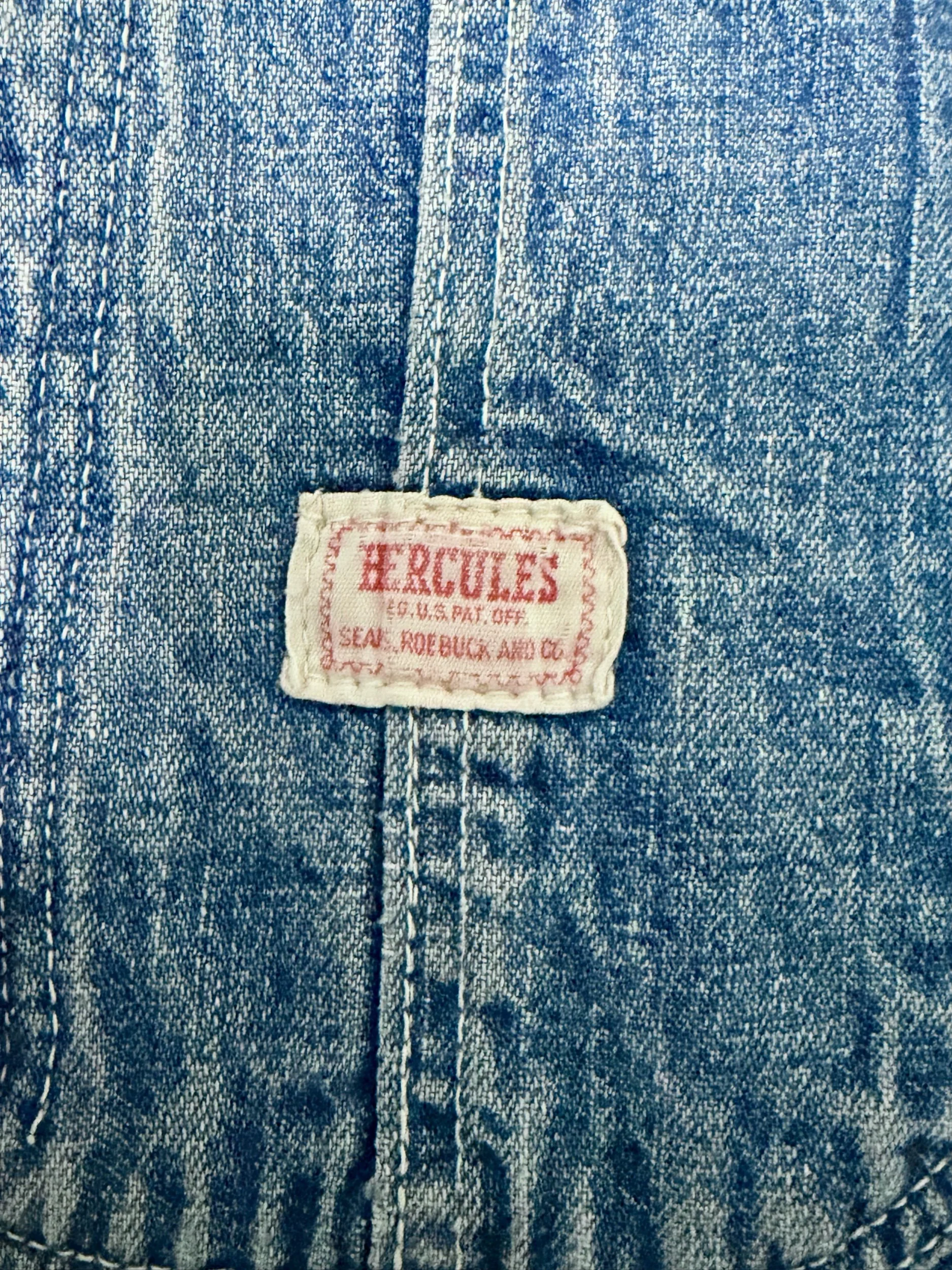
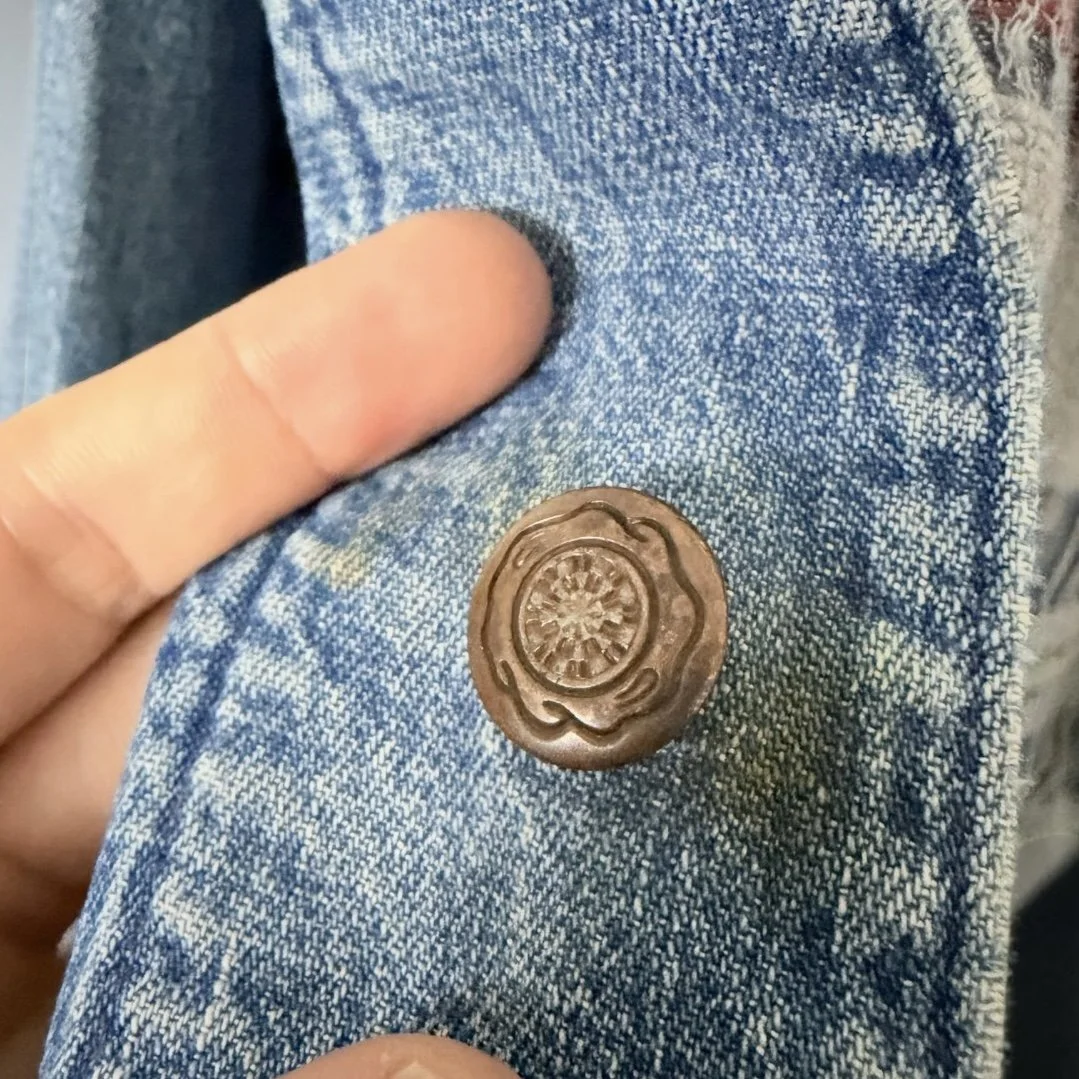
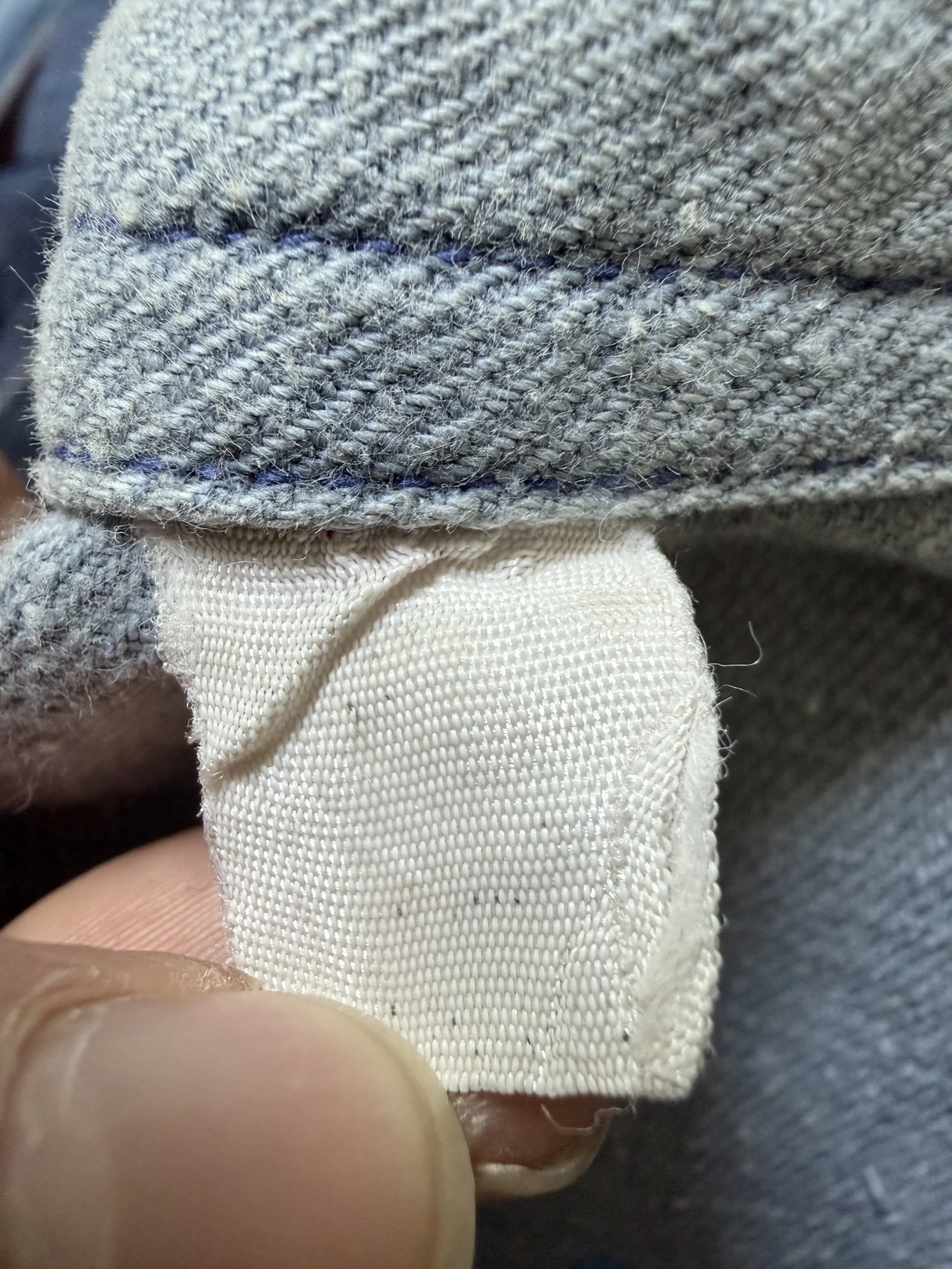
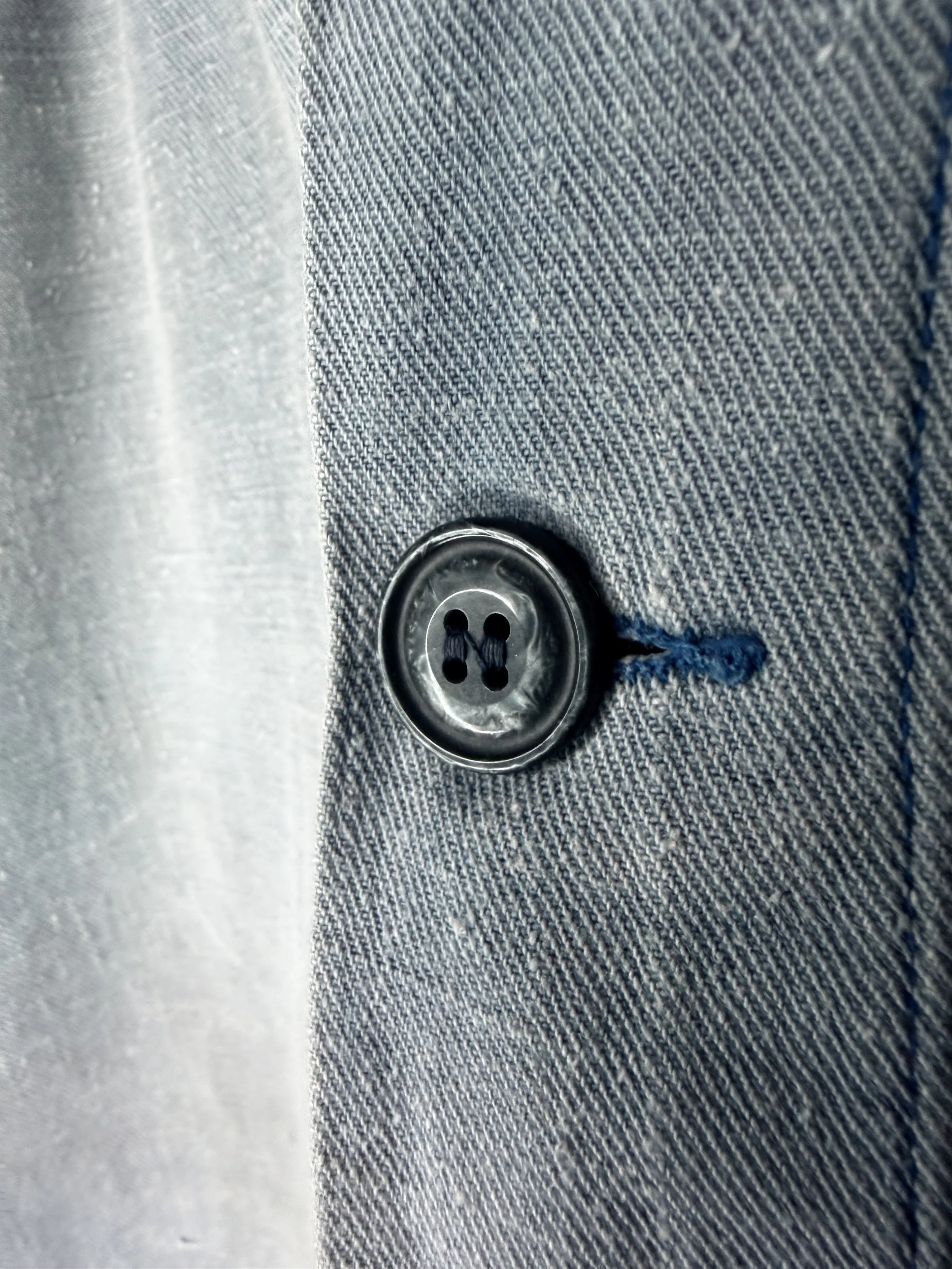
Likely produced between the late 1940s and late 1950s, this French chore coat features foundational mid-century bleu de travail construction. The exposed five-button front uses thick, dull black buttons, a detail more consistent with earlier French work jackets before covered button plackets became more common on later industrial workwear. It features an approximately 3-inch collar, a traditional three-pocket utilitarian layout, and two interior tags, including a soft, malleable remnant tag and a visible size 52 tag. The true focal point is the textile. Métis literally refers to a mixed cloth, and in French textile use the term most commonly denotes a linen/cotton blend. Historically, this type of fabric was prized in France for hard-wearing household linens, trousseau textiles, bedding, and utility garments because it offered strength, breathability, repeated-wash durability, and a cooler, drier hand than ordinary cotton. In French workwear, métis examples are significantly less common than standard cotton twill or moleskin chore jackets, making the fabric especially desirable to collectors.
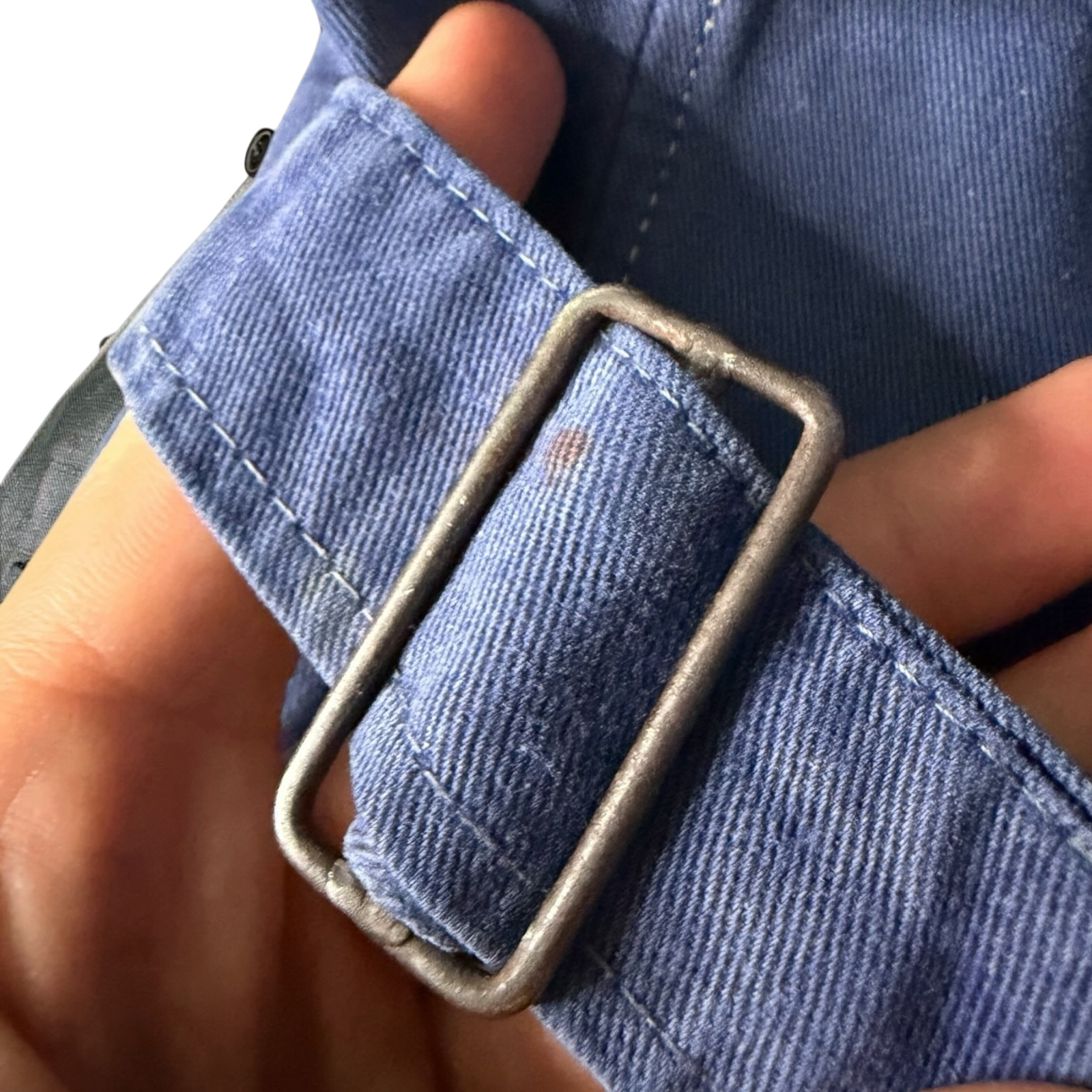
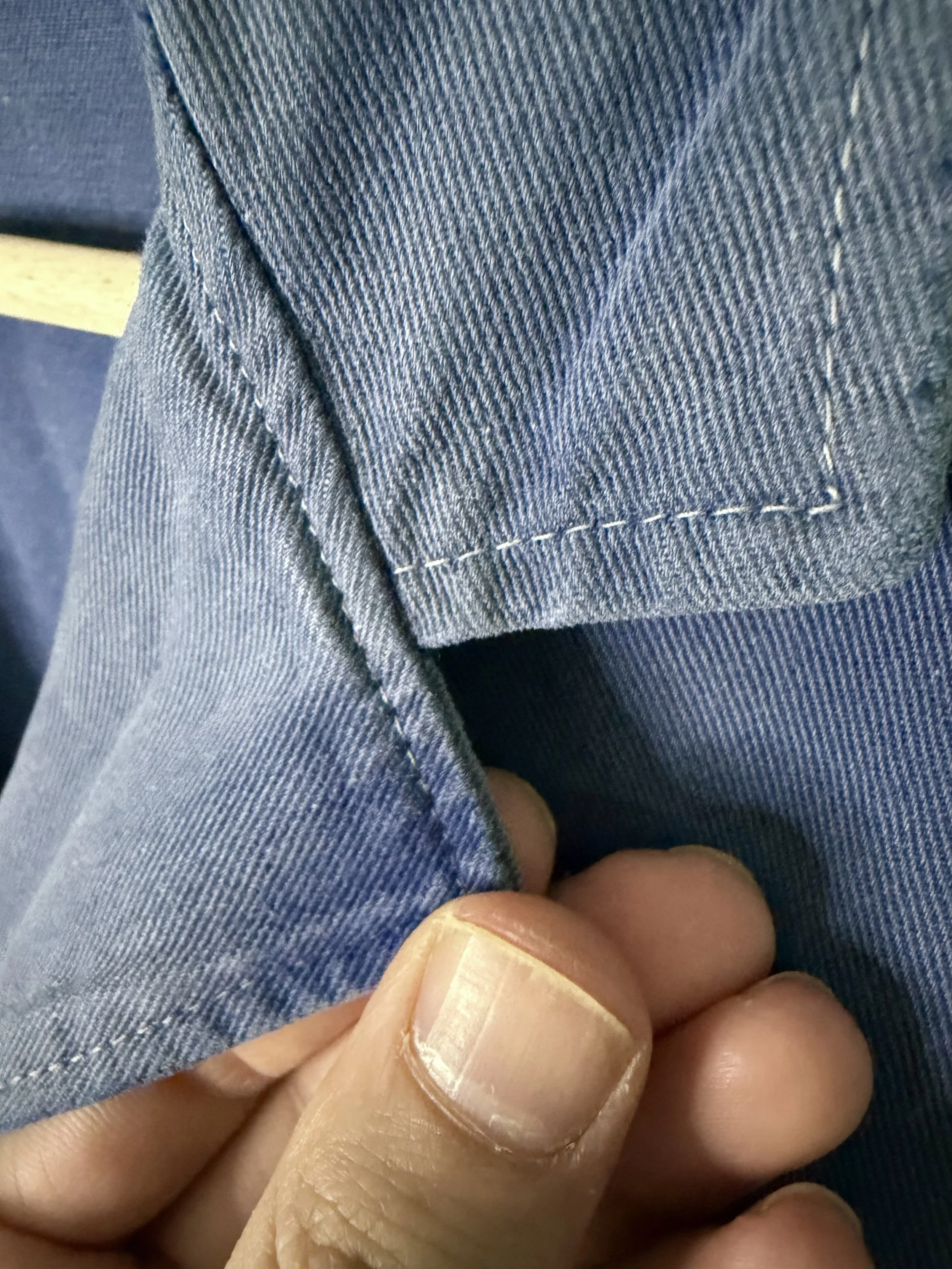
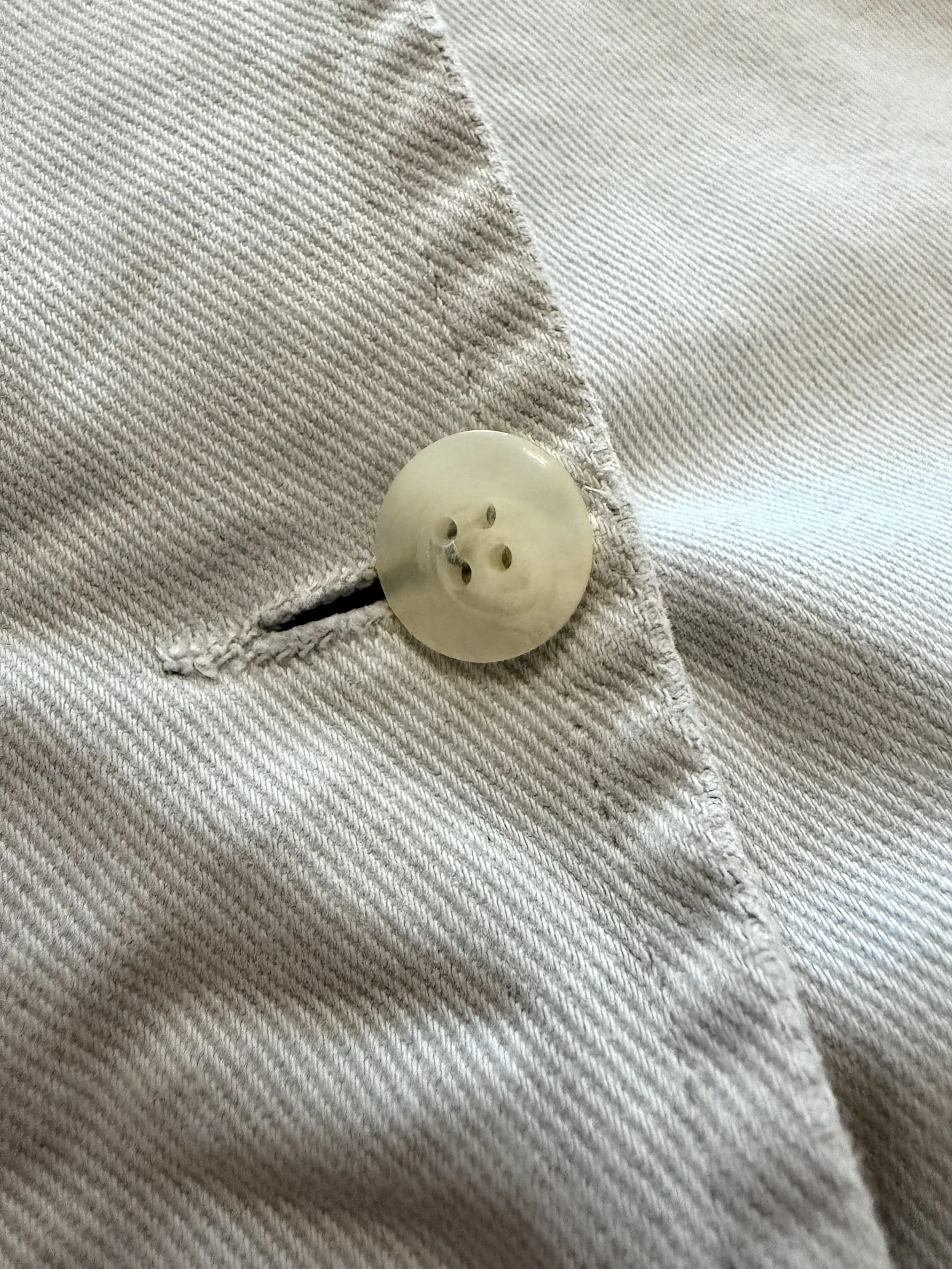
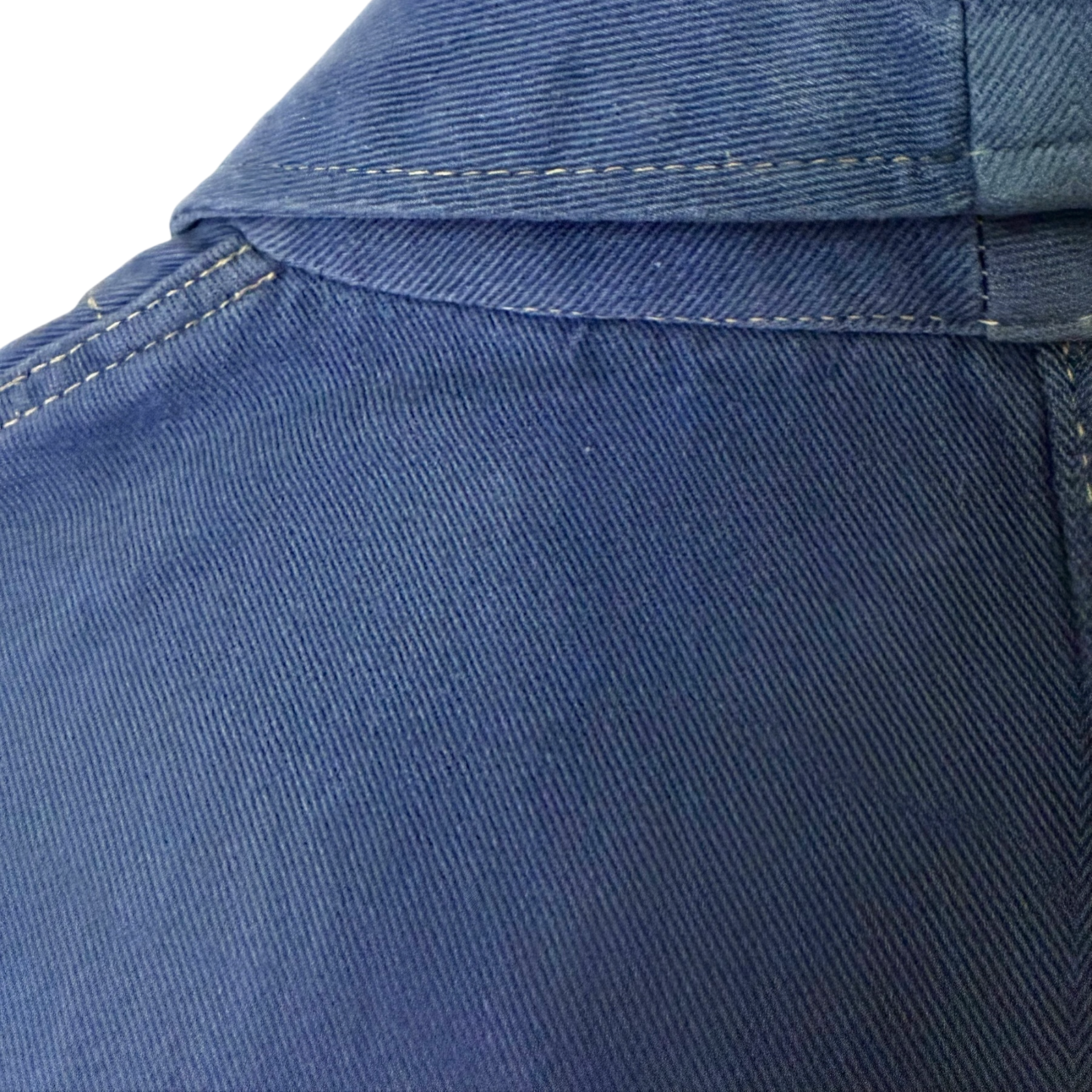
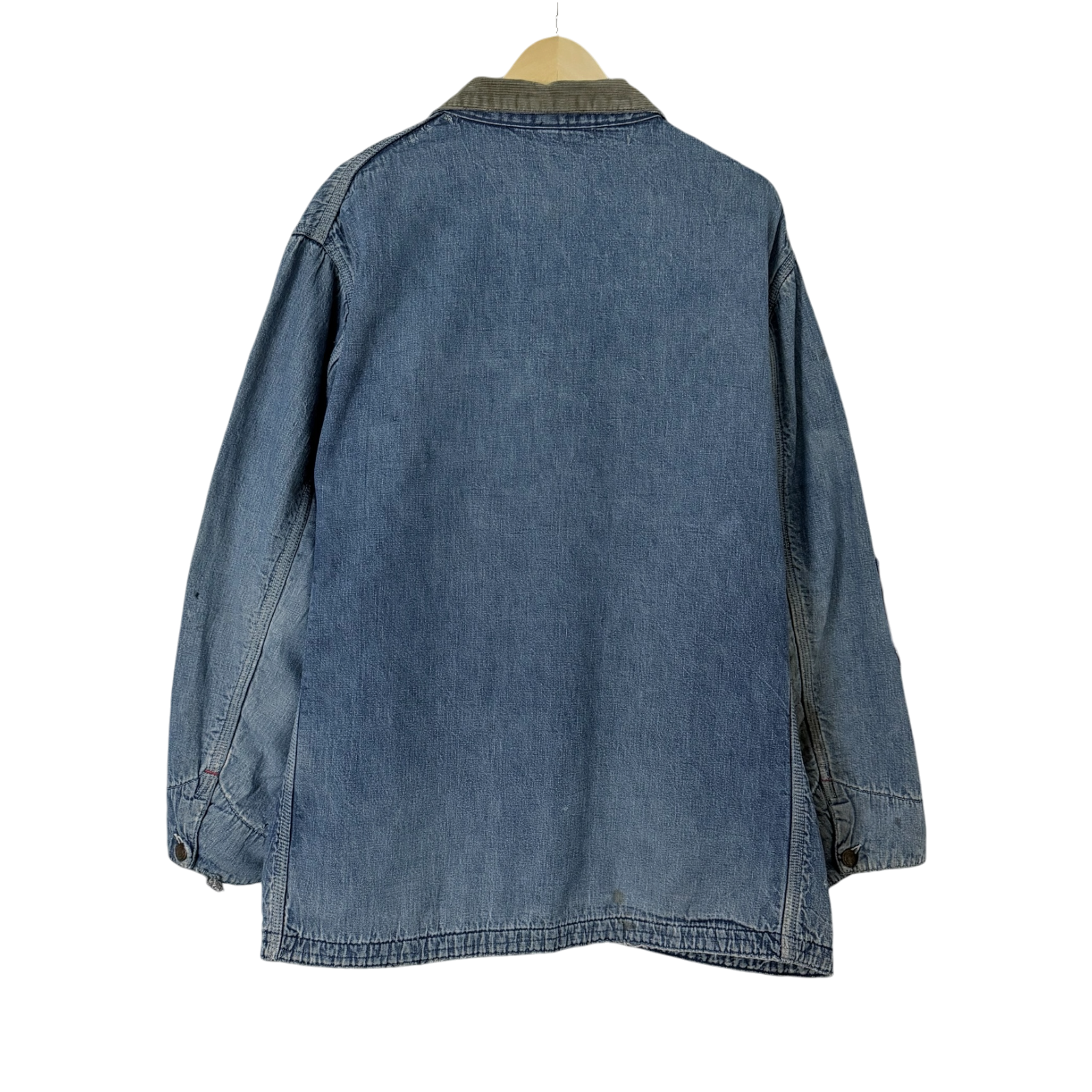
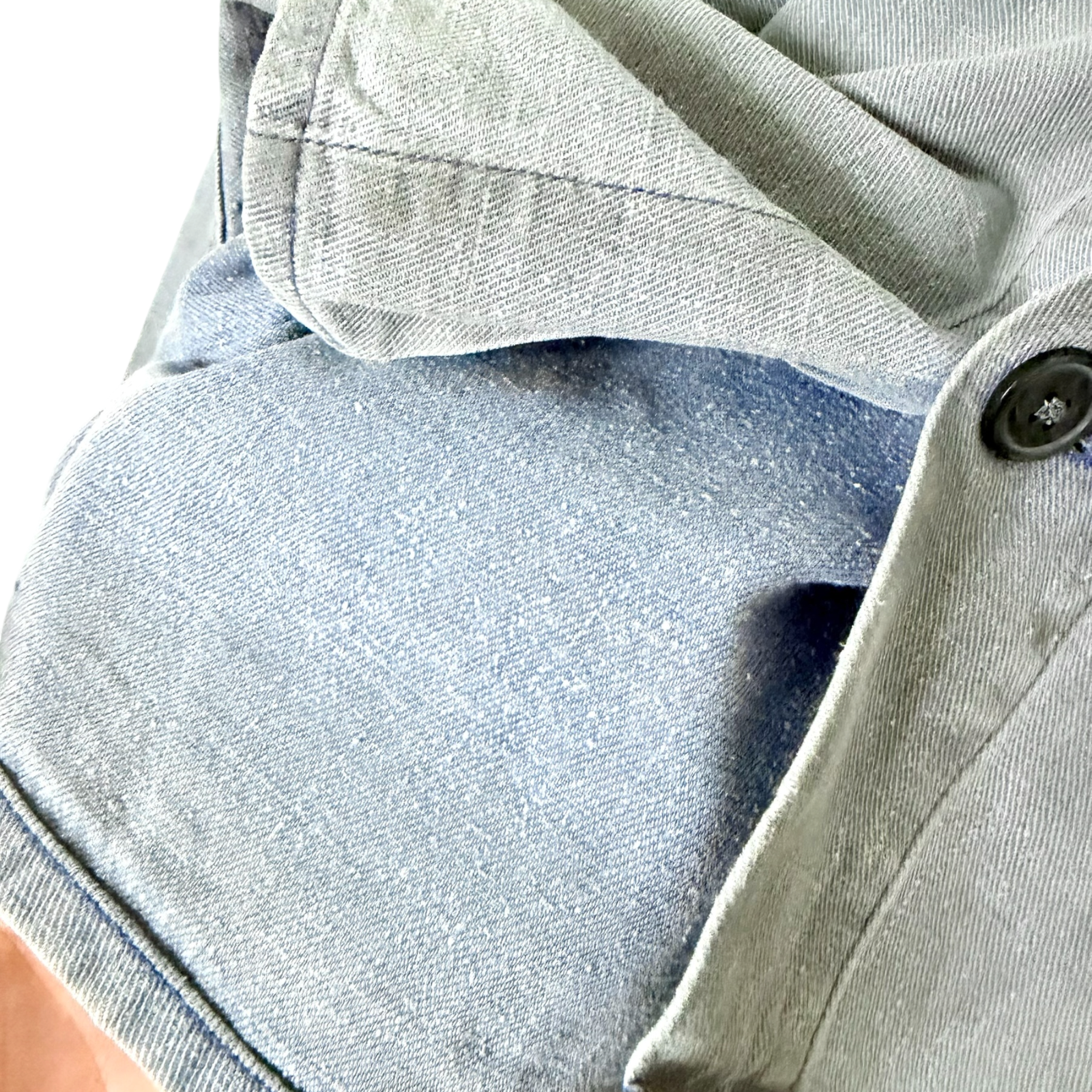
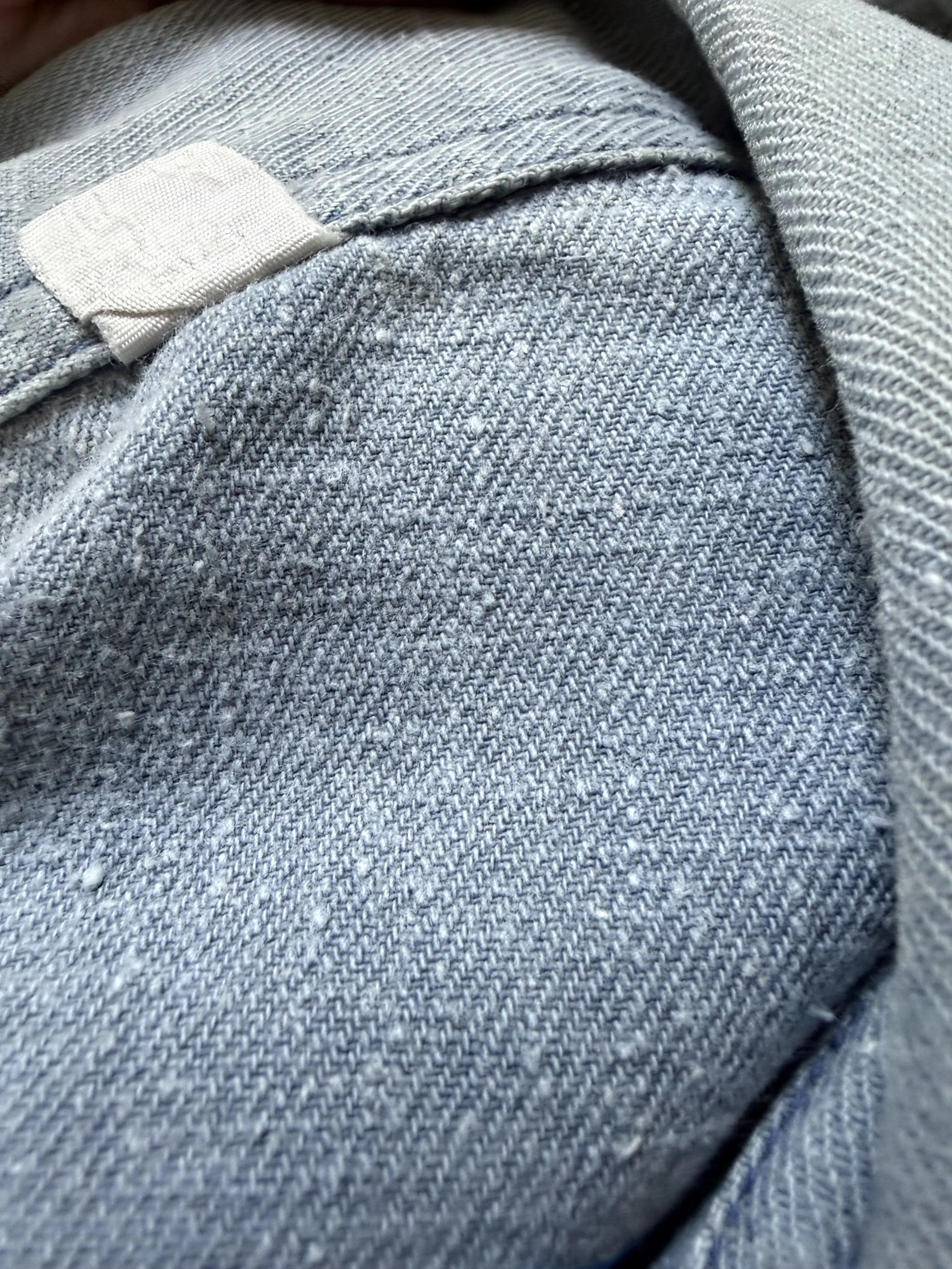
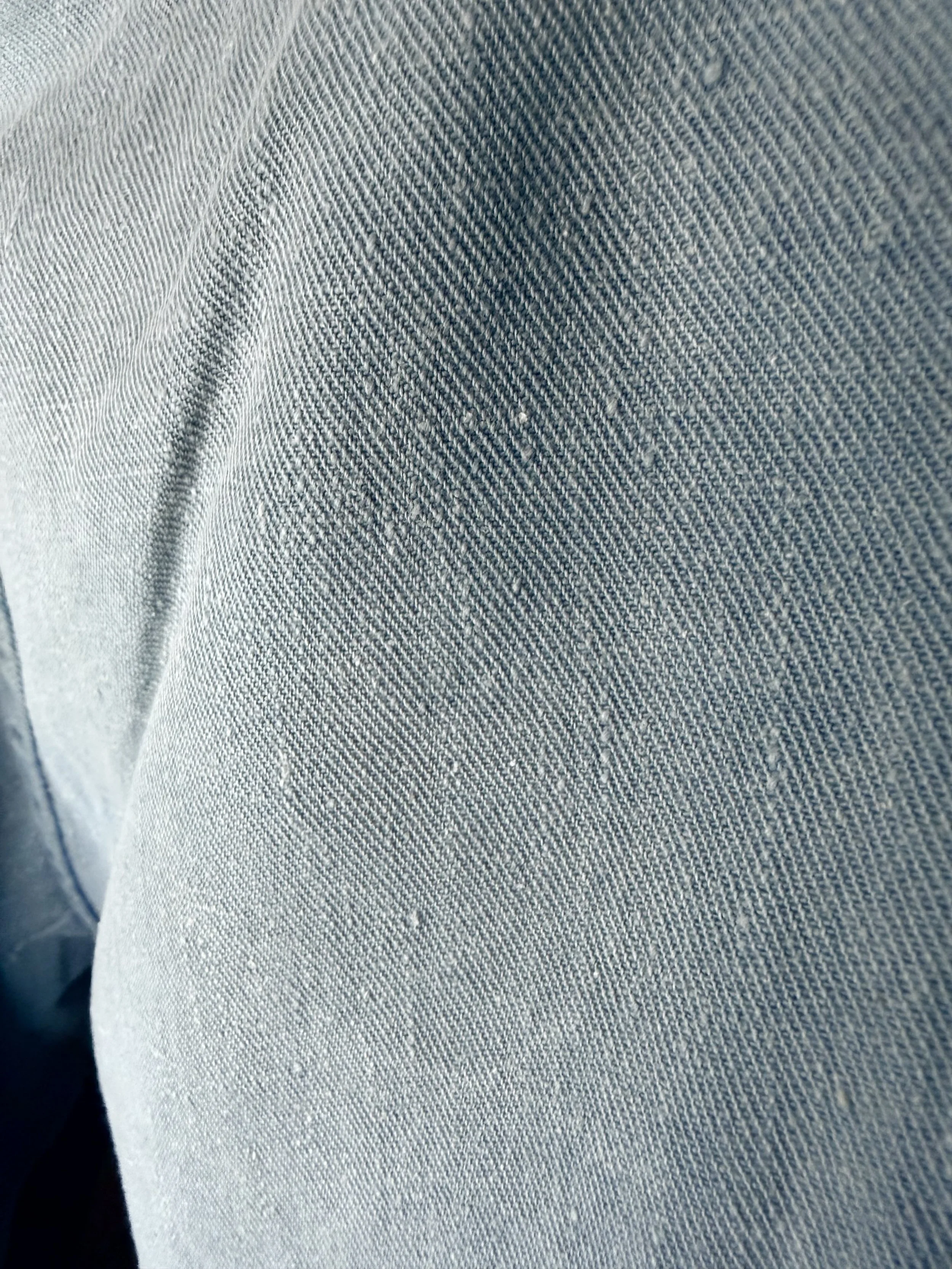
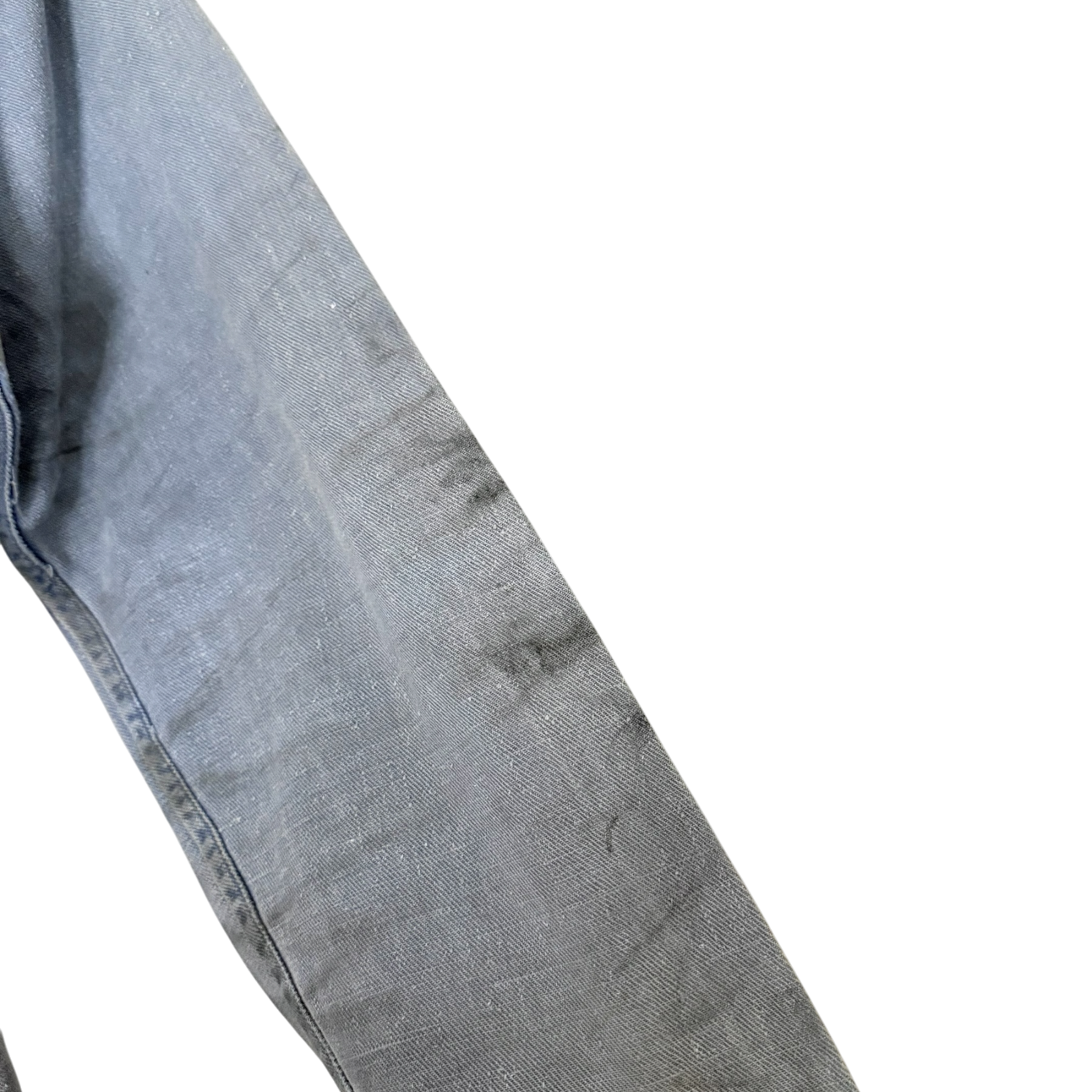
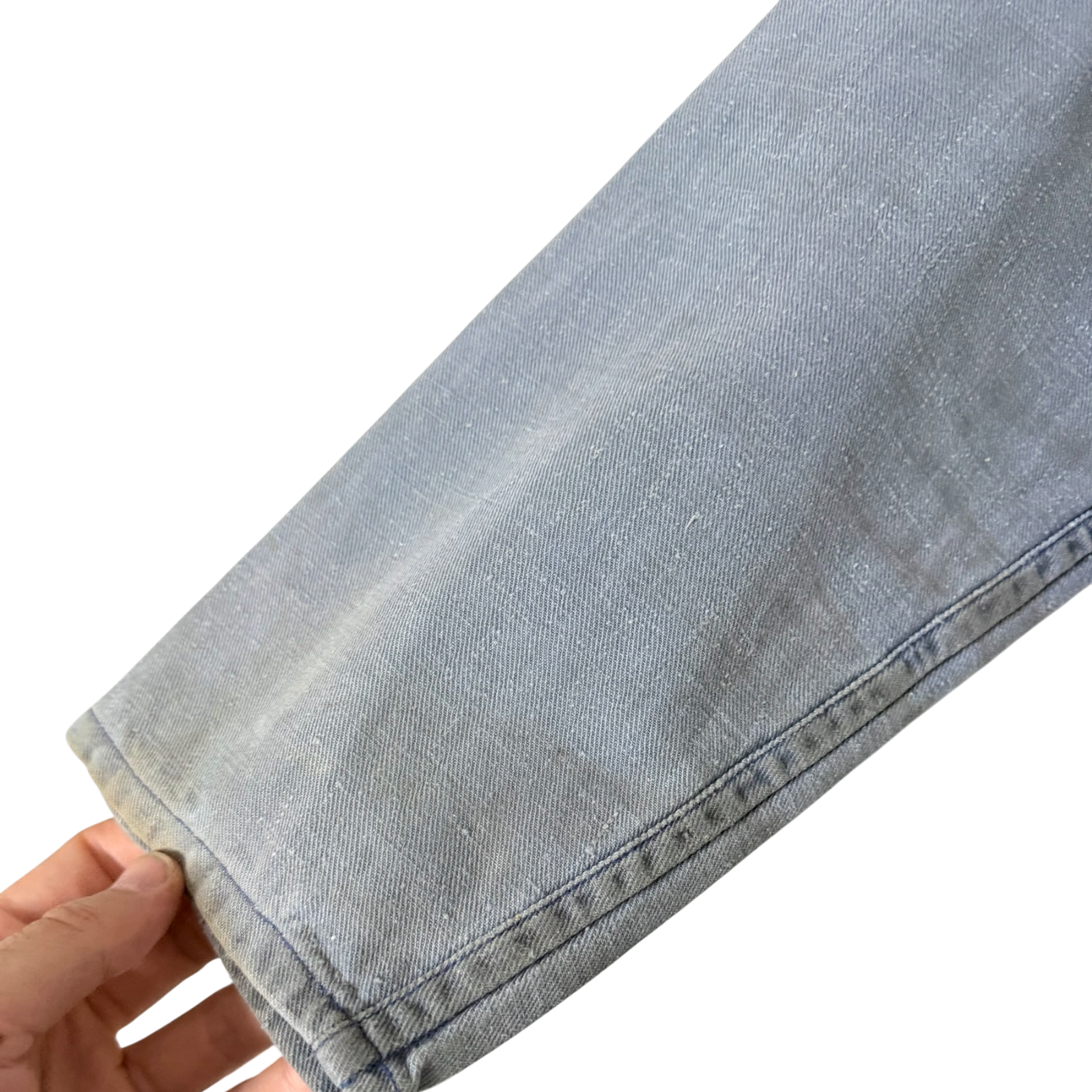
The fabric on this jacket very strongly indicates métis cotton-linen blend construction. The evidence is visible in the irregular horizontal slubbing interrupting the diagonal twill, the dry/crisp linen-like exterior hand, the softly bumbly interior texture, the lightweight but durable body, and the way the cloth has faded to a pale gris-bleu rather than the flatter fade usually seen on standard cotton workwear twill. While fiber content cannot be laboratory-confirmed from photos alone, the weave, hand, surface irregularity, fade behavior, and overall construction make this a very strong métis candidate rather than a standard cotton twill chore jacket.
Condition & Measurements
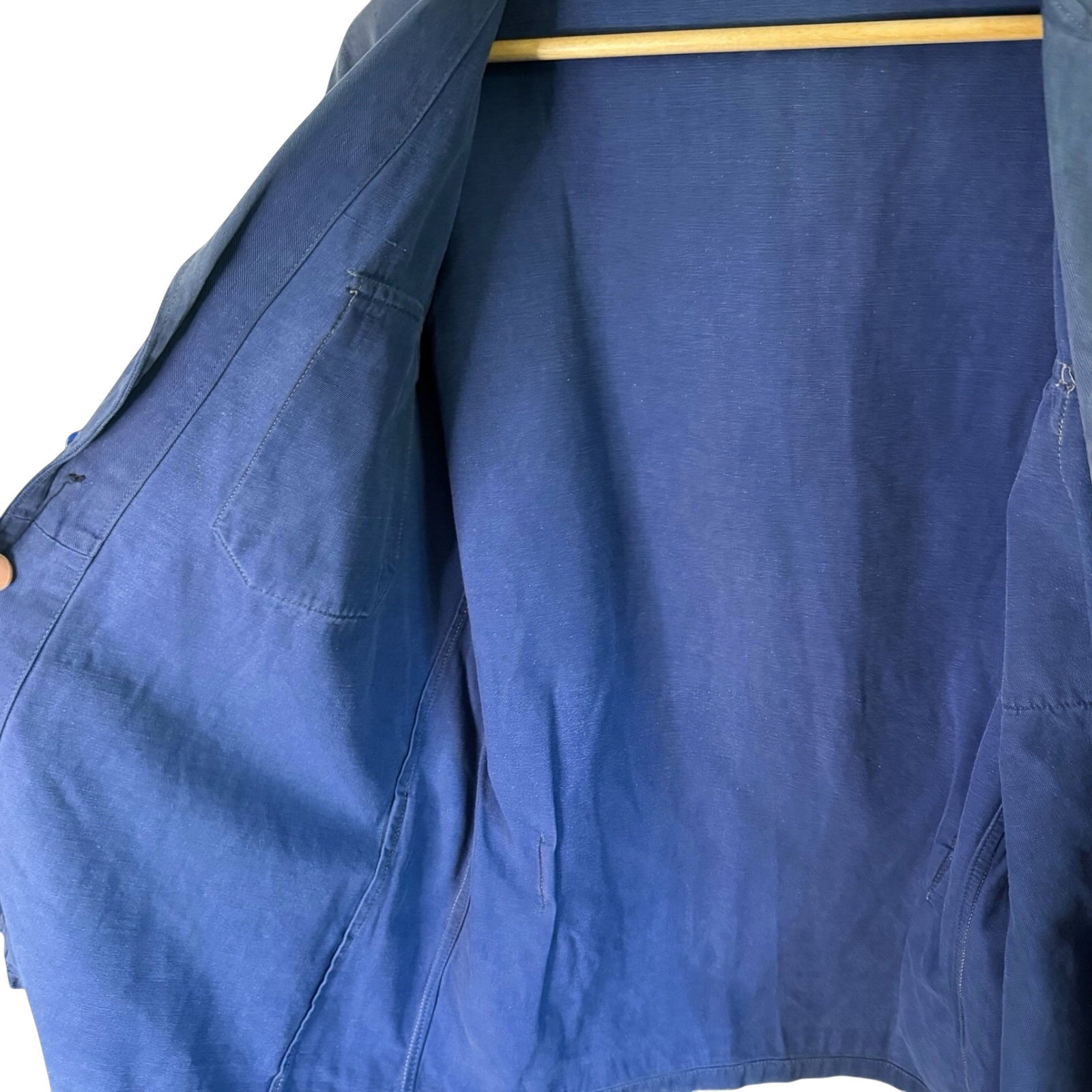
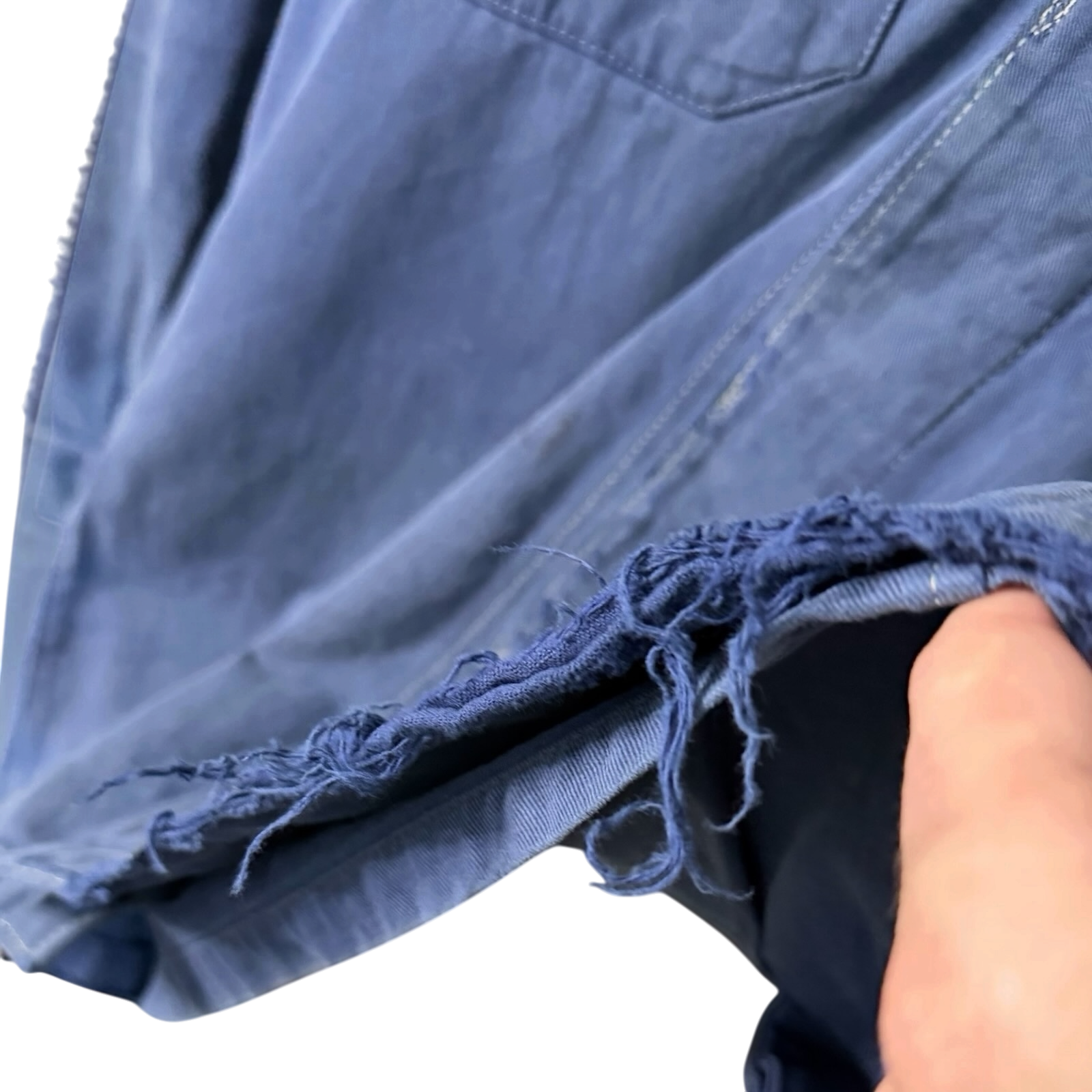
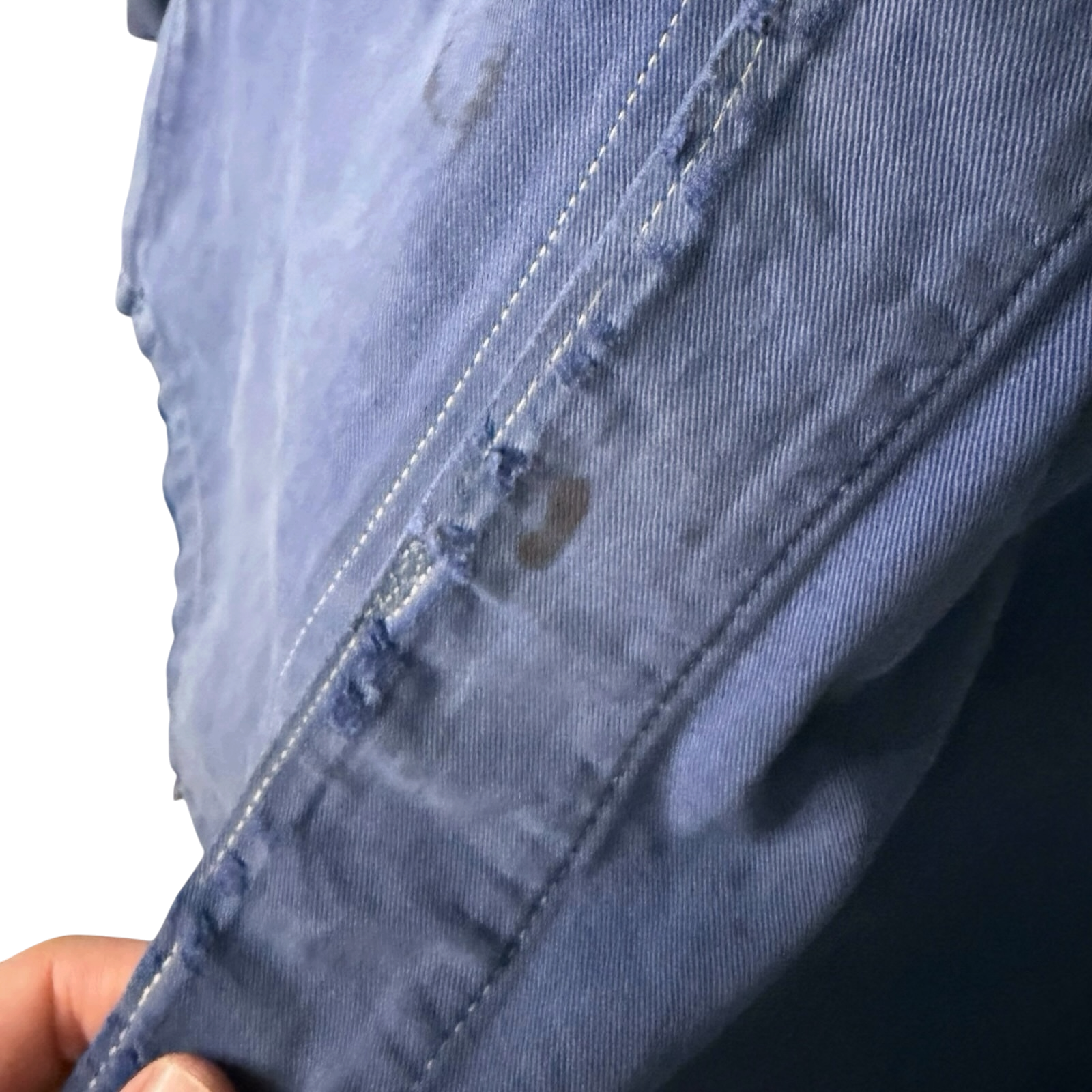
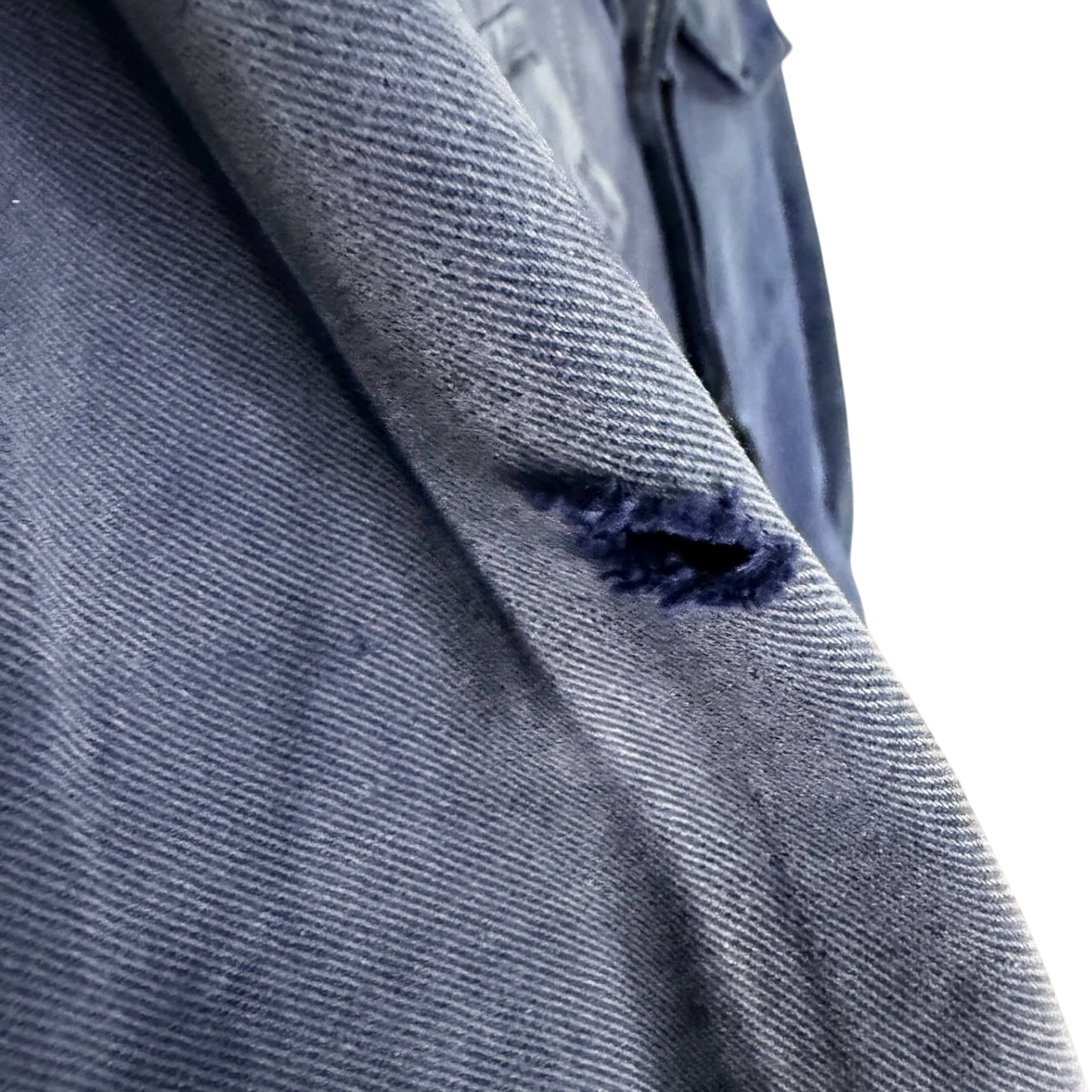
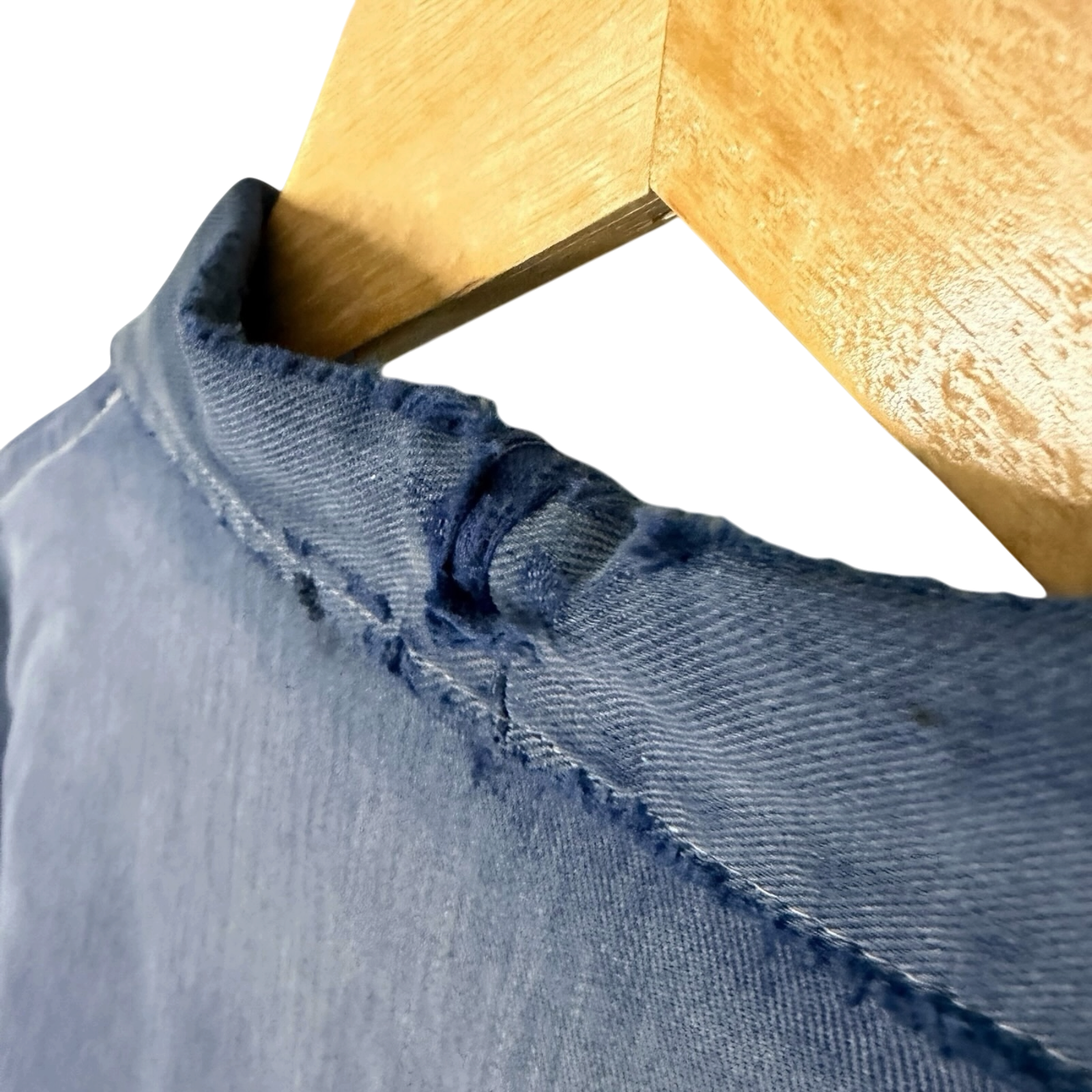
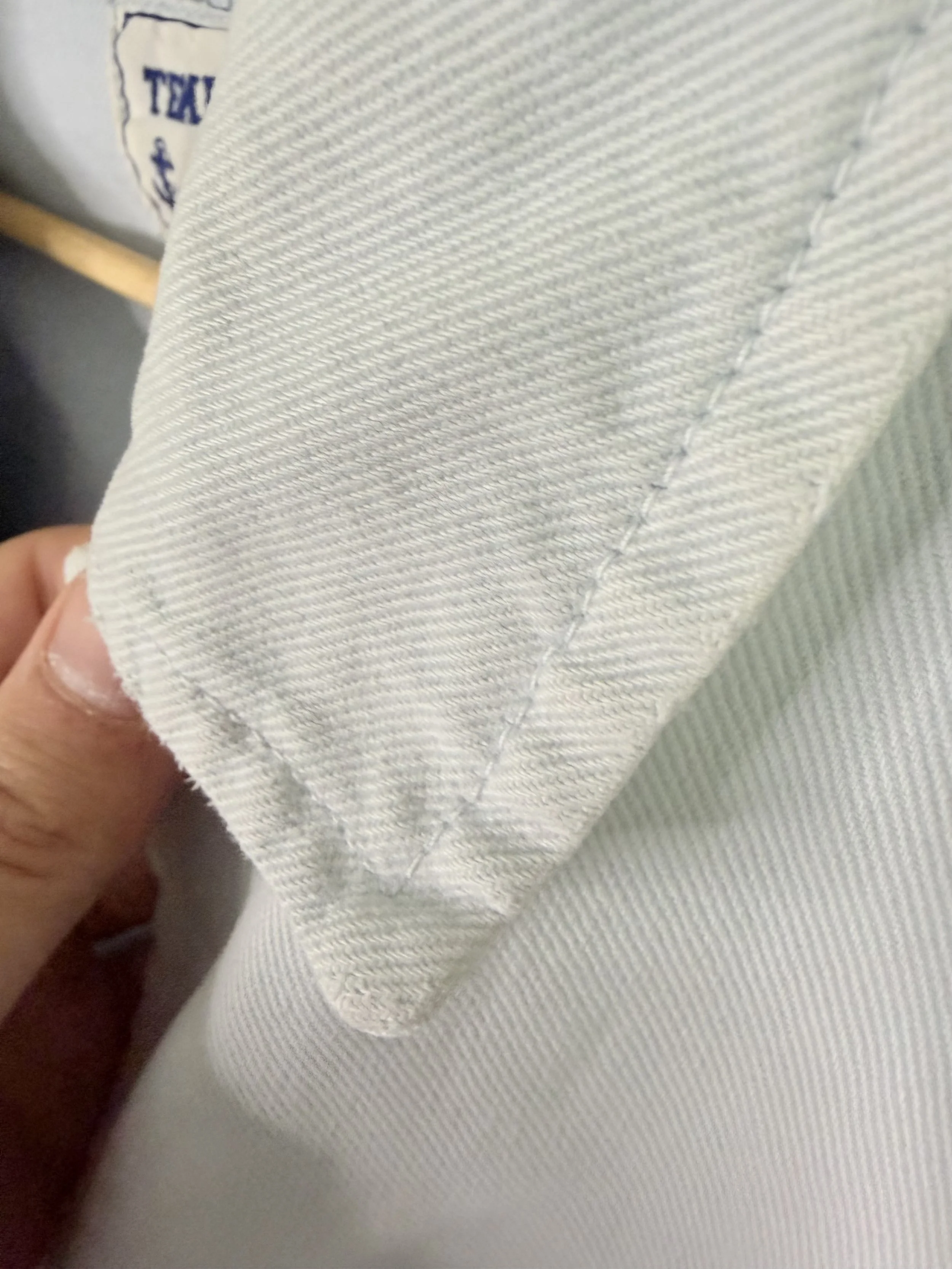
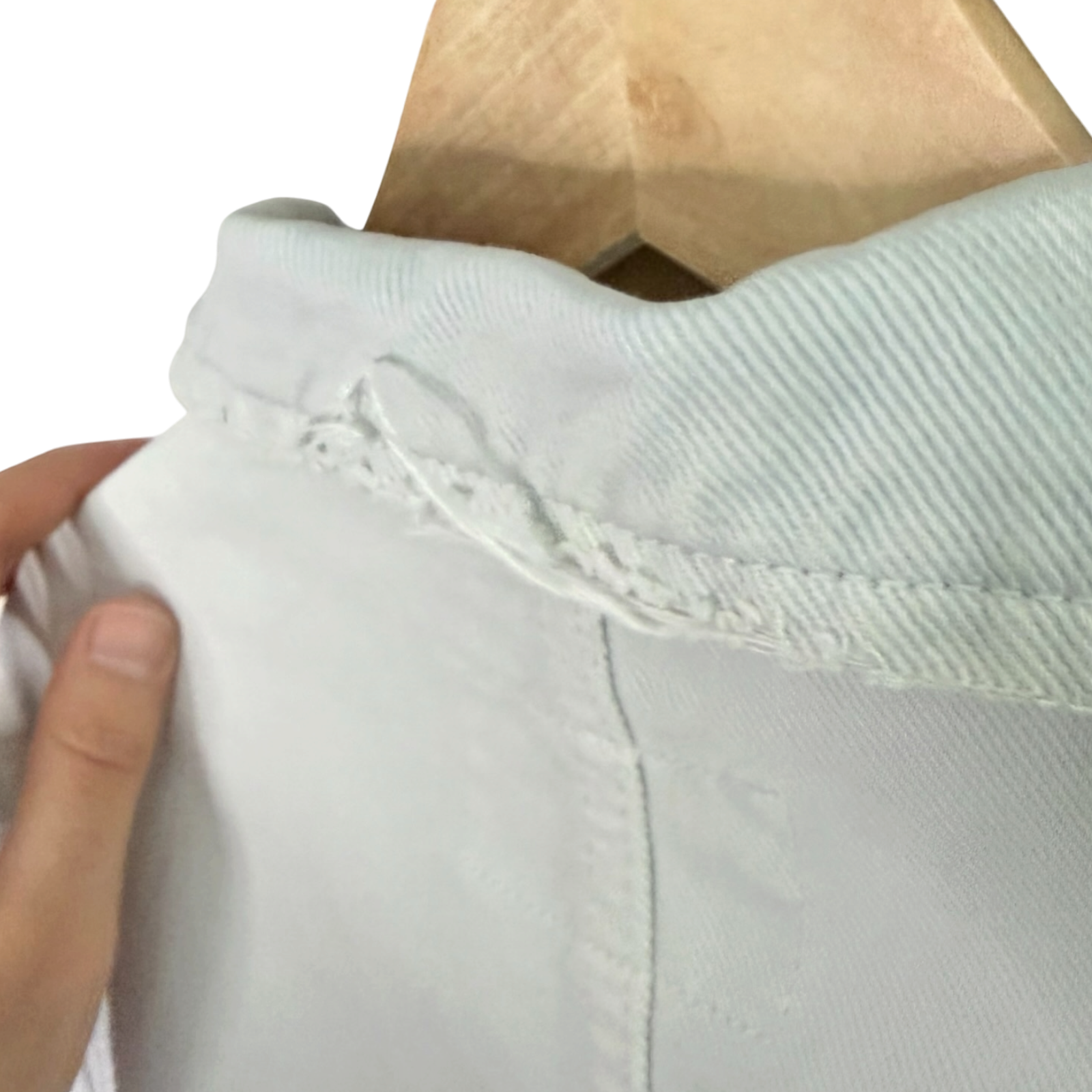
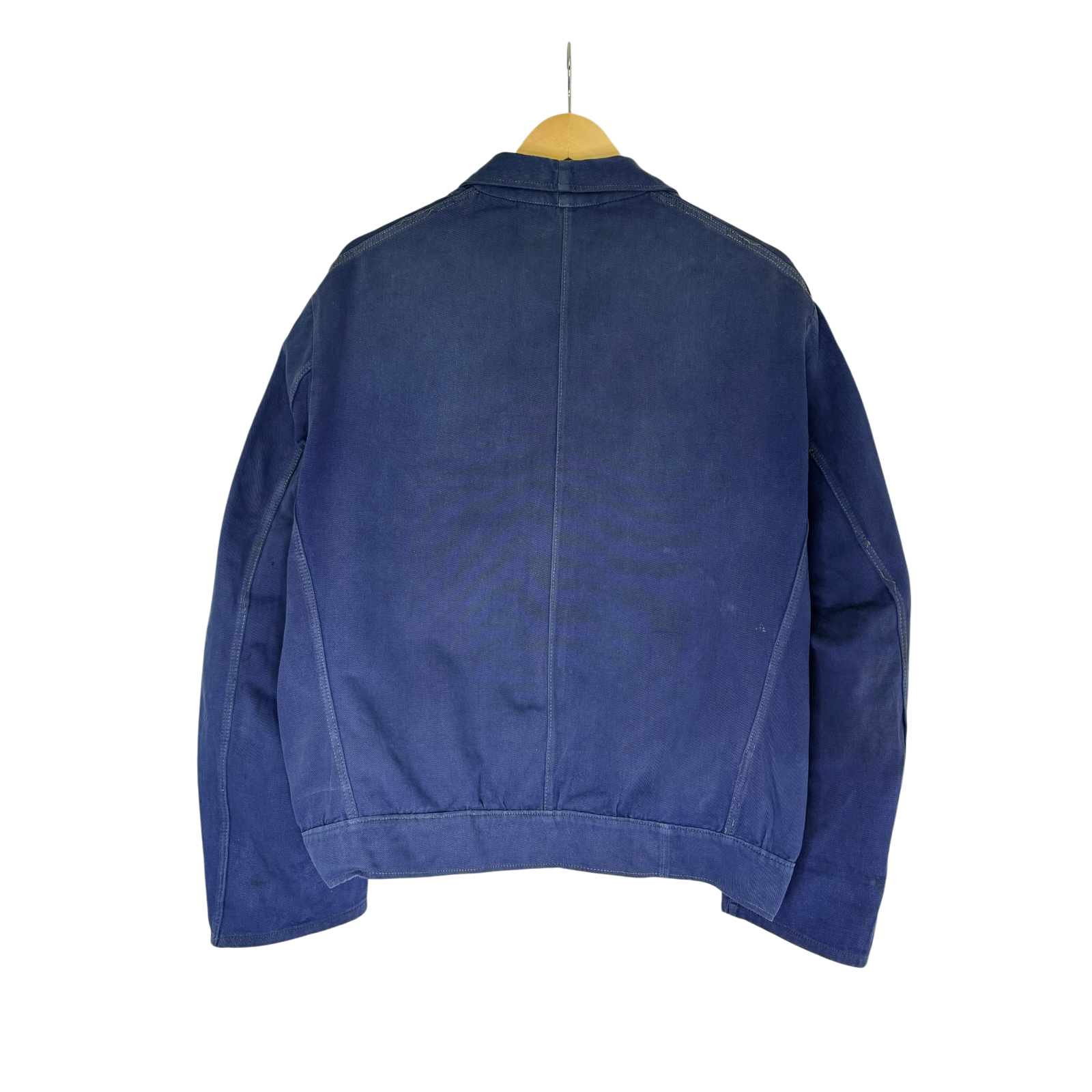
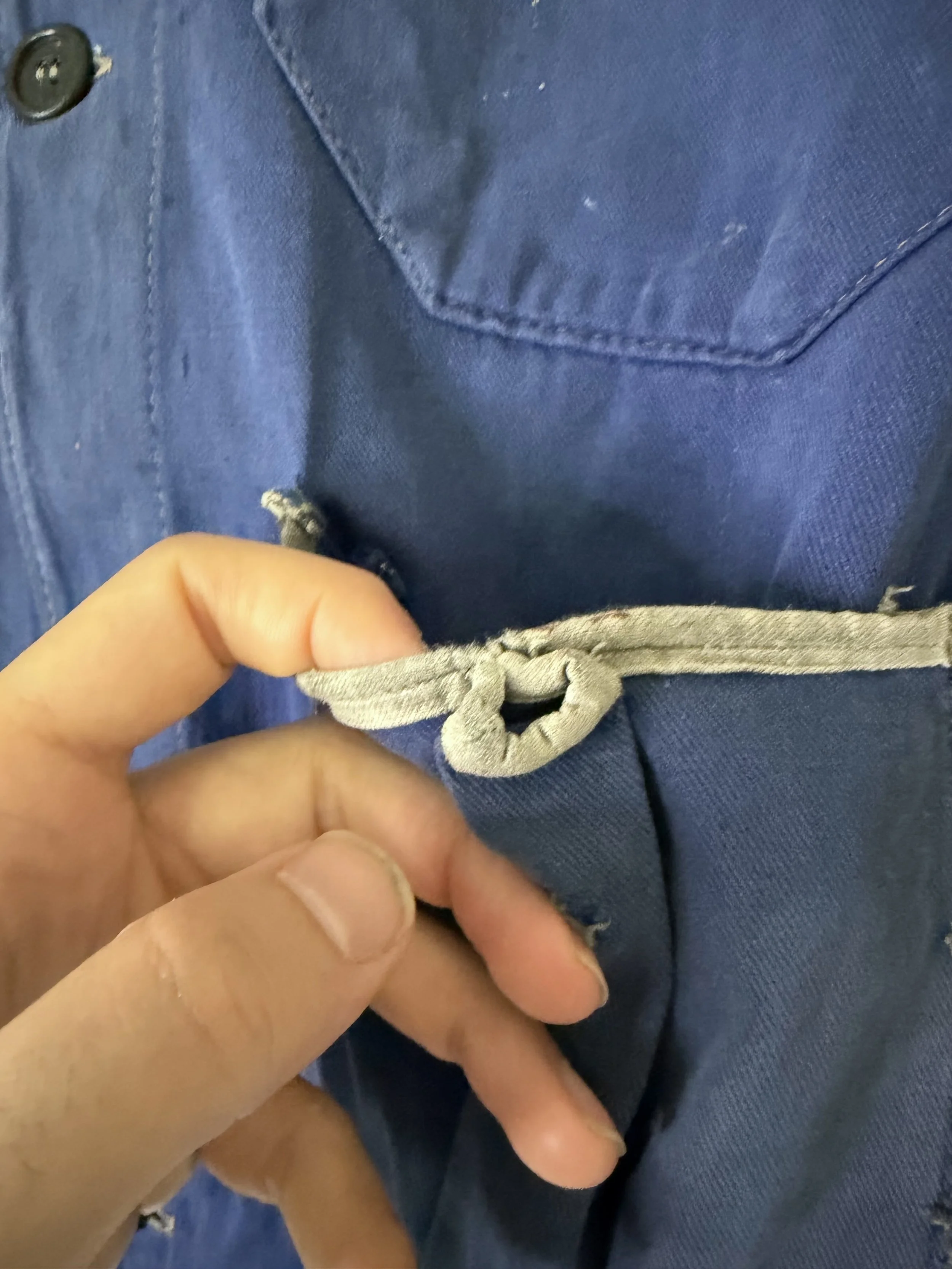
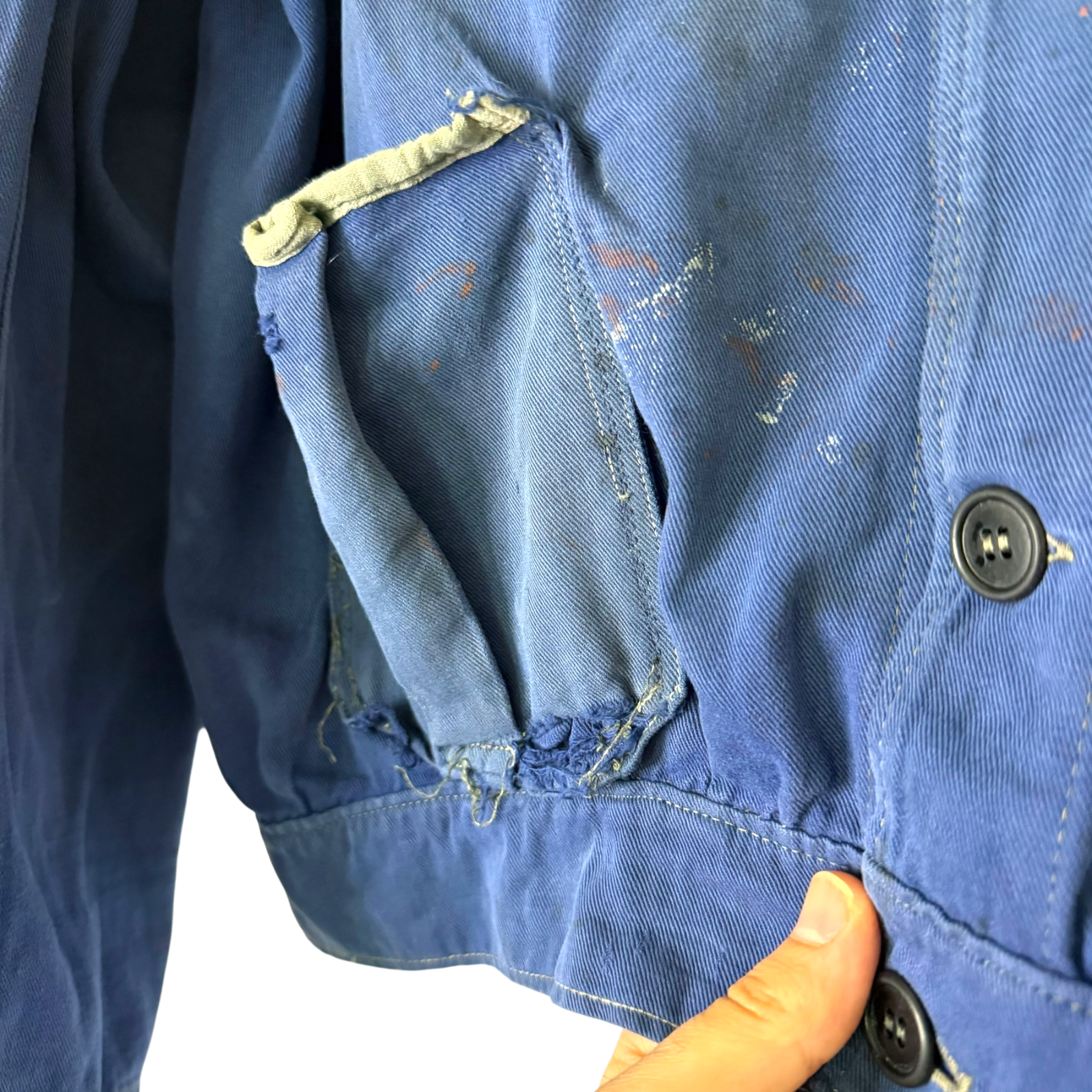
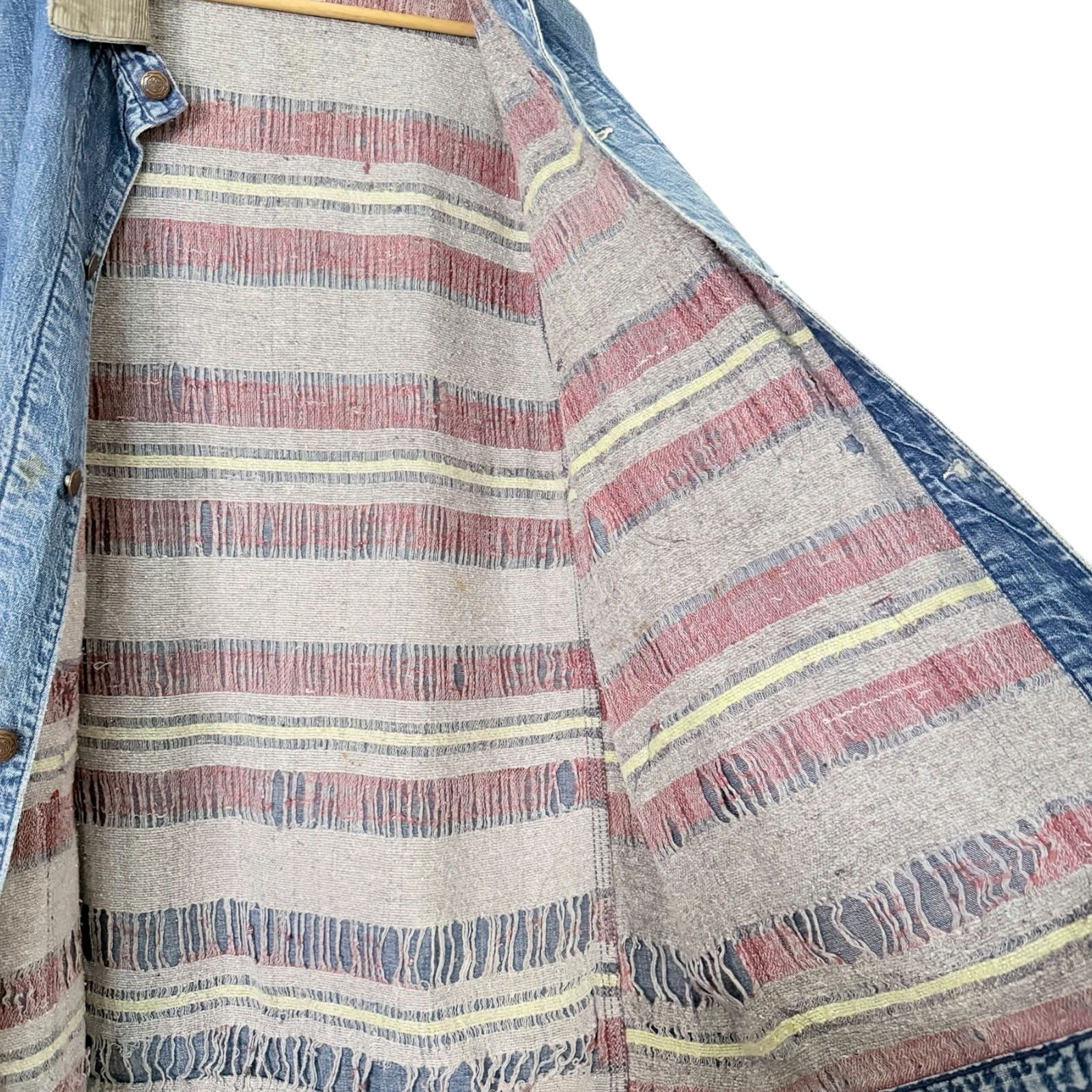
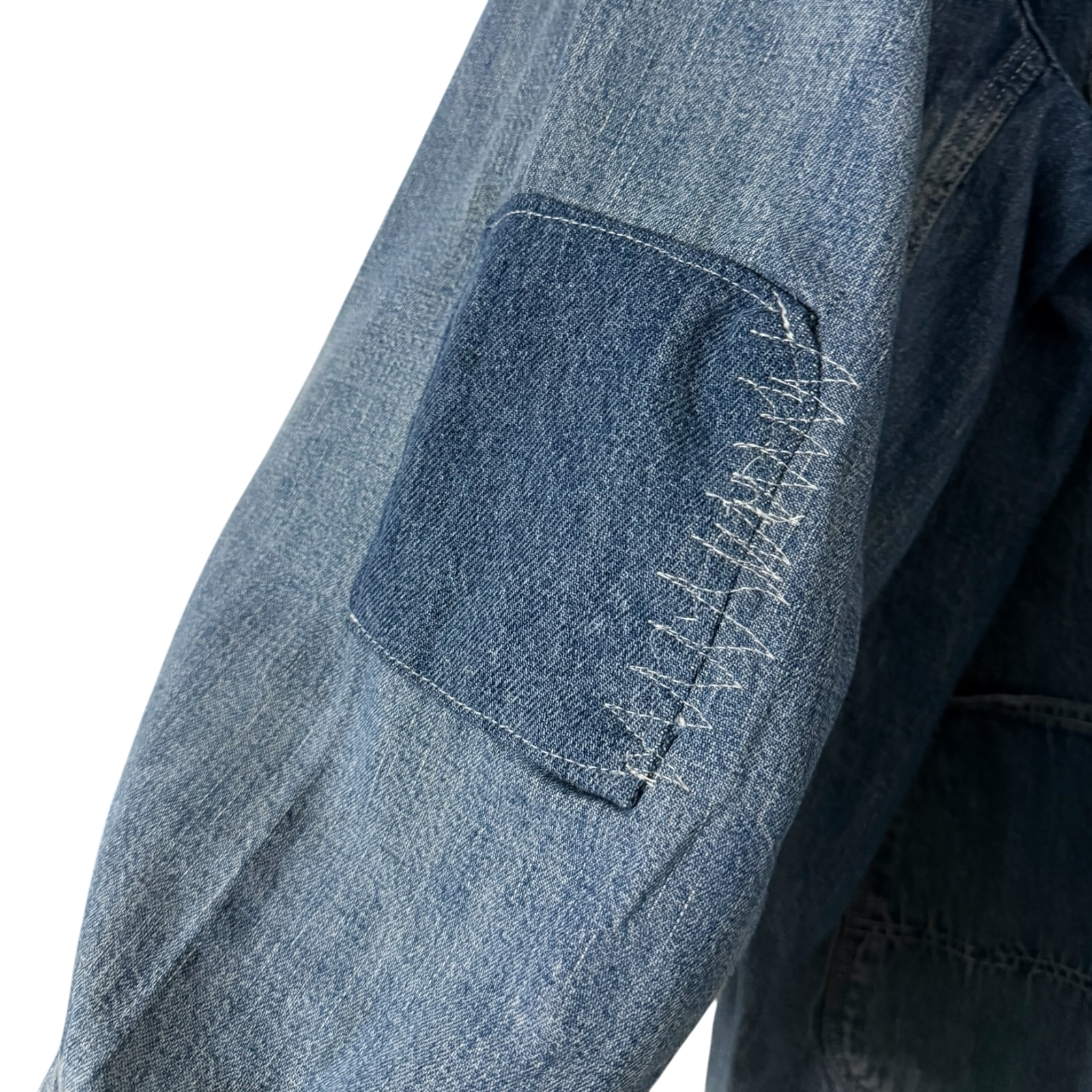
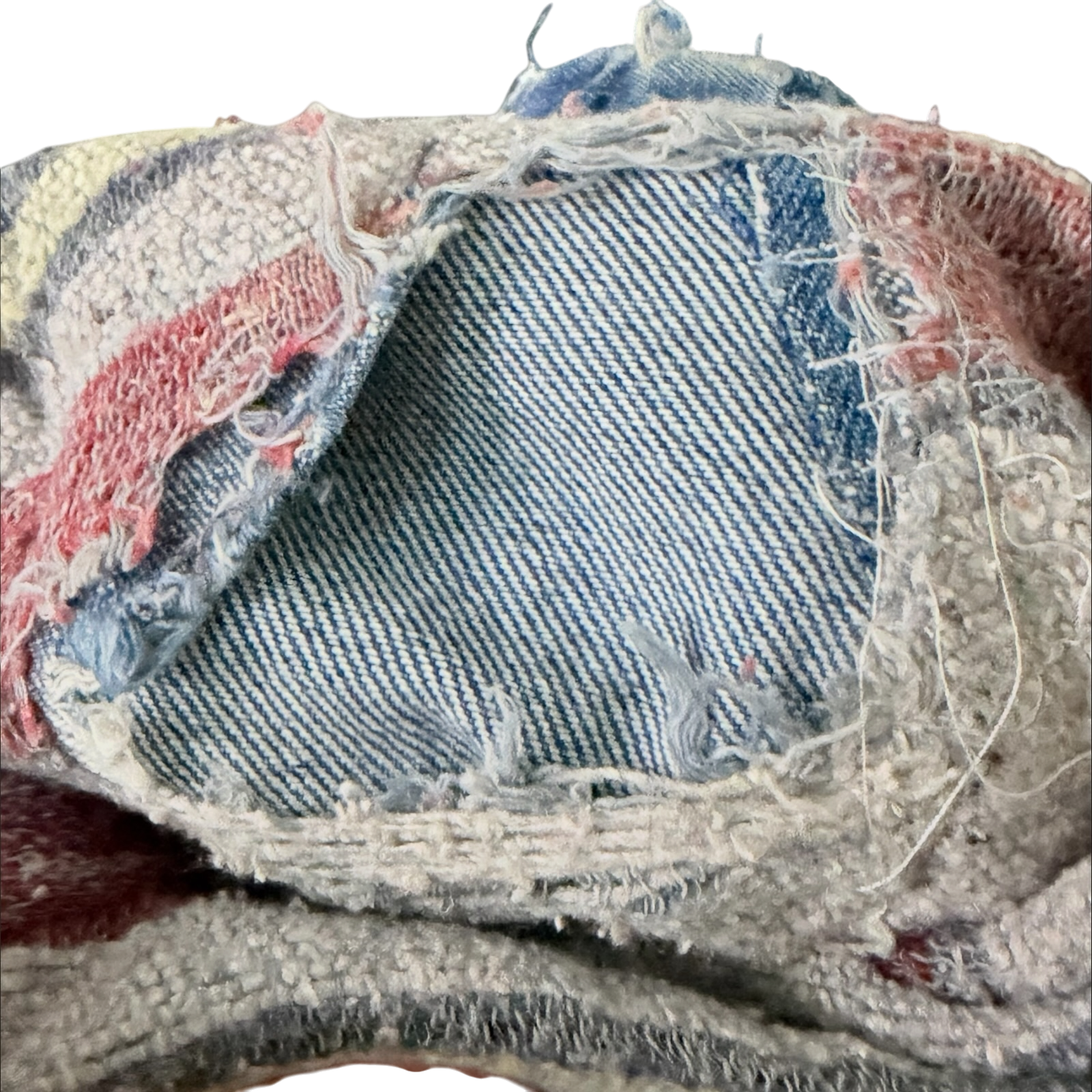
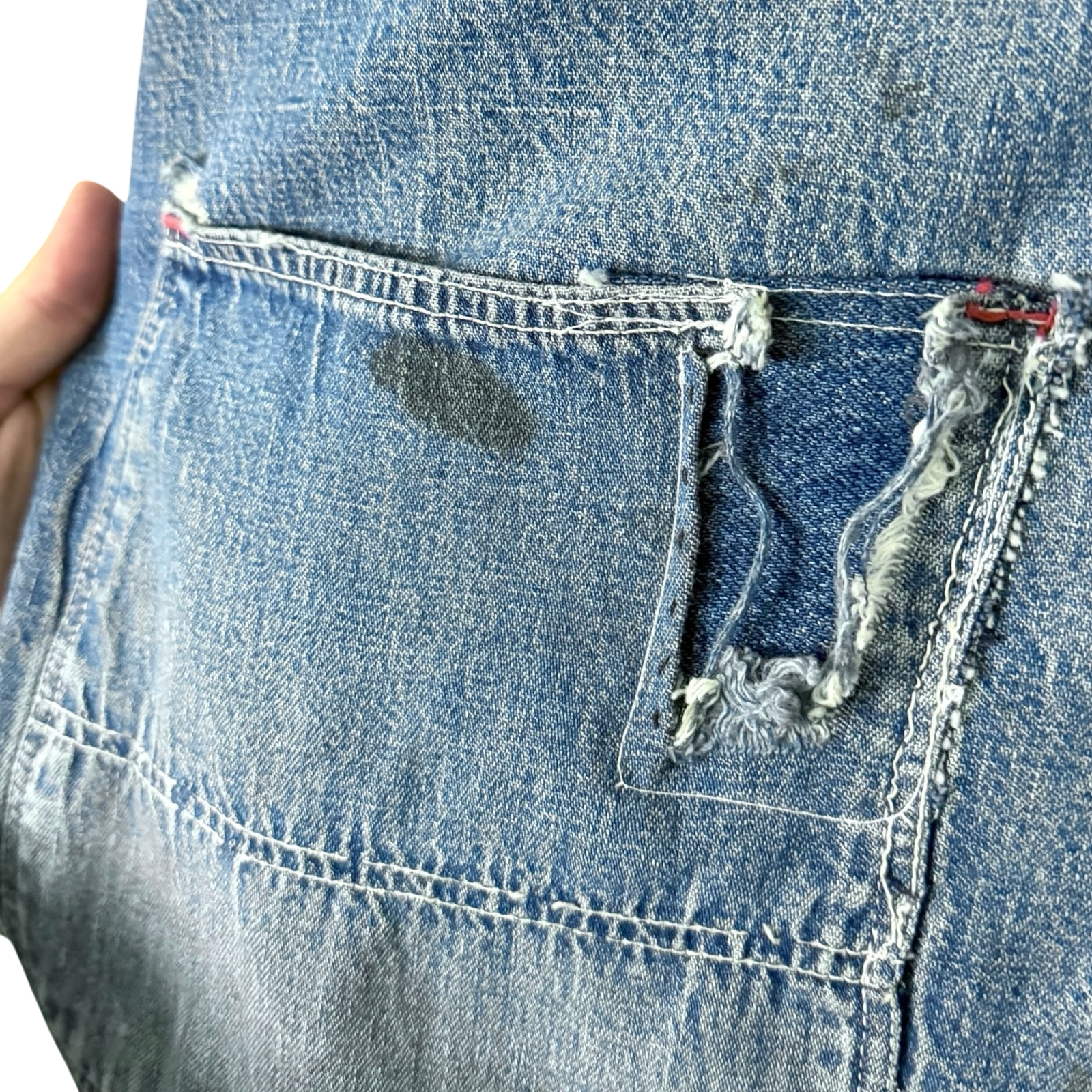
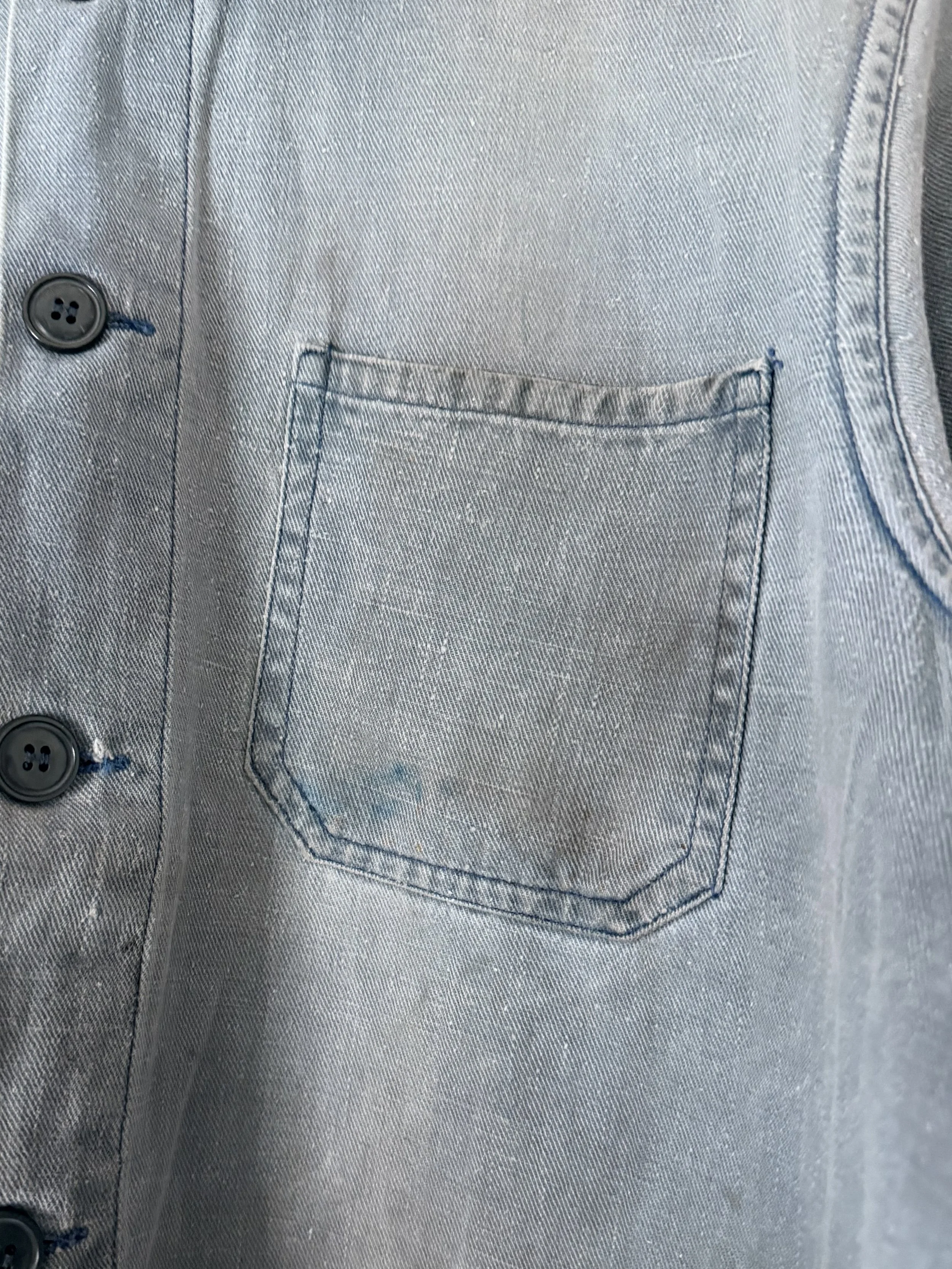
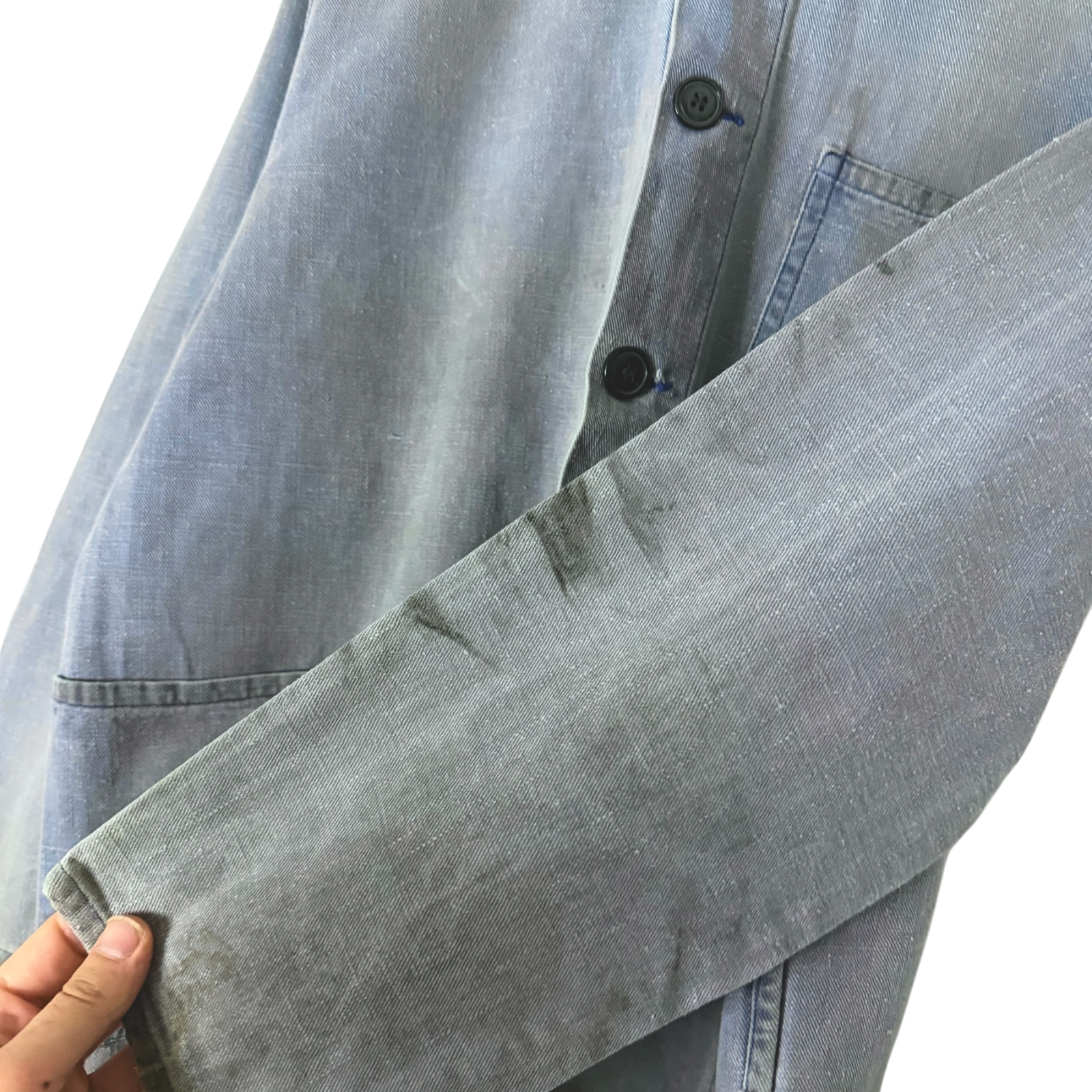
The garment shows heavy, authentic industrial wear and extraordinary fading across the exterior, with isolated pockets of the original deeper blue dye still present. The unfaded interior retains a distinct baby blue tone, providing a strong contrast to the heavily faded exterior. Distressing, patina, discoloration, and dark staining are present across the front and sleeves, consistent with a genuinely worn French workwear piece of this age. The arm staining is appreciable, though photographic contrast significantly exaggerates the dark front staining compared to how it presents under natural, in-person lighting conditions. A rare and visually striking example for collectors of French chore coats, bleu de travail, European workwear, antique work jackets, cotton-linen métis garments, and faded mid-century utility clothing.
Product Overview
This is an exceptional late 1940s–late 1950s French Bleu de Travail chore jacket, representing a highly sought-after tier of antique and mid-century European workwear. Textile analysis very strongly indicates the garment is constructed from métis, a French cotton-linen blend historically valued for combining linen’s durability, breathability, and dry hand crispness with cotton’s softness and wearability. The jacket exhibits an incredible authentic work fade, transitioning from deeply worn platinum silver-white and pale gray-blue tones to soft baby blue, creating a striking gris-bleu / salt-and-pepper visual texture. Lightweight, breathable, and durable, this is a collector-grade French workwear jacket with the age, fabric, fade, and construction details serious vintage buyers look for.
Details & History
Likely produced between the late 1940s and late 1950s, this French chore coat features foundational mid-century bleu de travail construction. The exposed five-button front uses thick, dull black buttons, a detail more consistent with earlier French work jackets before covered button plackets became more common on later industrial workwear. It features an approximately 3-inch collar, a traditional three-pocket utilitarian layout, and two interior tags, including a soft, malleable remnant tag and a visible size 52 tag. The true focal point is the textile. Métis literally refers to a mixed cloth, and in French textile use the term most commonly denotes a linen/cotton blend. Historically, this type of fabric was prized in France for hard-wearing household linens, trousseau textiles, bedding, and utility garments because it offered strength, breathability, repeated-wash durability, and a cooler, drier hand than ordinary cotton. In French workwear, métis examples are significantly less common than standard cotton twill or moleskin chore jackets, making the fabric especially desirable to collectors.
The fabric on this jacket very strongly indicates métis cotton-linen blend construction. The evidence is visible in the irregular horizontal slubbing interrupting the diagonal twill, the dry/crisp linen-like exterior hand, the softly bumbly interior texture, the lightweight but durable body, and the way the cloth has faded to a pale gris-bleu rather than the flatter fade usually seen on standard cotton workwear twill. While fiber content cannot be laboratory-confirmed from photos alone, the weave, hand, surface irregularity, fade behavior, and overall construction make this a very strong métis candidate rather than a standard cotton twill chore jacket.
Condition & Measurements
The garment shows heavy, authentic industrial wear and extraordinary fading across the exterior, with isolated pockets of the original deeper blue dye still present. The unfaded interior retains a distinct baby blue tone, providing a strong contrast to the heavily faded exterior. Distressing, patina, discoloration, and dark staining are present across the front and sleeves, consistent with a genuinely worn French workwear piece of this age. The arm staining is appreciable, though photographic contrast significantly exaggerates the dark front staining compared to how it presents under natural, in-person lighting conditions. A rare and visually striking example for collectors of French chore coats, bleu de travail, European workwear, antique work jackets, cotton-linen métis garments, and faded mid-century utility clothing.